

Note: This article contains affiliate links. If you click on these links and make a purchase, I may earn a small commission at no extra cost to you. This helps support my research and content. Read my full affiliate disclosure here.
If you drive a Hyundai Santa Fe and want a calmer, more comfortable cabin, choosing the right sound deadening mat matters. Proper materials and placement can significantly reduce road noise, rattles, and vibration that come through the floor, doors, and trunk. This guide shortlists the top options for the vehicle and explains why each type of mat made our selection. We evaluated candidates based on noise-reduction performance and installation practicality plus durability and material thickness. Read on to see the best sound-deadening mats for the Santa Fe and what to look for when fitting them to your vehicle.
Looking for other parts? See all Hyundai Santa Fe parts & accessories.
Top Picks at a Glance
| Best Reviewed A top-rated pick with lots of positive feedback | Siless VIBRO 80 mil Car Sound Deadening Mat, 10 sqft |  |
| Most Popular A crowd favorite that many people choose with confidence | Siless Liner 157 (4 mm) Closed-Cell Foam Sound Deadening and Heat Insulation Mat, 36 sq ft |  |
| Best Quality Built to a higher standard if you want something more solid | Siless Hybrid 3-in-1 200 mil Sound Deadening Mat (25 sqft) |  |
| Best Budget The cheapest option that still gets the job done reliably | NLXCXUCY 10‑Piece 80mil (2mm) Butyl Car Sound Deadening Mat (10.8 sqft) with Gloves |  |
| Most Sold A high-volume bestseller chosen again and again | Siless VIBRO 80 mil Car Sound Deadening Mat, 36 sq ft |  |
| Best Value for Money The sweet spot between price and what you get | MAT66 ProBlack 80 mil Butyl Car Sound Deadening Mat, 36 sq ft |  |
| Best Overall The best all-around choice for most situations | KILMAT 80 mil Butyl Car Sound Deadening Mat, 36 sq ft |  |
1. Siless VIBRO 80 mil Car Sound Deadening Mat, 10 sqft

| Thickness | 80 mil / 2 mm |
|---|---|
| Coverage | 10 square foot |
| Adhesive | Peel-and-stick backing |
The Siless VIBRO 80 mil sound deadening mat is a peel-and-stick butyl damping sheet intended to reduce metal resonance, road noise, and rattles in vehicle body panels. Typical use is trimming pieces to size and applying them to trunks, doors, roofs, and floor panels; hand-rolling the material ensures strong adhesion and conformity to contours. Notable features include a 2 mm thickness for heavier damping, a sticky backing for direct placement without extra adhesives, and grid lines on the liner to simplify cutting. In practice it noticeably reduces panel vibration when concentrated over problem areas and can be layered for extra effect behind speakers or around subwoofer enclosures. Installation is straightforward for a DIYer but requires time to prepare surfaces and a roller for best results. The main limitations are the 10 sq ft coverage per pack, which may be small for full-vehicle jobs on a Hyundai Santa Fe, and some variability reported between batches on exact thickness, so buyers should inspect material on arrival before large installations.
Best for: Reliability-focused DIYers who prioritize consistent reduction of rattles and panel vibration in their Hyundai Santa Fe and prefer a straightforward, durable material they can install themselves.
Less Ideal for: People who need full-vehicle coverage in a single purchase or who want a turnkey professional installation service should consider larger kits or shop installation instead.
- 2 mm (80 mil) thickness provides strong vibration damping for panels and trunks
- Peel-and-stick adhesive backing allows installation without additional glue
- Grid-lined backing simplifies cutting accurate pieces for panel fitment
- Can be layered to boost performance behind speakers and subwoofers
- Only 10 square feet of coverage per pack, likely insufficient for full-vehicle application
- Some buyers report delivered sheets thinner than advertised, creating batch consistency concerns
Verdict A reliable, heavy-duty 2 mm butyl mat that delivers strong vibration control for targeted damping on a Hyundai Santa Fe but requires multiple packs for full coverage.
2. Siless Liner 157 (4 mm) Closed-Cell Foam Sound Deadening and Heat Insulation Mat, 36 sq ft

| Thickness | 157 mil / 4 mm |
|---|---|
| Coverage | 36 sq ft |
| Backing | Self-adhesive |
| Material | Closed-cell polyethylene foam |
The Siless Liner 157 is a 4 mm closed-cell PE foam roll with a peel-and-stick backing intended to add thermal insulation and noise damping to vehicle panels. For a Hyundai Santa Fe it is typically applied to doors, floor pans, trunk area, and inside the hatch to reduce road and body-panel vibration and to limit heat transfer from engine and exhaust areas. Its lightweight, waterproof foam is easy to cut to fit odd panels and the adhesive backing and grid pattern simplify placement during a one-person install. In use it provides a modest increase in perceived panel mass, improves door thump, and helps reduce high-frequency road noise; many owners pair it as a top layer over heavier butyl products for better low-frequency damping. Limitations are that it is thin relative to thicker mass-loaded options, so it will not be as effective on deep bass or major panel resonance on its own, and adhesion to some bare metal areas can be hit-or-miss without extra surface prep or adhesive spray.
Best for: A convenience-driven buyer who wants an easy, low-effort improvement to cabin comfort on a Hyundai Santa Fe by reducing heat and mid/high-frequency noise with a quick DIY install.
Less Ideal for: Owners seeking maximum low-frequency noise control or full NVH restoration who prefer professional multi-layer butyl and mass-loaded solutions should consider heavier products instead.
- Closed-cell PE foam is waterproof and resists moisture and odors
- Self-adhesive backing with cuttable grid makes one-person installation straightforward
- Thin flexible sheets conform to curved panels like doors and trunk floors
- Provides thermal blocking to reduce radiant heat transfer into the cabin
- Lightweight solution that improves door feel and reduces high-frequency noise
- 157 mil (4 mm) thickness provides limited low-frequency/structure-borne noise reduction compared with heavier butyl mats
- Adhesion can be inconsistent on untreated metal without additional prep or spray adhesive
Verdict A lightweight, easy-to-install foam liner that noticeably improves thermal comfort and high-frequency noise on a Hyundai Santa Fe but is best used with heavier deadeners when deep bass or major panel resonance is the target.
3. Siless Hybrid 3-in-1 200 mil Sound Deadening Mat (25 sqft)

| Thickness | 200 mil (0.2 in) |
|---|---|
| Coverage | 25 sqft |
| Size | 25 sqft |
The Siless Hybrid 3-in-1 is a composite sound-deadening sheet designed to reduce road and exhaust noise, damp panel vibration, and add a thermal barrier in one product. It is typically cut to size, peeled and applied to vehicle panels such as doors, floors, and interior body panels; installation is straightforward by hand but benefits from a roller or heat to improve adhesion in tight creases. Notable features include a thick 200 mil construction and a combination of butyl, foam, and a mass-loaded layer, which together provide damping plus absorption and sound blocking without stacking multiple separate materials. For performance-focused Hyundai Santa Fe owners this means you can target typical noise sources—door skins, floor pans, and rear cargo areas—with a single material to improve cabin quietness and bass response. Limitations are that it is sticky and messy to handle, may need seam taping for perfect seals, and it is not a dedicated metal-backed damper for pure panel resonance control so some applications may still benefit from a foil-backed deadener underneath for best low-frequency panel control.
Best for: Performance-oriented Hyundai Santa Fe owners who want a single, high-performance material to reduce cabin noise, tame vibrations, and add thermal insulation with fewer installation steps.
Less Ideal for: If your goal is absolute panel resonance control or you prefer a rigid foil-backed damper as the primary layer, consider pairing this with a metal-backed deadener or choose a dedicated foil product instead.
- Three-layer construction combines damping, absorption, and mass in one sheet for multi-purpose performance.
- 200 mil thickness gives solid feel and effective blocking of mid-to-high frequency noise.
- Peel-and-place adhesive allows quick application to doors, floors, and panels without extra glue.
- Flexible and easy to trim, so it conforms to curves and tight spaces in the Santa Fe interior.
- Not optimized as a foil-backed deadener for maximum panel resonance control at very low frequencies.
- Adhesive is very tacky and can stick to clothing or tools during install.
- Best results may require additional seam taping or a roller and occasional heating during application.
Verdict A thick, multi-layer deadener that delivers broad noise reduction and thermal benefits for a performance-focused Santa Fe, though pairing with a foil-backed damper can further improve low-frequency panel control.
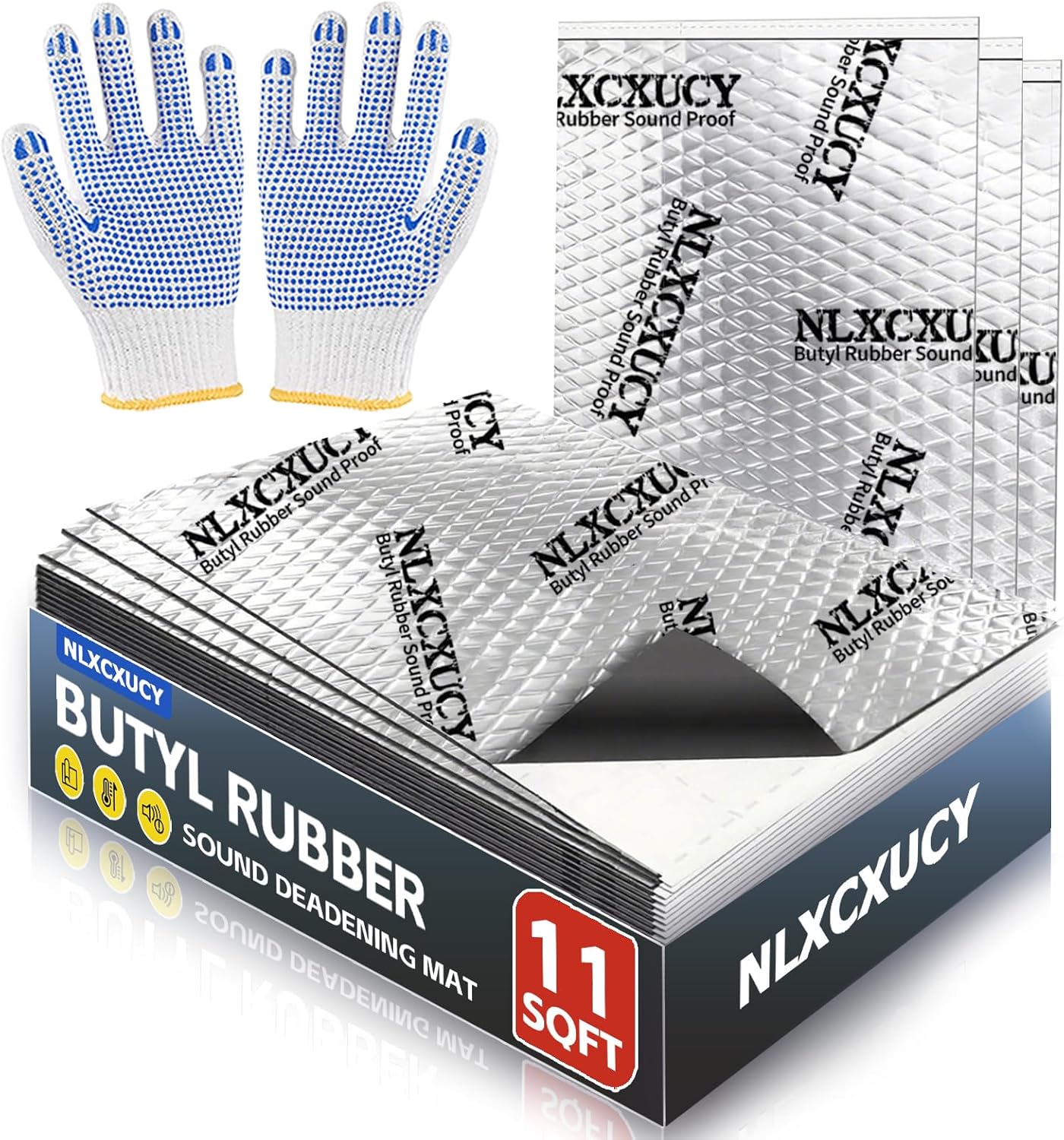
4. NLXCXUCY 10‑Piece 80mil (2mm) Butyl Car Sound Deadening Mat (10.8 sqft) with Gloves
| Thickness | 80 mil (2 mm) |
|---|---|
| Coverage | 10.8 sqft |
| Pieces | 10 pieces |
| Material layers | Foam, butyl mastic, aluminum foil |
This 10‑piece kit provides thin, flexible butyl mats with an aluminum face and foam layer intended to cut vibrations and lower low‑frequency road and exhaust noise. It is supplied in pre‑cut sheets that together cover about 10.8 sq ft, and the strong adhesive backing lets you peel and stick the pieces to flat or mildly contoured surfaces. Typical uses include lining doors, the trunk floor, firewall edges, and inner panels on a Hyundai Santa Fe to reduce rattle and improve cabin quietness without major disassembly. Notable features are the three‑layer construction (foam, butyl mastic, and foil), 2 mm thickness for modest mass damping, and included gloves to help press the material down. Practical benefits are easier DIY installation, noticeable reduction in mid and some low frequencies, and added radiant heat blocking from the foil. Important limitations are the relatively thin 2 mm profile, which will not match heavier mass‑loaded or thicker mats for maximum low‑end reduction, and the kit only covers a small area so multiple sets are needed for whole‑car treatment.
Best for: Budget‑conscious DIYers who want an affordable, easy‑to‑apply way to reduce rattles and improve cabin quiet on a Hyundai Santa Fe without specialist tools or extensive disassembly.
Less Ideal for: Audiophiles or serious soundproofing projects seeking maximum low‑frequency control and full‑car coverage should choose thicker, mass‑loaded materials or larger kits instead.
- Three‑layer construction (closed‑cell foam, butyl core, aluminum foil) targets vibration, airborne noise, and radiant heat simultaneously.
- Strong adhesive backing that sticks well to painted metal and common interior panels for straightforward peel‑and‑stick DIY installation.
- Pre‑cut multi‑piece kit is flexible and easy to trim for doors, trunk floor, firewall edges, and other small panels.
- Included gloves make hand‑rolling and smoothing the mat simpler during application.
- At 2 mm thickness this kit provides modest mass damping and is less effective at killing deep bass compared with thicker or mass‑loaded alternatives.
- Coverage (10.8 sqft) is limited so you will likely need multiple kits for full Santa Fe treatment.
Verdict A cost‑effective, user‑friendly 2 mm butyl mat kit that delivers noticeable noise and heat reduction for spot treatments on a Hyundai Santa Fe but requires multiple kits or thicker alternatives for full low‑end control.
5. Siless VIBRO 80 mil Car Sound Deadening Mat, 36 sq ft

| Thickness | 80 mil (2mm) |
|---|---|
| Coverage | 36 square feet |
| Adhesive | Peel-and-place butyl |
This Siless VIBRO mat is a peel-and-place butyl sound deadener designed to cut vibration and road noise when applied to body panels, trunk lids, doors, and floors. Typical use is trimming sheets to fit a panel, peeling the release liner, applying the adhesive side to clean metal, and rolling to ensure full contact. The product highlights include a claimed 80 mil (2mm) thickness for mid-to-high damping, strong adhesive tack for immediate sticking, and grid lines on the backing for easier cutting and placement. In real-world installs it provides measurable reduction in panel resonance and can noticeably reduce rattles from subwoofers or loose trim when applied strategically. Limitations are that one 36 sq ft kit may not cover an entire SUV thoroughly, and heavier multi-layer installations require extra material and a roller tool for best long-term adhesion. Some buyers have reported thickness variance in isolated batches, so check pieces on arrival before committing to full installation on a Hyundai Santa Fe.
Best for: A risk-averse mainstream buyer seeking a reliable, factory-quality-feeling solution to reduce cabin noise and rattles on their Hyundai Santa Fe without complicated installation or specialized adhesives.
Less Ideal for: Drivers planning full-vehicle, multi-layer soundproofing or professional installers who need larger coverage per kit should consider higher-quantity or commercial-grade options instead.
- True 2mm nominal thickness for effective vibration damping in panel areas
- Peel-and-place adhesive makes installation straightforward without extra glues
- Backed coverage of 36 sq ft is useful for treating key areas like trunk, doors, or floor tunnels
- Grid on the backing simplifies cutting consistent shapes for panels
- 36 sq ft may be insufficient to fully cover a mid-size SUV like the Hyundai Santa Fe
- No roller included in the package which is recommended for long-term adhesion and contour work
- Some buyers report occasional thickness variance between batches
Verdict Good mid-thickness, easy-to-install mat that reliably reduces rattles on a Hyundai Santa Fe but may require multiple kits or extra tools for full-vehicle coverage.
6. MAT66 ProBlack 80 mil Butyl Car Sound Deadening Mat, 36 sq ft

| Thickness | 80 mil (2 mm) |
|---|---|
| Coverage | 36 sqft |
| Adhesive | Self-adhesive butyl |
| Finish | Foil-clad with install indicator |
The MAT66 ProBlack is a self-adhesive, foil-clad butyl sound deadening kit supplied as multiple sheets covering 36 square feet and intended for DIY installation in vehicle panels. It sticks directly to clean metal surfaces, conforms to contours with a roller, and the embossed foil gives a visual cue when a sheet is fully adhered. At 80 mil thickness the material will noticeably reduce panel vibration and road noise when applied to doors, trunk lids, floor tubs, and other accessible metal areas of a Hyundai Santa Fe, and doubling layers behind speakers can improve bass clarity. Installation is manual and time consuming for a full-vehicle job; heating the mat in cold conditions and using a proper roller speeds shaping and adhesion. The mat is quite tacky and can be messy on hands or clothing, and cutting/trim work requires many blades. Also, while it reduces noise and helps thermal insulation, it does add a layer that may complicate reassembly in tightly packaged areas. For a buyer optimizing cost versus performance, it delivers heavy-duty damping at a lower price than many premium brands but needs patience and basic prep work to get best results.
Best for: Practical optimizers who prioritize effective sound and vibration reduction per dollar and are willing to do hands-on work to improve cabin quietness and audio performance on a Hyundai Santa Fe.
Less Ideal for: Buyers who want a plug-and-play acoustic solution installed professionally with minimal labor or those unwilling to spend time surface-prepping and trimming during installation.
- Thick 80 mil butyl backing provides strong vibration damping and measurable noise reduction.
- Self-adhesive foil sheets with embossed install indicator make positioning and adhesion confirmation straightforward.
- 36 sq ft kit includes many sheets sized for doors and panels, offering good coverage for a Santa Fe interior.
- Foil-clad surface helps with heat resistance and provides a neat factory-like appearance after installation.
- Application is labor intensive and requires a roller and frequent blade changes for trimming.
- Highly tacky adhesive can be messy and leaves residue that is difficult to remove from clothing or tools.
- May require multiple boxes or layering for full-floor or high SPL applications, increasing project time.
Verdict A cost-efficient, thick butyl mat that delivers strong damping for a Hyundai Santa Fe if you are prepared for hands-on installation.
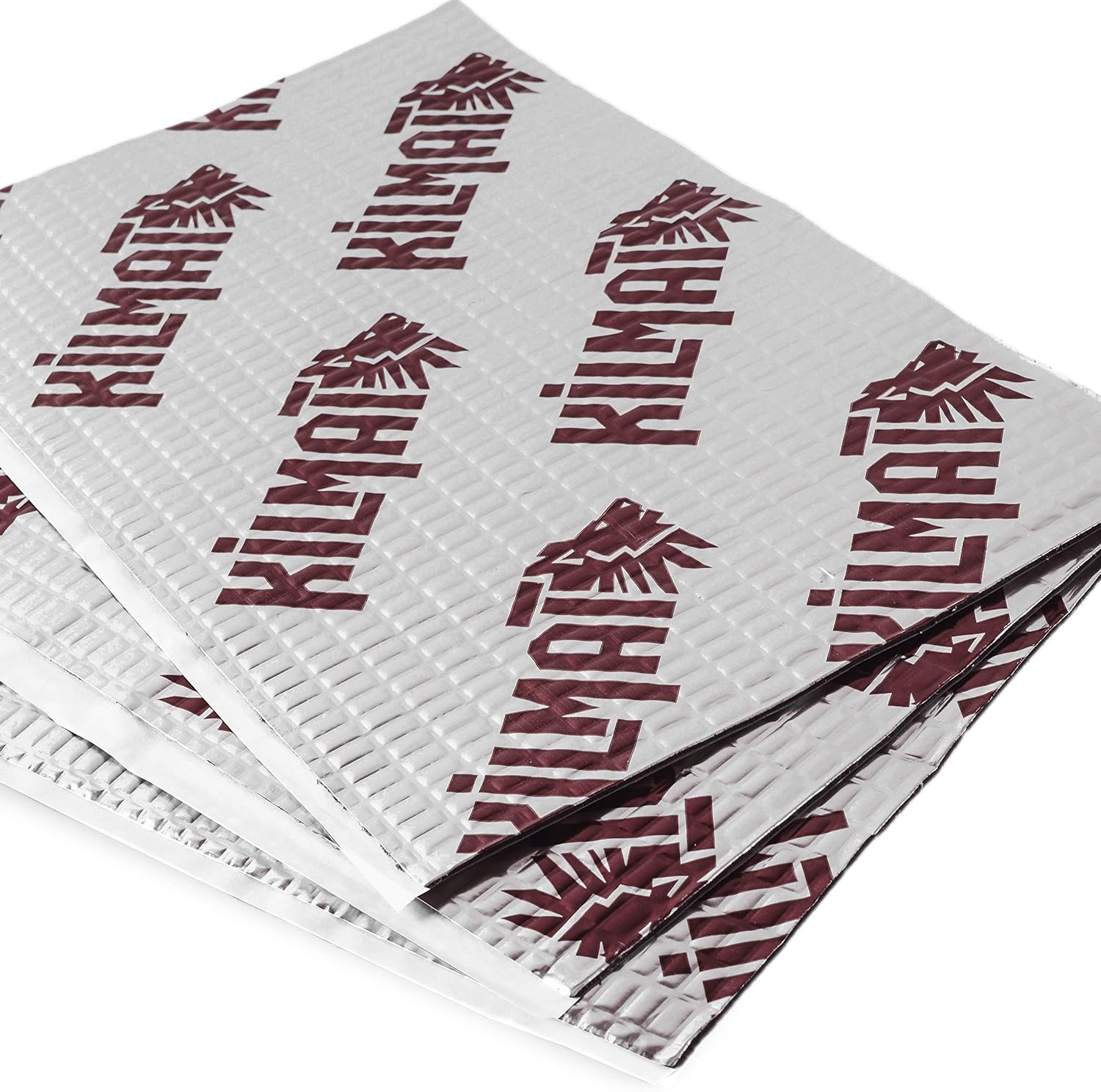
7. KILMAT 80 mil Butyl Car Sound Deadening Mat, 36 sq ft
| Thickness | 80 mil (2 mm) |
|---|---|
| Coverage | 36 square feet |
| Material | Butyl with aluminum foil |
| Adhesive | Self-adhesive |
This KILMAT mat is a heavy-duty, self-adhesive sound deadener designed to reduce panel vibration and lower road and exhaust noise when applied to vehicle interior metal surfaces. Typical use involves removing trim or panels on the Hyundai Santa Fe, cleaning and degreasing the metal, cutting sheets to fit, peeling the backing, and rolling the foil onto door skins, floors, trunk areas, or roof sections. The 80 mil butyl core with an aluminum foil face gives good damping for mid- and low-frequency vibration and the embossed installation indicator helps confirm a full bond after rolling. Benefits include strong tack that stays put once set, flexible sheets that conform to contours, and coverage sized for multi-area installs. Limitations are that it requires panel removal and surface prep for best results, cutting the foil can produce sharp edges so gloves are recommended, and a single 36 sq ft kit may not be enough for full two-layer coverage on larger areas of a Santa Fe if you aim for maximum attenuation.
Best for: Balanced owners focused on improving cabin comfort on a Hyundai Santa Fe who want a practical, DIY-friendly upgrade that reduces rattles and road noise without complex tools or professional installation.
Less Ideal for: Owners seeking a one-kit, full-vehicle, professional-grade two-layer solution or those unwilling to remove interior panels and do cleaning and rolling work should consider higher-coverage or thicker alternatives.
- Thick 80 mil butyl plus foil construction provides strong vibration damping for panels and doors
- Self-adhesive backing with embossed installation indicator helps ensure a full bond after rolling
- Flexible sheets cut and conform easily to curved door and floor contours
- 36 sq ft coverage is useful for partial to moderate installs on a midsize SUV like the Santa Fe
- Requires careful surface prep and panel removal for reliable adhesion and long-term performance
- Can produce sharp aluminum edges when cut and a tacky residue on hands without gloves
- 36 sq ft may be insufficient for full-vehicle two-layer installations for complete noise control
Verdict Thick, flexible and DIY-friendly, this KILMAT kit is a cost-effective way to cut rattles and road noise in a Hyundai Santa Fe but you may need extra packs for full-coverage installs.
Choosing the Right Hyundai Santa Fe Sound Deadening Mat: Key Factors to Consider
Material Density and Mass
Denser materials typically block and absorb more sound, especially low-frequency road and engine noise. A heavier mat adds mass to the vehicle panels, which reduces panel vibration and the transmission of structure-borne noise. When selecting a mat, consider the mass-per-area rating if available because higher values generally improve noise reduction.
Be mindful that heavier mats add weight to the vehicle, which can affect fuel efficiency and handling if applied excessively. Balance the desire for maximum acoustic damping with practical limitations on total added mass.
Thickness and Layering
Thickness affects both the mat's ability to damp vibrations and its capacity to absorb airborne noise. Thicker mats typically perform better at isolating low-frequency vibrations, while multi-layer systems that combine adhesive butyl layers with foam or foil facings can address a broader range of frequencies. Consider whether the mat is a single-layer damping sheet or part of a layered system.
Also evaluate clearance under seats, door panels, and under carpeting. Thicker solutions can interfere with reassembly or trim fit if not planned for, so account for vehicle interior tolerances when choosing thickness.
Adhesive Quality and Ease of Installation
Strong, heat-resistant adhesive helps ensure the mat stays bonded to metal panels over time, preventing peeling that reduces effectiveness. Mats with aggressive adhesives reduce the need for mechanical fasteners and simplify installation, but they should also allow repositioning during fitting.
Ease of installation also includes how easily the material conforms to curves and tight spaces. Mats that cut cleanly and are flexible enough to mold to door cavities and floor contours save time and lead to more complete coverage, which enhances overall performance.
Thermal and Moisture Resistance
Interior mats must withstand temperature swings and occasional moisture without degrading or losing adhesion. Materials that tolerate heat and humidity maintain their damping properties longer and resist mold or corrosion risks on underlying panels. Look for mats rated for automotive environments and that specify resistance to temperature and moisture.
Proper moisture resistance also protects the vehicle from trapped dampness. Ensure mats have a durable backing and that installation includes measures to avoid sealing in water in drain channels or seam areas.
Coverage and Conformability
Effective soundproofing depends on coverage of key areas: floors, doors, trunk, and wheel wells are common targets. Consider whether the mat is sold in sheets or pre-cut kits and how easily it can cover large, irregular surfaces. Larger sheets reduce seams but may be harder to position; smaller pieces let you work around obstacles.
Conformability determines whether the material can be pressed into hollows, recesses, and around brackets, which is important for a flush fit. A mat that conforms well yields fewer air gaps and better acoustic performance.
Compatibility with Interior Panels and Trim
Some mats bond strongly enough that removal can mar metal or make trim reinstallation difficult. Choose materials that work with the Santa Fe's interior design and that permit trim reattachment without excessive interference. Consider whether repeated access to areas beneath the mat will be needed and if the product allows for clean removal or partial replacement.
Also account for any effects on wiring, sensors, or HVAC ducts. Mats should not obstruct moving parts or create pressure on sensors and should be installed to preserve factory access points.
FAQ
How much noise reduction can I expect after installing a sound deadening mat?
Noise reduction depends on material type, coverage area, and installation quality. Many installations noticeably reduce rattles and mid- to low-frequency road noise, while layered systems can also reduce airborne sounds. Expect incremental improvements rather than complete silence; full effectiveness often requires covering multiple vehicle areas.
Where should I install mats in a Hyundai Santa Fe for the biggest impact?
Floors and doors are high-impact areas because they transmit both airborne and structure-borne noise into the cabin. Addressing the trunk and wheel wells can further reduce road and tire noise. Prioritize panels that vibrate or have large exposed metal surfaces for the best returns on effort.
Can I install sound deadening mats myself, or do I need a professional?
Many mats are designed for DIY installation and include adhesive backings and straightforward cutting. Basic tools like a roller, utility knife, and heat source for contouring are often sufficient. For complex areas or full-vehicle installs, a professional can ensure consistent coverage and prevent issues with trim and electronics.
Will sound deadening mats cause moisture or corrosion problems?
High-quality mats designed for automotive use are usually moisture resistant and include backings that prevent trapping water against metal. Proper surface preparation and correct placement are important to avoid sealing in existing moisture. If you are concerned, choose products that explicitly state resistance to moisture and temperature cycles.
Do heavier mats always perform better than lighter ones?
Heavier mats often perform better at damping low-frequency vibrations because of added mass, but performance also depends on material formulation and installation. Excessive weight can add load to the vehicle and complicate fitting. Balance mass with flexibility and coverage for the best practical outcome.
How long do sound deadening mats typically last once installed?
Lifespan depends on material quality and environmental exposure. Well-made automotive mats that resist heat and moisture can remain effective for many years without significant degradation. Regular inspections after extreme conditions can help catch any adhesion issues early.
How We Chose the Best Hyundai Santa Fe Sound Deadening Mat
We focused on mats designed for passenger-vehicle floors, doors, and trunks that provide measurable reductions in airborne and structure-borne noise. Key evaluation criteria included material density and thickness, measured or documented noise reduction performance, adhesive quality and ease of installation, heat and moisture resistance, and long-term durability under cabin conditions. We also considered coverage options and how well a mat conforms to complex contours common in modern vehicle interiors. Excluded from consideration were generic foam pads intended only for upholstery, products primarily meant for exterior applications, and items lacking clear material specifications. We prioritized solutions that balance acoustic performance with straightforward installation, so the final list emphasizes mats suitable for someone fitting soundproofing to a Hyundai Santa Fe without specialized fabrication tools.
Our full evaluation process is outlined in our review methodology.
Conclusion
When choosing a Hyundai Santa Fe sound deadening mat, prioritize material density, adhesive quality, and coverage of high-impact areas like floors and doors. Consider thickness and layering to address both vibration and airborne noise, while keeping installation practicality and vehicle weight in mind. Tradeoffs are inevitable: heavier, thicker systems usually deliver better damping but add weight and may complicate fitment. Select a solution that balances acoustic gains with ease of installation and long-term durability to get the most value from your soundproofing project.
Explore More:
- Check out all Hyundai Santa Fe parts & accessories
- Explore Interior Accessories
- Browse all Accessories
