

Note: This article contains affiliate links. If you click on these links and make a purchase, I may earn a small commission at no extra cost to you. This helps support my research and content. Read my full affiliate disclaimer here.
Picking the right timing belt tensioner for your Hyundai Elantra matters because the tensioner keeps the timing belt aligned and the engine running smoothly. A worn or incorrect tensioner can lead to noisy operation, uneven belt wear, or timing issues that affect performance and longevity. This guide highlights five shortlisted tensioners chosen for their fitment reliability and build quality, and it explains the practical factors that should guide your decision. Below we outline what we evaluated and what to watch for when choosing a replacement for your Elantra.
Looking for other parts? See all Hyundai Elantra parts & accessories.
Top Picks at a Glance
| Best Reviewed A top-rated pick with lots of positive feedback | DNJ Timing Belt Tensioner TBT120 for 2.0L Hyundai/Kia 2006–2012 |  |
| Best Quality Built to a higher standard if you want something more solid | A-Premium Timing Belt Kit with Water Pump and Tensioner for Hyundai 2.0L |  |
| Best Budget The cheapest option that still gets the job done reliably | Dorman 420-102 Engine Timing Belt Tensioner |  |
| Most Sold A high-volume bestseller chosen again and again | Hyundai Genuine Timing Belt Tensioner Assembly 24410-23050 |  |
| Best Overall The best all-around choice for most situations | AISIN BTT-501 Hydraulic Timing Belt Tensioner (Center) |  |
1. DNJ Timing Belt Tensioner TBT120 for 2.0L Hyundai/Kia 2006–2012
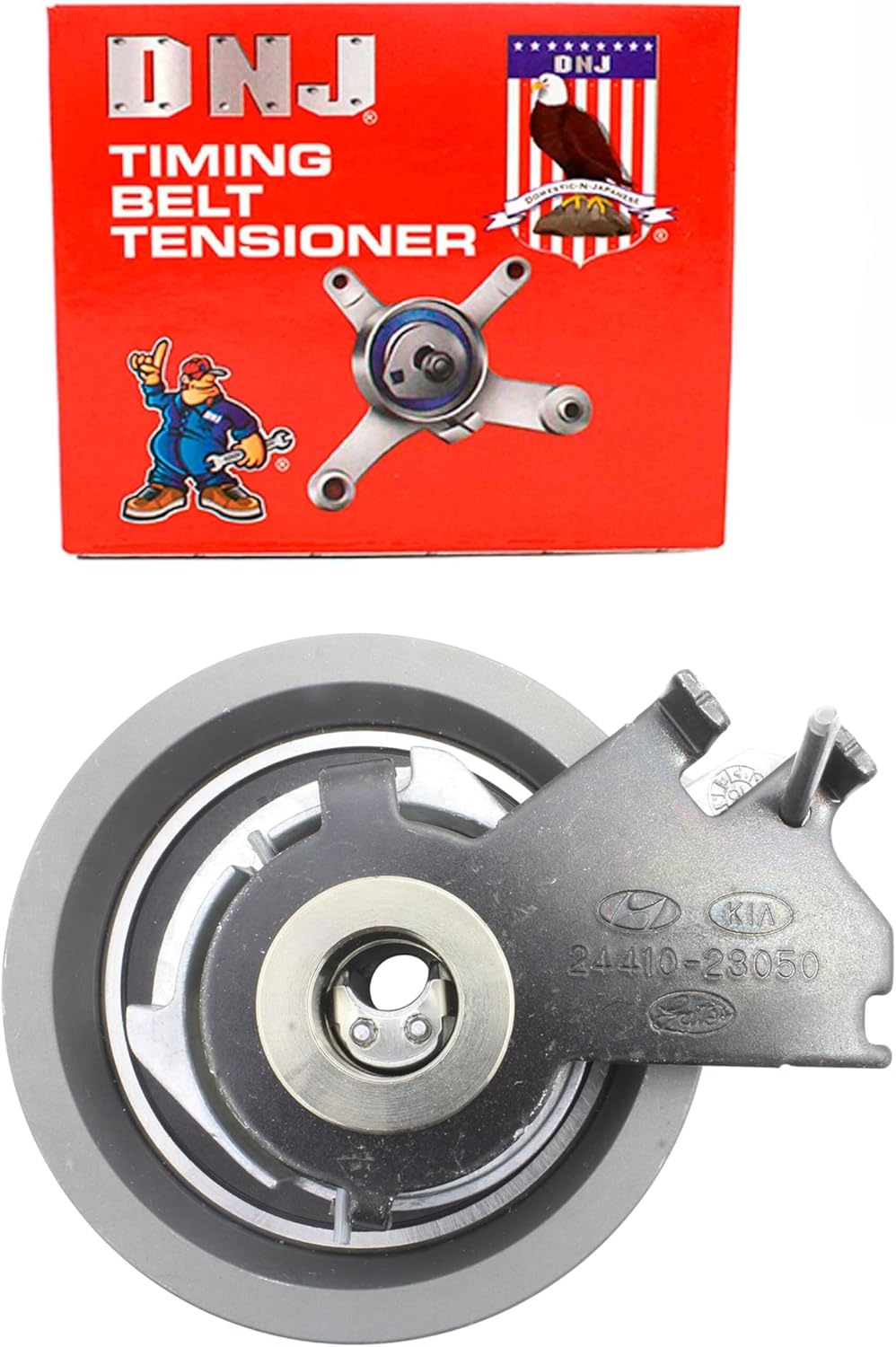
| Manufacturer | DNJ Engine Components |
|---|---|
| Model | Timing Belt Tensioner (TBT120) |
| Vehicle Fit | 2006–2012 Hyundai, Kia 2.0L L4 DOHC |
This DNJ timing belt tensioner is a direct replacement part intended for 2.0L Hyundai and Kia engines used in Elantra, Soul, Sportage, Tucson, Spectra, Spectra5, and Tiburon model years 2006–2012. Installed in the timing system, the tensioner maintains correct belt tension to prevent slippage and ensure accurate valve timing. The unit ships new, carries a limited 12-month or 12,000-mile warranty, and is marketed by a specialist engine-parts brand with a long track record. Practical benefits include straightforward fitment when your vehicle matches the listed applications and a factory-replacement form factor that simplifies routine timing-belt service. Limitations are typical for aftermarket tensioners: you must verify exact engine and production-date fitment, and replacing only the tensioner without inspecting the belt, idlers, and water pump may leave related wear unaddressed. For a reliability-focused repair, pair this tensioner with all related timing components and follow torque and installation procedures carefully.
Best for: Reliability-focused buyers who prioritize restoring factory-quality timing performance on 2006–2012 Hyundai Elantra engines and prefer brand-specific replacement parts for preventive maintenance.
Less Ideal for: Buyers looking for a full timing kit or comprehensive service solution should consider kits that include belt, idlers, and water pump rather than a single tensioner.
- Fits specified 2006–2012 Hyundai and Kia 2.0L DOHC applications for direct replacement use
- From a dedicated engine-parts supplier with a documented product model and interchange number
- New unit condition reduces risk of early failure compared with used parts
- Includes a limited 12-month or 12,000-mile warranty for basic defect coverage
- Warranty is limited to replacement of a defective product and does not cover labor or related component failures
- Fitment requires matching production date notes so parts may not suit every 2.0L vehicle without verification
Verdict A solid, brand-specific tensioner choice for restoring timing-belt tension on 2006–2012 Hyundai Elantra 2.0L engines when paired with a full timing service.
2. A-Premium Timing Belt Kit with Water Pump and Tensioner for Hyundai 2.0L

| Brand | A-Premium |
|---|---|
| Manufacturer | PremiumpartsWhosale |
| Manufacturer Part Number | APTBK030 |
| Vehicle Fitment Note | L4 2.0L engines only |
This A-Premium timing belt kit is a full-service replacement for Hyundai 2.0L engines, bundling the timing belt, tensioner, idler and a water pump with gasket so you can do the job in one go. It is intended for front-of-engine installation to synchronize camshaft and crankshaft timing, reduce noise and maintain engine efficiency. The kit’s included water pump and tensioner simplify routine timing service and avoid reusing aging components that commonly cause failures after a belt job. Buyers report good fitment on Elantra/Tucson/Sportage and generally positive durability impressions, though a few installers noted minor water-pump pulley alignment work required during installation. The product carries a one-year unlimited-mileage guarantee and is positioned as a quality aftermarket alternative to factory parts, offering convenience and lower cost than dealer-sourced components. If you want a single-purchase solution that replaces all wear items at once, this kit covers the essentials, but expect to verify pump pulley alignment during fitment and use a competent installer for best results.
Best for: Performance-oriented owners who prioritize restoring engine timing integrity and prefer replacing all wear items at once to maintain engine performance and reliability.
Less Ideal for: Owners seeking OEM-branded parts or those who want to replace only a single component rather than the entire timing assembly should consider other options.
- Complete kit includes timing belt, tensioner, idler and water pump with gasket for a single service job
- Made to fit Hyundai/Kia 2.0L engines, simplifying part matching for compatible models
- Many user reports of good fit and reliable performance, reducing need for immediate follow-up repairs
- One-year unlimited-mileage guarantee provides added confidence in aftermarket quality
- Some installers reported the water pump pulley required minor modification or drilling to fit perfectly
- Pulleys in the kit may feel less robust than higher-end OEM-brand alternatives
Verdict A convenient, quality-focused complete timing belt kit for Hyundai 2.0L engines that replaces all wear items at once, though installers should verify pump pulley fit during installation.
3. Dorman 420-102 Engine Timing Belt Tensioner

| Manufacturer | Dorman Products |
|---|---|
| Item model number | 420-102 |
| Compatible vehicles (summary) | Select Hyundai models including Santa Fe, Sonata, Tiburon, Tucson; verify Elantra fitment |
This Dorman timing belt tensioner is a budget-friendly replacement intended to restore correct belt tension after a timing belt service. It installs in place of the factory tensioner and is typically used when replacing the timing belt and pulleys to ensure proper engine timing and reduce noise. The part is engineered from durable materials to provide reliable service life and is marketed to match original fit and function on supported Hyundai models. Practical benefits include straightforward direct-replacement fitment, which simplifies installation for DIYers or independent shops, and a lower cost compared with dealer parts. Limitations are that compatibility must be confirmed for your exact Elantra trim and year before purchase and that longevity and precise calibration can vary compared with higher-end or OEM tensioners, so some installers prefer a premium unit for high-mileage or performance engines.
Best for: Budget-conscious Hyundai Elantra owners who prioritize saving on routine timing-belt maintenance and prefer a cost-effective, straightforward replacement part.
Less Ideal for: Owners planning high-mileage, performance, or long-term builds who should consider higher-end or factory-quality tensioners for potentially tighter tolerances and longer service life.
- Direct-replacement design intended to match factory fit and function
- Durable construction aimed at reliable performance during timing belt service
- Lower cost option compared with factory dealer parts
- Compatibility is application-specific so you must verify fit for your Elantra trim and year
- May not offer the same long-term tolerance or calibration consistency as higher-end factory-quality tensioners
Verdict A practical, low-cost direct-replacement tensioner for budget-minded Hyundai Elantra maintenance when verified for correct year and trim.
4. Hyundai Genuine Timing Belt Tensioner Assembly 24410-23050

| Manufacturer | Hyundai |
|---|---|
| Model | 24410-23050 |
| Voltage | 12 Volts |
This Hyundai genuine timing belt tensioner is a direct-fit replacement intended to restore proper timing belt tension when servicing the timing system. Installers typically use it during a timing belt replacement interval to ensure correct belt alignment and tensioning; the part matches factory fitment so it drops into the original mounting points without modification. Notable characteristics include factory-quality manufacturing and a packaged, ready-to-install assembly that uses the same specifications the vehicle was built with. The practical benefit is predictable performance and reduced risk of premature failure compared with low-cost aftermarket units, which reviewers report can behave like a loose spring rather than a tensioner. The main limitation is that this is a single replacement tensioner only and does not include related hardware or the belt itself, so plan to buy the full timing kit if you need water pump or belt replacement at the same time.
Best for: Buyers prioritizing reliability and low risk who want a factory-quality replacement part that matches dealer standards for timing system repairs.
Less Ideal for: DIYers on a strict budget who prefer bundled timing kits or those needing multiple timing components in one purchase should consider a full kit instead.
- Factory-quality, direct-fit replacement for compatible Hyundai engines
- Predictable spring-loaded tensioning similar to dealer-supplied parts
- Simple drop-in installation using original mounting points
- Sold as a single tensioner so related timing components are not included
- No installation instructions or hardware for a full timing kit included
Verdict Choose this OEM tensioner if you want a drop-in, factory-quality replacement to avoid the uncertainty of cheaper aftermarket tensioners.
5. AISIN BTT-501 Hydraulic Timing Belt Tensioner (Center)

| Manufacturer Part Number | BTT-501 |
|---|---|
| OEM Part Number | 13540-46030 |
| Position | Center |
| Exterior | Machined |
This Aisin BTT-501 hydraulic tensioner is a direct-fit, factory-quality timing belt tensioner intended as a like-for-like replacement. It uses a hydraulic pressurizing mechanism to absorb timing belt vibration and maintain consistent belt tension during normal driving and higher RPM operation. Typical use is as the center tensioner when servicing the timing belt assembly; because it is manufactured to original equipment standards it should simplify installation and eliminate fitment guesswork. The aluminum die-cast housing keeps weight down while offering structural strength, and buyers report straightforward installation and reliable performance in many engines. Some users have reported fitment or dimensional variance on certain engines and isolated durability complaints, so confirm exact fitment for your Elantra before installing. If you plan to replace the belt, swapping the tensioner at the same time reduces labor and helps ensure long-term timing reliability.
Best for: A balanced all-round buyer who values factory-quality replacements and wants a dependable, straightforward tensioner when servicing their timing belt on routine maintenance.
Less Ideal for: Drivers planning high-horsepower modifications or motorsport use should consider heavy-duty aftermarket tensioners designed for sustained extreme loads.
- Factory-quality design that matches original fit for straightforward installation.
- Hydraulic pressurizing mechanism reduces timing belt vibration across the RPM range.
- Aluminum die-cast construction balances light weight with structural strength.
- Sold as a single center tensioner for direct replacement during timing belt service.
- Some purchasers report fitment or dimensional differences on specific engines, so verification is required before installation.
- A minority of reviews cite premature wear under high-stress or performance use.
Verdict Aisin's BTT-501 is a solid factory-style center tensioner that makes timing belt service easier for routine Elantra maintenance, provided you confirm correct fitment first.
Choosing the Right Hyundai Elantra Timing Belt Tensioner: Key Factors to Consider
Fitment and Compatibility
Correct fitment is critical because the tensioner must match the Elantra's engine layout and mounting points to maintain proper belt tension and alignment. An improperly fitting tensioner can cause misalignment, accelerated belt wear, or interfere with nearby components. When fitment is precise, installation is straightforward and the tensioner functions as intended under engine load.
Compatibility also means confirming the tensioner matches the engine variant and model year. Always verify mounting bolt pattern, pulley offset, and tensioner orientation so the unit seats correctly and the belt tracks true across cam and crank pulleys.
Bearing and Spring Durability
The internal bearing and spring determine how reliably the tensioner holds consistent tension over time. Bearings with higher-quality seals and hardened races resist contamination and fatigue, which reduces the risk of squeal and premature failure. Likewise, a robust spring maintains consistent force through temperature cycles and belt stretch.
Failing components can lead to loss of tension, timing variability, and eventual engine damage. Prioritizing materials and construction that resist wear will extend service intervals and reduce the chance of unexpected failure.
Noise and Vibration Characteristics
A tensioner that minimizes noise and vibration improves perceived engine refinement and can signal correct operation. Excessive noise often indicates bearing wear or improper preload and can precede failure. Since many owners notice symptoms like rattling or whining from the front of the engine, choosing a tensioner with dampening features or smooth-running bearings reduces this risk.
Consider how the tensioner performs under idle and varying RPMs, and whether the design reduces resonance with the timing belt. Lower noise usually correlates with better internal tolerances and lubrication.
Material Quality and Corrosion Resistance
Materials affect longevity, especially in environments with moisture, road salt, or temperature swings. Corrosion-resistant finishes on the housing, high-grade steel in bearings, and durable polymer pulleys all contribute to long-term performance. A corroded housing or seized bearing can prevent correct tension and complicate removal at the next service.
Choosing tensioners with proven coatings and corrosion-resistant components helps maintain smooth operation and simplifies future maintenance.
Serviceability and Installation
Ease of installation matters for both professional shops and DIYers. Clear alignment marks, accessible mounting points, and compatibility with common tools reduce labor time and the chance of installation errors. Some tensioners are offered in kits with related components such as idler pulleys or seals, which can be advantageous during a timing service.
Also consider availability of installation guidance like torque specs or step notes. A design that allows controlled tensioning and straightforward locking during belt installation helps ensure correct setup and safer work practices.
FAQ
How do I know if my Hyundai Elantra timing belt tensioner is failing?
Common signs include unusual noise from the timing cover area, such as rattling or whining, and visible belt looseness or uneven wear. You may also notice engine misfires or rough idle if the belt timing shifts. Inspection often reveals a seized bearing or excessive play in the tensioner pulley.
Can I replace the timing belt tensioner myself on an Elantra?
Many mechanically inclined owners can replace the tensioner with the right tools and service manual guidance. The job requires correct alignment, torque settings, and sometimes special locking tools to hold timing components. If you are comfortable with engine timing procedures and follow documented steps, DIY replacement is feasible; otherwise seek professional help.
Should I replace the tensioner when changing the timing belt?
It is common practice to replace the tensioner during a timing belt service because the components share service life and a worn tensioner can compromise a new belt. Replacing both at the same time reduces the chance of follow-up failures and can save labor compared with separate procedures.
What causes timing tensioner noise on an Elantra?
Noise typically stems from bearing wear, loss of lubrication, or spring fatigue that allows excess pulley movement. Contaminants and corrosion can also increase friction and create audible sounds. Addressing the root cause often means replacing the tensioner rather than attempting repairs.
How long does a timing belt tensioner usually last?
Tensioner lifespan depends on driving conditions, engine design, and material quality. They often last as long as the timing belt service interval, but severe conditions can shorten life. Regular inspections at service intervals help catch early wear before it affects engine timing.
How We Chose the Best Hyundai Elantra Timing Belt Tensioner
We focused on tensioners designed specifically for Hyundai Elantra fitment and evaluated candidates across multiple technical and practical dimensions. Key criteria included precise OEM-equivalent fitment to ensure correct belt alignment, bearing and spring durability to reduce premature wear, and material quality for corrosion resistance. We also looked at noise and vibration characteristics because a quality tensioner minimizes audible tensioner noise and contributes to quieter engine operation. Ease of installation and availability of installation guidance were considered for owners doing a DIY replacement. Finally, we considered whether parts came as single units or in tensioner kits that include related components for a more complete service. We excluded units that lacked explicit Elantra fitment data, those with unclear manufacturing specifications, and items that were only generic rather than engine-specific. The list favors tensioners with verifiable technical specs and documented fitment to relevant Elantra engine years and layouts.
Our full evaluation process is outlined in our review methodology.
Conclusion
When selecting a timing belt tensioner for a Hyundai Elantra, prioritize correct fitment, durable internal components, and low-noise operation. Balancing material quality and serviceability helps ensure the unit maintains proper belt tension and minimizes risk of timing issues. Consider replacing the tensioner during a timing belt service to address wear-related tradeoffs and reduce future labor. Focus on verified fitment information and components that offer corrosion resistance and reliable bearing performance.
Explore More:
- Check out all Hyundai Elantra parts & accessories
- Explore Engine
- Browse all Auto Parts
