

Note: This article contains affiliate links. If you click on these links and make a purchase, I may earn a small commission at no extra cost to you. This helps support my research and content. Read my full affiliate disclaimer here.
Finding the right BMW 7 Series oxygen sensor matters because the sensor directly affects engine performance, fuel economy, and emissions control. A failing sensor can lead to rough idling, reduced efficiency, or trigger a check engine light, so replacing it promptly keeps the car running as intended. This guide covers our shortlisted top picks for BMW 7 Series oxygen sensors and explains the practical factors we used to evaluate them, including fitment accuracy and signal responsiveness. Read on to understand what to look for and how the options were vetted before the product list.
Looking for other parts? See all BMW 7 Series parts & accessories.
Top Picks at a Glance
| Best Reviewed A top-rated pick with lots of positive feedback | Bosch 13477 Premium Original Equipment Oxygen Sensor |  |
| Most Popular A crowd favorite that many people choose with confidence | NECATUO Upstream Oxygen Sensor (11787558073) |  |
| Best Quality Built to a higher standard if you want something more solid | Bosch 17272 Premium Original Equipment Oxygen Sensor |  |
| Best Budget The cheapest option that still gets the job done reliably | JESBEN Heated 4‑Wire Oxygen Sensor (Direct Fit) |  |
| Most Sold A high-volume bestseller chosen again and again | Bosch 17187 Premium Original Equipment Oxygen Sensor |  |
| Best Value for Money The sweet spot between price and what you get | Maxfavor Oxygen Sensor Pair (Upstream & Downstream) for BMW 3.0L Cylinder 4/5/6 |  |
| Best Overall The best all-around choice for most situations | NewYall Left/Right Upstream and Downstream Oxygen Sensor for BMW L6 3.0L |  |
1. Bosch 13477 Premium Original Equipment Oxygen Sensor

| Maximum Supply Voltage | 16 Volts (DC) |
|---|---|
| Measuring Range | 20 – 1000 °C |
| Mounting Type | Flange Mount |
| Output Type | electrical signal |
This Bosch 13477 oxygen sensor is a direct-fit, factory-quality replacement intended to restore accurate oxygen measurements for compatible BMWs. It installs like a factory part with a pre-coated thread and a matching connector, so wiring and mounting are straightforward for a DIY mechanic or technician. Notable features include a double laser-welded stainless steel body for corrosion resistance, a fast-acting heater that brings the sensor to operating temperature quickly, and full bench testing at the factory for functionality. In practice this means faster warm-up, more reliable closed-loop fueling and fewer false diagnostic codes after installation. The sensor is sold as a single unit and is built to the kind of durability expected from a long-standing supplier to the auto industry. Limitations are that fitment varies by engine and model year so you must confirm it fits the specific BMW 7 Series application, and replacing sensors on older exhaust threads can require penetrating oil or an O2 socket to remove stubborn factory units.
Best for: Reliability-focused buyers who prioritize restoring factory-level emissions control and long-term stable engine operation on their BMW 7 Series.
Less Ideal for: Buyers looking for a universal or multi-pack solution for many vehicles at once or those who need a sensor specified for non-BMW models.
- Direct-fit connector and threads pre-coated with anti-seize for easier installation
- Double laser-welded stainless steel body for corrosion resistance and longer service life
- Fast-acting heater reduces warm-up time so the sensor reaches operating temperature quickly
- Factory testing ensures each unit meets functional standards
- Compatibility depends on engine and model year so fitment must be verified before purchase
- Sold as a single sensor so replacing both banks requires buying two units
Verdict A durable, factory-quality direct-fit oxygen sensor that restores reliable emissions sensing on compatible BMW 7 Series engines when correct fitment is confirmed.
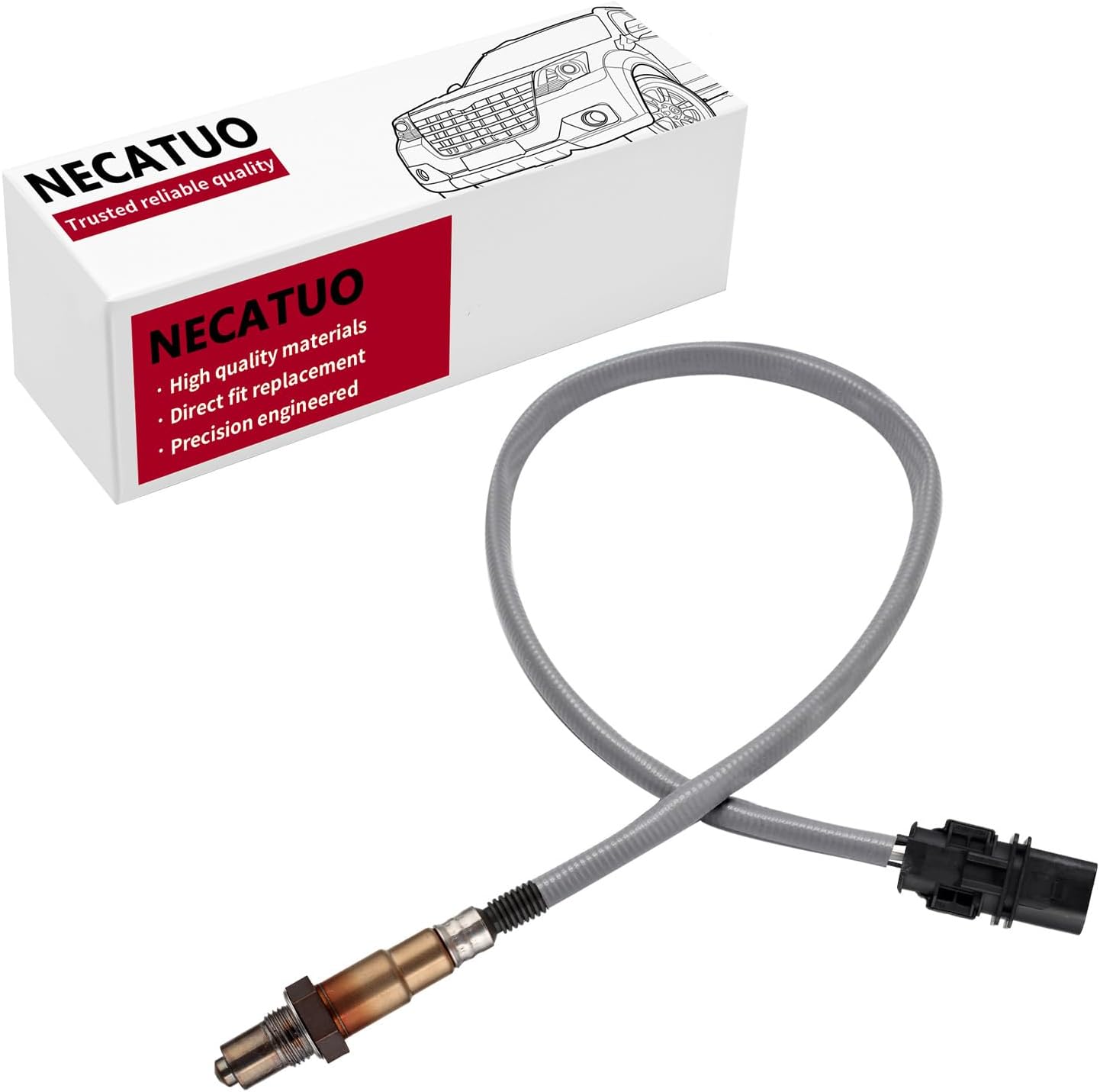
2. NECATUO Upstream Oxygen Sensor (11787558073)
| Mounting Type | Flange Mount |
|---|---|
| Output Type | Push-Pull |
| Specific Uses For Product | original equipment replacement |
| Upper Temperature Rating | 850 Degrees Celsius |
This NECATUO upstream O2 sensor is a direct-replacement style sensor designed to read exhaust oxygen before the catalytic converter and report air/fuel data to the engine control system. It is typically used to replace a failing upstream sensor that causes fuel trim errors or a check engine light. The sensor is built to flange-mount fitment and a push-pull output type, and the listing references several BMW part numbers it replaces so it aims to match factory fit and function. Practical benefits include straightforward bolt-in installation for a technician or DIYer, compatibility with many BMW 3.0L and 2.0L engines from the mid 2000s to early 2010s, and a high temperature rating that suits exhaust conditions. Some buyers report reliable clearance of CEL codes and improved drivability, while other reports indicate intermittent failures or fitment mismatches on certain vehicles, so diagnostic verification after install is recommended. If exact fit and long-term durability are critical, budget aftermarket sensors can be hit-or-miss compared with higher-end factory-quality replacements.
Best for: Convenience-driven buyers who prioritize a ready-to-install replacement that aims to match factory fit and lets a mechanic or competent DIYer quickly resolve an upstream O2 sensor code and get the BMW back on the road.
Less Ideal for: Buyers who need guaranteed long-term OEM-level durability or are restoring a high-value BMW where only brand-name factory-quality parts are acceptable should consider premium factory-quality alternatives.
- Designed as a direct replacement for specified BMW part numbers for straightforward fitment
- Flange mount and push-pull output match common factory installation style
- Upper temperature rating of 850 Degrees Celsius suited for exhaust manifold location
- Many users report the sensor clears check engine lights and restores proper air/fuel readings
- Some customers report inconsistent fit or early failure on certain vehicles
- Not supplied with vehicle-specific installation instructions or vehicle-specific connector guarantees
Verdict A convenient, flange-mount upstream O2 replacement for compatible BMW engines that can fix CEL and drivability issues but may vary in long-term reliability compared with premium factory-quality units.
3. Bosch 17272 Premium Original Equipment Oxygen Sensor

| Mounting Type | Flange Mount |
|---|---|
| Output Type | Push-Pull |
| Specific Uses For Product | Temperature |
| Material Type | Stainless Steel |
This Bosch 17272 oxygen sensor is a direct-fit replacement intended to restore proper oxygen sensing and fuel trim control on compatible BMW engines. It installs like a factory part with true direct-fit connectors and pre-coated threads, so it is commonly used when a failing upstream sensor triggers lean codes or poor fuel economy. Notable features include a double laser-welded stainless steel body for corrosion resistance, a fast-acting heater for quick warm-up, and factory-style wiring that simplifies swapping the old sensor for this unit. In practice the sensor reaches operating temperature quickly which reduces emission control delays and helps eliminate misfires or rough idle caused by a faulty sensor. Limitations are that fitment depends on engine and model year so buyers must confirm it matches the BMW 7 Series engine and sensor position, and installation may require lifts or ramps and an oxygen sensor socket for access on some models. The product is engineered for longevity but replacement still follows recommended maintenance intervals.
Best for: Performance-oriented BMW owners seeking a factory-quality replacement to restore precise air-fuel control and maintain engine performance.
Less Ideal for: Buyers looking for a universal or multi-vehicle sensor solution or those unwilling to confirm exact engine fitment and sensor position beforehand.
- Direct-fit, factory-style connector and harness for straightforward installation
- Double laser-welded stainless steel body that resists exhaust corrosion
- Fast-acting heater brings the sensor to operating temperature quickly
- Threads pre-coated with anti-seize to simplify removal and future service
- Compatibility varies by engine and model year so fit must be verified before purchase
- Access to the sensor on some BMW 7 Series engines may require lifts, ramps, or removal of underbody panels
Verdict A factory-quality, fast-heating direct-fit oxygen sensor geared toward performance-minded BMW owners who need reliable, OEM-style replacement sensing.
4. JESBEN Heated 4‑Wire Oxygen Sensor (Direct Fit)

| Mounting Type | Flange Mount |
|---|---|
| Output Type | electrical signal |
| Specific Uses For Product | Oxygen Sensor |
| Type | 4-wire |
This JESBEN oxygen sensor is a heated, 4‑wire direct‑fit replacement designed to detect exhaust oxygen and feed a voltage signal to the engine control system. It is typically used to replace a failing upstream sensor so the engine can maintain proper fuel trim and reduce emissions. The unit includes a threaded sensor body and a 4‑wire harness with a female connector for plug‑in installation; the listing cites compatibility with a range of BMW engines and several interchange part numbers. In practical terms the sensor should restore closed‑loop fueling behavior when the original sensor has degraded and can be installed with basic hand tools and an oxygen‑sensor socket. Expect the benefit of a lower replacement cost compared with factory parts and a prewired connector that avoids splicing. Limitations are mixed user reports on longevity and check‑engine‑light recurrence on some vehicles, and this aftermarket option may require careful part‑number matching to ensure correct fit and signal behavior for a BMW 7 Series application.
Best for: Budget‑conscious buyers seeking a low‑cost replacement oxygen sensor to keep an older BMW running and pass emissions checks without paying for a factory sensor.
Less Ideal for: Drivers who prioritize long‑term reliability or want guaranteed factory‑quality parts for performance or warranty reasons should consider OEM or higher‑end aftermarket sensors instead.
- Heated 4‑wire design supports closed‑loop fuel control and quick warm‑up.
- Direct‑fit threaded mounting with prewired female connector for plug‑and‑play replacement.
- Covers multiple BMW interchange part numbers for easier part matching.
- Lower cost than factory replacements, appealing for budget repairs.
- Some buyers report premature failure or return of the check engine light after installation.
- Not branded as OEM so compatibility and longevity can vary by vehicle and driving conditions.
Verdict A cost‑focused heated 4‑wire replacement that can restore fuel control for a BMW when matched carefully, but it may not match OEM longevity.
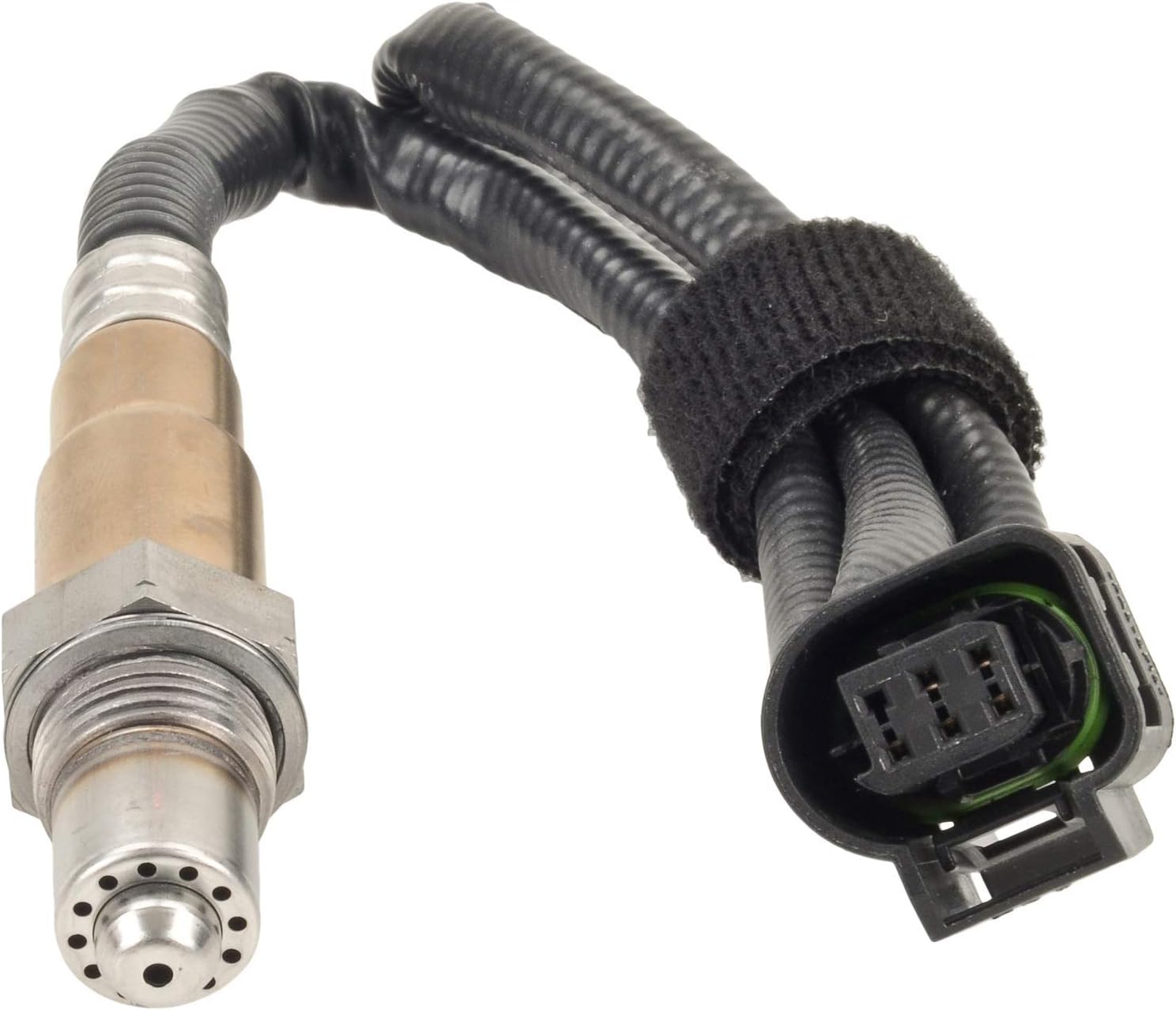
5. Bosch 17187 Premium Original Equipment Oxygen Sensor
| Maximum Supply Voltage | 15 Volts (DC) |
|---|---|
| Mounting Type | Flange Mount |
| Output Type | Push-Pull |
| Response Time | 3 seconds |
| Upper Temperature Rating | 800 Degrees Celsius |
The Bosch 17187 is a direct-fit oxygen sensor engineered to replace the factory unit in compatible BMW 7 Series and related models. It monitors exhaust oxygen to help the engine control module adjust fuel trim and emissions, and it includes a fast-acting heater so the sensor reaches operating temperature within seconds. The sensor uses a double laser-welded stainless steel body and is 100 percent function-tested, which should improve durability in the hot, corrosive exhaust environment. Installation is straightforward thanks to OEM-style connectors and pre-coated threads with anti-seize compound. In real-world use this means quick replacement and reliable communication with factory electronics, helping clear codes and restore fuel economy. Limitations to note are that fitment depends on engine and sensor position so you must verify exact compatibility for a given 7 Series chassis and that a small number of buyers reported damaged or early-failing units, suggesting occasional quality or shipping issues beyond typical manufacturing performance.
Best for: Risk-averse buyers who prioritize a factory-quality replacement and predictable, hassle-minimized repairs for BMW 7 Series ownership.
Less Ideal for: People looking for a universal or modified-sensor solution for custom exhaust work should consider purpose-built or universal alternatives instead.
- True direct-fit connectors and pre-coated threads for easier installation
- Fast-acting heater reduces warm-up time and restores sensor operation quickly
- Double laser-welded stainless steel body resists exhaust corrosion for longer service life
- 100% functional testing at the factory increases consistency between units
- Fitment varies by engine and sensor position so you must confirm exact compatibility
- A minority of buyers reported receiving damaged or early-failing sensors
Verdict A factory-style Bosch replacement that simplifies installation and restores proper emissions control for compatible BMW 7 Series models, provided you verify exact fitment.
6. Maxfavor Oxygen Sensor Pair (Upstream & Downstream) for BMW 3.0L Cylinder 4/5/6

| Maximum Supply Voltage | 12 Volts |
|---|---|
| Mounting Type | Flange Mount |
| Output Type | electrical signal |
| Specific Uses For Product | Oxygen Sensor |
| Material Type | Stainless Steel |
These Maxfavor oxygen sensors are sold as a two-pack designed to replace the upstream and downstream sensors that monitor the rear bank (cylinders 4/5/6) on compatible BMW 3.0L engines. They function like standard zirconia O2 sensors, producing an electrical signal to the engine control unit so fuel trim and catalytic converter operation can be corrected. Typical use is direct replacement during an emissions or drivability repair where the original sensors have failed or triggered fault codes. Notable features listed include flange mounting, 12 volt supply compatibility, and stainless steel construction intended for durability. In practice this set can restore closed-loop fueling and clear related check-engine lights when the sensors match the vehicle wiring and connector; reviewers report many successful installs but a few reports of erratic readings or missing heat-shield hardware. Expect budget-level pricing and adequate performance for routine replacements, but plan on verifying connector/fit visually before installation and be prepared to source OEM-style parts if you need fully guaranteed long-term stability on higher-mileage or performance BMWs.
Best for: A practical optimizer looking to repair emissions or drivability issues on a compatible BMW 3.0L with a budget-conscious mindset and willingness to verify fitment before install.
Less Ideal for: Buyers who require guaranteed factory-quality long-term durability or who prefer fully validated OEM sensors for high-mileage or performance-tuned BMW 7 Series applications should consider higher-end alternatives.
- Sold as an upstream and downstream pair so both bank sensors can be replaced together
- Designed for flange mount direct replacement on specified BMW 3.0L applications
- Stainless steel construction aimed at corrosion resistance
- Produces standard electrical signal output compatible with factory sensor inputs
- Fit and connector accessories vary by vehicle so some installers reported missing heat-shield or connector differences
- Some reviewers reported inconsistent voltage behavior on certain units requiring replacement with a different brand
Verdict A cost-conscious two-pack that can fix rear-bank O2 faults on compatible BMW 3.0L engines if you confirm connector and fit before installation.
7. NewYall Left/Right Upstream and Downstream Oxygen Sensor for BMW L6 3.0L

| Measuring Range | AFR 10-15 to AFR 14.7-1 or λ 0.67-1 to 1.33-1 |
|---|---|
| Mounting Type | Flange Mount |
| Output Type | Analog |
| Material Type | Stainless Steel |
This NewYall oxygen sensor is offered as a replacement for BMW vehicles with the L6 3.0L engine and is meant to serve in either upstream or downstream positions to monitor air-fuel ratio. It measures AFR across a broad range and provides an analog output through a flange-mount connection, so it functions like a factory-style sensor to restore emissions feedback and clear related fault codes. Typical use is a bolt-in swap where you replace a failing sensor to recover fuel trim accuracy and pass emissions checks. The stainless steel construction should resist exhaust corrosion and the sensor supports the AFR and lambda ranges needed for gasoline tuning. Expect straightforward installation on compatible BMWs, though some buyers reported occasional wiring or connector differences that required minor splicing or adaptor work. While many users noted good fit and improved driveability, a minority experienced persistent codes after installation, so verify connector compatibility and diagnostic results after fitting.
Best for: Balanced, practical BMW owners who prioritize restoring proper emissions control and engine drivability on L6 3.0L 7 Series cars without spending on dealer parts.
Less Ideal for: Owners who need guaranteed factory-direct fitment with no chance of wiring changes or those who prefer brand-name OEM parts backed by dealer diagnostics support.
- Designed for BMW L6 3.0L applications so fitment is targeted for the engine specified
- Analog AFR output with wide measuring range supports accurate air-fuel feedback
- Stainless steel body resists exhaust corrosion for durability in the exhaust stream
- Available for both upstream and downstream positions, covering multiple sensor locations
- Some vehicles may need minor wiring or connector modification for perfect plug-and-play fit
- Not all buyers cleared codes after installation, indicating possible compatibility or ECU adaptation issues
Verdict A cost-conscious replacement that restores air-fuel sensing on BMW L6 3.0L cars but check connector compatibility and post-install diagnostics before relying on it as a permanent OEM-level fix.
Choosing the Right BMW 7 Series Oxygen Sensor: Key Factors to Consider
Fitment And Connector Compatibility
Correct fitment is the foundation of a successful oxygen sensor replacement. The sensor must match the threaded bung size, reach length, and connector type used on the BMW 7 Series to ensure a secure mechanical and electrical connection.
If the sensor does not seat at the proper depth or uses an incompatible connector, it can cause poor sealing, wiring stress, or intermittent signals. Always verify that mounting threads and the harness plug match the vehicle specification to avoid installation headaches and potential false error codes.
Sensor Type And Signal Characteristics
Different sensor technologies produce different signal behaviors that affect engine management. Narrowband sensors switch around a stoichiometric voltage and are common for factory systems, while wideband sensors output a linear air-fuel ratio signal used by some control strategies and tuning applications.
Understanding the expected signal type for your BMW 7 Series circuit is crucial because the engine control unit expects specific voltage ranges and response times. A mismatch in signal characteristics can lead to incorrect fuel trims or control issues even if the physical fit is correct.
Heater Circuit Performance
Most modern oxygen sensors include an internal heater that brings the sensor up to operating temperature quickly after a cold start. Fast heater warm-up reduces warm-up enrichment time and helps the ECU reach closed-loop operation sooner, improving emissions and drivability.
When evaluating replacements, check that the heater resistance and warm-up behavior meet vehicle specifications. Poor heater performance can cause extended open-loop operation, higher emissions, and potential diagnostic trouble codes related to the heater circuit.
Response Time And Signal Stability
A sensor that responds quickly to changes in exhaust composition allows the engine control system to adjust fuel delivery more precisely. Faster response time contributes to smoother throttle response, better fuel economy, and lower emissions.
Signal stability is equally important; noisy or drifting outputs make it harder for the ECU to calculate fuel trims. Look for sensors with documented response characteristics and stable waveforms to ensure consistent engine management.
Durability And Contaminant Resistance
Oxygen sensors operate in a harsh environment with high temperatures and exposure to oil, coolant, and combustion byproducts. Durable construction and protective coatings help sensors resist contamination, thermal cycling, and electrode degradation over time.
Choosing a sensor built with robust materials and good sealing reduces the likelihood of premature failure and maintains accurate readings under prolonged service conditions. Consider sensors rated for high-temperature endurance and with design features that limit fouling.
Installation Considerations
Ease of installation affects both DIY and professional replacement. Factors such as thread anti-seize on the mounting boss, accessible wiring lengths, and clear connector latching impact how straightforward the swap will be on a BMW 7 Series.
Sensors that include installation-friendly features or match factory harness lengths reduce the chance of installation errors. Confirm the sensor orientation, wiring routing, and any required gaskets or clips before beginning the replacement to avoid rework.
FAQ
How can I tell if the BMW 7 Series oxygen sensor is failing?
Common signs often include a persistent check engine light, rough idle, decreased fuel economy, or poor throttle response. You may also notice increased tailpipe emissions or difficulty passing emissions checks. Diagnosis usually starts with reading trouble codes and checking sensor voltage behavior under different engine loads.
Do I need to replace upstream and downstream sensors at the same time?
It depends on the specific symptoms and sensor condition. Upstream sensors typically respond faster and influence fuel control, while downstream sensors monitor catalyst efficiency. If one sensor has failed due to contamination or wiring issues, the other may still be functional, but simultaneous replacement can be warranted if both show age-related degradation.
Can I test an oxygen sensor without special tools?
Basic checks like inspecting wiring and connectors, observing live voltage data with an OBD-II reader, or watching response to rapid throttle changes can reveal problems. For precise testing you may need a multimeter or an oscilloscope to measure voltage swings and response time, which gives a more definitive assessment.
Will a bad oxygen sensor cause a check engine light on the BMW 7 Series?
Yes, a failing sensor often triggers diagnostic trouble codes that illuminate the check engine light. Codes may indicate sensor circuit faults, slow response, or heater circuit failures. Intermittent connector issues can also produce stored codes even if the sensor itself is marginal.
How long do oxygen sensors usually last on this vehicle?
Sensor lifespan varies with driving conditions and engine health. They often last many tens of thousands of miles, but exposure to oil contamination, coolant leaks, or frequent short trips can shorten service life. Regular inspection and attention to engine issues can help extend sensor longevity.
Is it important to match the sensor wiring and connector when you install an oxygen sensor?
Yes, correct wiring and connector match are critical for reliable operation. A mismatched connector or swapped wires can lead to incorrect readings, heater circuit faults, or intermittent signals. Ensure the replacement mirrors the original harness configuration and secure connectors to prevent corrosion or looseness.
How We Chose the Best BMW 7 Series Oxygen Sensor
We focused on sensors that provide reliable fitment specifically for BMW 7 Series applications and accurate oxygen sensing under typical driving conditions. Key evaluation criteria included physical compatibility and connector match, sensor response time and signal stability, long-term durability against heat and contamination, wiring and harness quality, and adherence to emissions specifications and heater circuit performance. We excluded units that lacked clear vehicle-specific fitment data, sensors without heater circuit information, and parts with inconsistent quality reports. We also filtered out generic listings that did not document waveform performance or manufacturing traceability. The final selections prioritize correct electrical and mechanical fit, prompt voltage response for closed-loop control, durable materials for high-temperature longevity, and consistent heater operation for cold-start function.
Our full evaluation process is outlined in our review methodology.
Conclusion
When choosing a BMW 7 Series oxygen sensor, prioritize correct fitment and the signal type expected by the vehicle’s control system. Heater performance and response time have direct effects on emissions and drivability, while durability and proper wiring influence long-term reliability. Balance these factors based on whether you need a direct factory-equivalent replacement or are addressing a specific failure mode. Paying attention to fit, heater specs, and documented signal behavior will give the most reliable outcome for restoring engine control and reducing emissions.
Explore More:
- Check out all BMW 7 Series parts & accessories
- Explore Engine
- Browse all Auto Parts
