

Note: This article contains affiliate links. If you click on these links and make a purchase, I may earn a small commission at no extra cost to you. This helps support my research and content. Read my full affiliate disclosure here.
If you tow with a Dodge Durango, picking the right trailer hitch changes how confidently and safely you haul. The correct hitch affects load stability, tongue weight distribution, and how much payload you can tow without overstressing the vehicle.This guide shortlists seven top trailer hitches for the Dodge Durango based on capacity and fitment quality. We evaluated load ratings and installation factors so you can quickly compare options and choose a hitch that matches your towing plan.
Looking for other parts? See all Dodge Durango parts & accessories.
Top Picks at a Glance
| Best Overall The best all-around choice for most situations | Rhino USA Adjustable Aluminum Trailer Hitch with 6-Inch Drop/Rise |  |
| Best Quality Built to a higher standard if you want something more solid | CURT Class 3 Trailer Hitch with Custom Wiring Harness for Dodge Durango (2" Receiver) |  |
| Best Value The sweet spot between price and what you get | HECASA Class 3 Trailer Hitch 2" Receiver for Dodge Durango / Jeep Grand Cherokee |  |
| Best Budget The cheapest option that still gets the job done reliably | APS Rear 2" Trailer Hitch Receiver for Dodge Durango and Jeep Grand Cherokee |  |
| Highest Rated A top-rated pick with lots of positive feedback | PSAUTO Adjustable Drawbar Trailer Hitch (20,000 lb) |  |
| Most Popular A crowd favorite that many people choose with confidence | Draw-Tite 76432 Class IV Trailer Hitch, 2-Inch Receiver for Dodge Durango 2011–2026 |  |
| Best Seller A high-volume bestseller chosen again and again | CURT 13182 Class 3 Trailer Hitch, 2-Inch Receiver — Fits Select Dodge Durango and Jeep Grand Cherokee WK2 |  |
Rhino USA Adjustable Aluminum Trailer Hitch with 6-Inch Drop/Rise

| Material | Aluminum |
|---|---|
| Finish Type | Powder Coated |
| Gross Trailer Weight | 12,500 Pounds |
| Adjustability | 6 inches drop/rise |
| Receiver Size | 2-inch |
This Rhino USA adjustable trailer hitch is a versatile ball mount designed to give towing flexibility for trucks and SUVs. It uses a sliding rail to provide 6 inches of drop or rise, so you can level a trailer without changing vehicles or adding shims. The hitch includes both 2-inch and reversible 2-5/16-inch balls, letting you switch between smaller utility trailers and larger loads. Built from milled aluminum with a powder coating and stainless hardware, it stays lighter than steel while resisting corrosion and is easier to lift during installation. Rhino ships two locking pins with dust covers to secure the hitch and shank when parked. The hitch is rated to 12,500 lb GTW and 1,250 lb tongue weight at the higher ball size, making it suitable for heavy towing within those limits. Limitations are that it is intended for standard 2-inch receivers only and heavier-duty Class 5-specific applications may require a different, higher-capacity mount; the aluminum construction is lighter but not as impact-resistant as some forged steel options. For Durango owners who tow a mix of trailers, it balances strength, adjustability, and corrosion resistance.
Best for: Buyers seeking a balanced, all-round hitch solution for regular towing who prioritize flexibility and corrosion resistance while keeping installation and adjustments simple.
Less Ideal for: Drivers who need a Class 5 or specialized commercial hitch or who routinely tow the heaviest loads should consider a higher-capacity steel mount made for those demands.
- Adjustable 6-inch drop/rise rail for leveling without vehicle changes
- Dual 2" and reversible 2-5/16" balls to fit different trailer couplers
- Lightweight milled aluminum construction resists corrosion and is easier to handle
- Includes double locking hitch pins with dust covers for added security
- Designed specifically for 2-inch receivers so it will not fit nonstandard or larger receiver sizes
- Aluminum construction is less impact-resistant than heavy forged steel for extreme-duty use
Verdict: A corrosion-resistant, highly adjustable ball mount that fits 2-inch receivers and works well for Durango owners wanting a durable, versatile hitch for everyday heavy towing.
CURT Class 3 Trailer Hitch with Custom Wiring Harness for Dodge Durango (2" Receiver)

| Material Type | Alloy Steel |
|---|---|
| Receiver Size | 2" |
| Included Components | Class 3 Hitch Kit |
| Vehicle Fitment | Select Dodge Durango |
This CURT kit combines a custom-fit Class 3 receiver hitch with a vehicle-specific 4-way trailer wiring harness to give Durango owners a ready-to-install towing solution. The hitch is engineered for the Durango chassis and uses precision welding and a co-cured liquid Bonderite plus powder coat to resist rust and chips for long-term durability. It installs using existing body fasteners with no drilling in most cases, and the standard 2" receiver accepts common ball mounts, bike racks, and cargo carriers. The included wiring harness provides a plug-and-play 4-way flat output with SMT circuitry and a potted enclosure for weather resistance, simplifying trailer light hookups without splicing. Limitations to consider are that the kit is vehicle-specific (excludes SRT) so fitment must match model year, and some buyers reported issues receiving the correct harness variant. For a performance-oriented buyer this hitch delivers a robust, factory-style towing interface that prioritizes strength and corrosion protection over low-cost alternatives.
Best for: Performance-oriented Durango owners who want a factory-style, heavy-duty towing setup that emphasizes strength, corrosion resistance, and a precise vehicle fit.
Less Ideal for: Buyers who need a universal hitch solution for multiple vehicles or who prefer a hitch without vehicle-specific fitment constraints should consider other options.
- Vehicle-specific design for a precise fit to Dodge Durango chassis
- 2" receiver rated for up to 6,000 lb GTW (manufacturer rating) and compatible with common hitch accessories
- Durable dual-layer finish with liquid Bonderite undercoating and powder coat for corrosion resistance
- Included plug-and-play 4-way wiring harness with SMT circuitry and potted enclosure for weather protection
- Not compatible with SRT Durango models and requires correct year/model match for fitment
- Some customers reported receiving the wrong wiring harness variant
Verdict: A rugged, vehicle-specific Class 3 hitch kit that gives Durango owners a strong, factory-style towing interface with a plug-and-play wiring harness.
HECASA Class 3 Trailer Hitch 2" Receiver for Dodge Durango / Jeep Grand Cherokee

| Receiver size | 2 inches |
|---|---|
| Maximum towing capacity | 6000 Pounds |
| Tongue weight | 600 lbs |
| Material Type | Alloy Steel |
This HECASA Class 3 hitch provides a direct-fit, heavy-duty mounting solution for 2011–2023 Dodge Durango (excluding SRT) and 2012–2021 Jeep Grand Cherokee (excluding SRT variants) and 2022 Grand Cherokee WK. It installs to existing frame holes and includes hardware and instructions so home mechanics can complete the job with common tools; reviewers report typical install times from 15 minutes to a couple of hours depending on rusted bolts. Made from alloy steel with a powder-coated finish, the hitch resists corrosion and accepts standard 2-inch accessories such as ball mounts, bike racks, and cargo carriers. Towing specs are clearly stated at 6,000 lb gross trailer weight and 600 lb tongue weight with higher capacities listed when using weight-distribution systems. Trade-offs to note are that fit and finish vary by unit—some buyers found alignment issues requiring drilling or trimming—so expect to spend time adjusting during install if exact factory fit is required. For owners prioritizing function and load capacity over brand-new factory styling, this hitch delivers a capable, budget-conscious option.
Best for: Practical optimizers who want a sturdy, no-frills trailer hitch that restores full towing capability without paying dealer prices and who are comfortable doing or overseeing a hands-on install.
Less Ideal for: Buyers seeking a factory-identical appearance or a guaranteed bolt-in, paint-perfect fit should consider dealer or branded factory-replacement options instead.
- Vehicle-specific design for stated Durango and Grand Cherokee model years
- Class 3 2-inch receiver supports common towing accessories
- 6,000 lb gross trailer weight and 600 lb tongue weight ratings
- Alloy steel construction with powder-coated finish for corrosion resistance
- Includes installation hardware and instructions for bolt-on mounting
- Some units show fitment or alignment issues that may require drilling or modification during installation
- Not a factory-branded hitch so appearance and hang height may differ from OEM
Verdict: A budget-friendly Class 3 hitch that gives Durango and Grand Cherokee owners reliable 2-inch receiver towing capacity without the dealer markup.
APS Rear 2" Trailer Hitch Receiver for Dodge Durango and Jeep Grand Cherokee
| Material | Carbon Steel |
|---|---|
| Finish Type | Powder Coated with liquid aquence coating |
| Maximum Towing Capacity | 6000 Pounds |
| Automotive Fit Type | Vehicle Specific Fit |
| Package Contents | Includes mounting hardware and hitch cover |
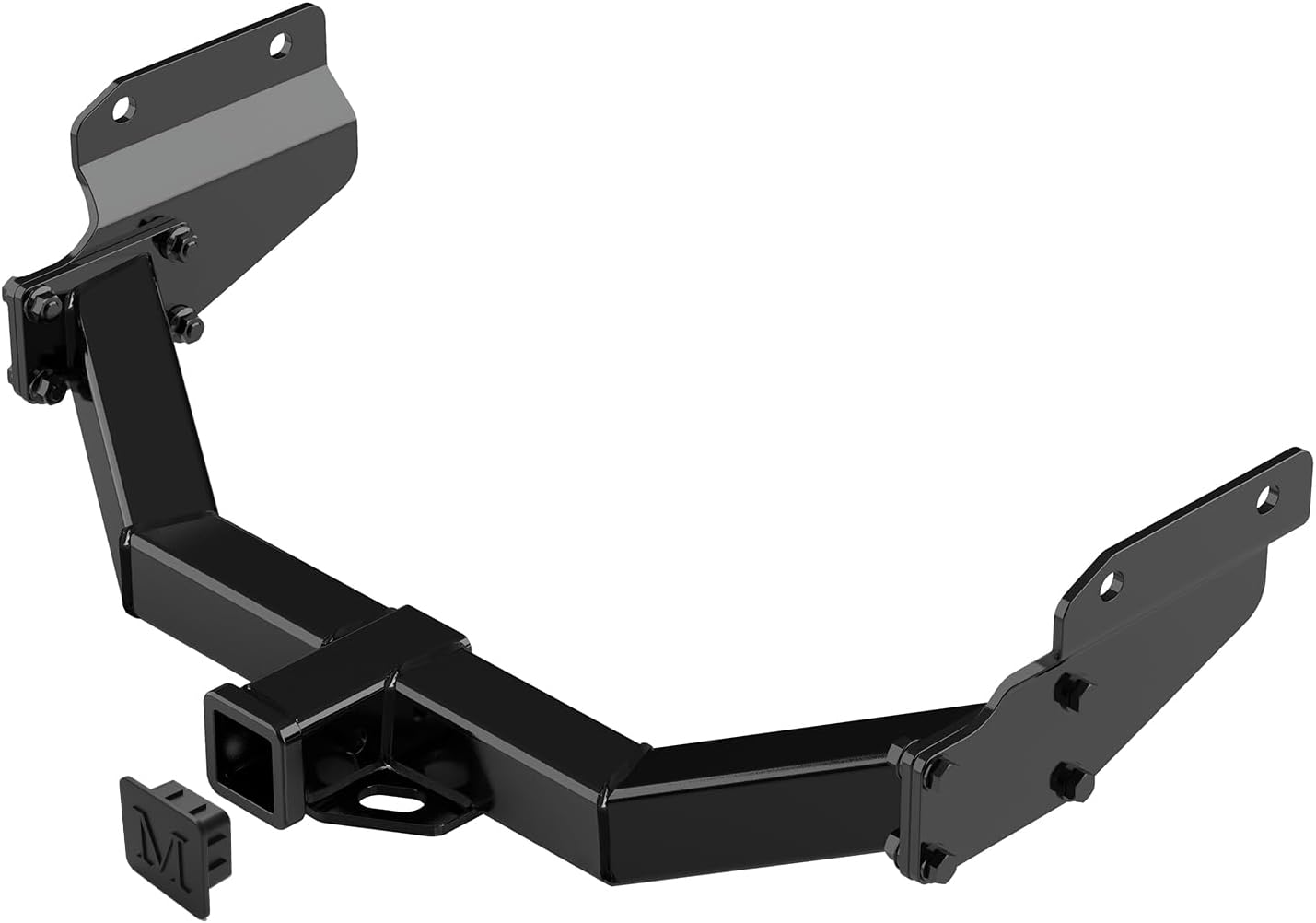
This APS 2-inch trailer hitch receiver is a vehicle-specific bolt-on replacement that installs without drilling on Dodge Durango (2011–2026) and compatible Grand Cherokee models. It provides a factory-style mount point for standard receivers and is rated for 6,000 pounds gross trailer weight with a 600 pound tongue weight (and higher ratings with weight distribution). Constructed from carbon steel with a high-gloss black powder coat and an additional corrosion-resistant liquid coating, it is intended for long-term outdoor use and resists chipping and rust. The hitch ships with mounting hardware and a hitch cover and users report straightforward installation and a solid, heavy build. Expect a budget-friendly alternative to branded hitches that performs the same function, though surface finish and cosmetic imperfections appear occasionally on new units. For towing tasks like bike racks, trailers, and general utility use on the specified Durango, it balances strength and value effectively.
Best for: Budget-conscious Durango owners prioritizing a reliable, low-cost factory-style replacement hitch for routine towing and accessory use.
Less Ideal for: Buyers seeking a show-quality finish or who need professional-grade cosmetic perfection should consider higher-end branded hitches instead.
- Vehicle-specific, bolt-on design for a direct fit to the listed Durango/Grand Cherokee models
- 6000 lb towing rating with 600 lb tongue weight for common towing needs
- High-gloss powder coat plus liquid aquence coating for improved corrosion resistance
- Includes mounting hardware and a hitch cover for a complete installation package
- Some units arrive with surface scratches or paint chips despite the advertised finish
Verdict: A strong, vehicle-specific 2-inch receiver that delivers OEM-style towing capacity and core features at a budget-friendly price.
PSAUTO Adjustable Drawbar Trailer Hitch (20,000 lb)

| Brand | PSAUTO |
|---|---|
| Material | Alloy Steel |
| Finish Type | Powder Coated |
| Pull Force | 20000 Pounds |
This PSAUTO adjustable drawbar hitch is built for heavy, repeated use and is intended to make changing ball sizes and ride height fast without swapping hitches. It installs into a standard receiver and provides a channel-style shank with multiple pin positions so you can drop or raise the ball in 1‑inch increments for leveling trailers. Notable features include a welded steel construction with powder coat and zinc plating for corrosion resistance, three silencer pads to reduce vibration, and included pins and a locking receiver pin. In use it performs as a workhorse for hauling trailers and equipment where you need flexibility between 2 and 2‑5/16 inch balls. Limits to be aware of are the practical tow rating being constrained by ball size and vehicle capability, and some users report the anti-rattle pads are less effective when using certain adapters. The included locking pin is basic and many buyers replace it with a heavier security pin for theft resistance.
Best for: Reliability-focused buyers who prioritize a rugged, flexible hitch they can depend on for frequent towing and want a single unit that handles different trailer setups.
Less Ideal for: Drivers seeking a minimalist, lightweight hitch for occasional light towing or those who prefer an integrated manufacturer-specific towing solution should consider other options.
- Solid all-steel construction designed for heavy towing and repeated use
- Adjustable channel shank with multiple pin positions for quick height adjustment
- Includes both 2 and 2-5/16 inch ball compatibility without swapping hitches
- Powder coat and zinc plating for corrosion resistance in outdoor use
- Included locking receiver pin is basic and may be replaced for better theft protection
- Anti-rattle pads can be ineffective with some adapters or when not installed optimally
Verdict: A durable, adjustable heavy-duty drawbar hitch ideal for dependable, flexible towing when paired with a vehicle capable of the required towing loads.
Draw-Tite 76432 Class IV Trailer Hitch, 2-Inch Receiver for Dodge Durango 2011–2026

| Vehicle Application | Dodge Durango 2011-2026 |
|---|---|
| Receiver Size | 2 Inch |
| Maximum Towing Capacity | 7500 Pounds |
| Maximum Tongue Weight | 1125 Pounds |
| Material | Alloy Steel |
This Draw-Tite Class 4 hitch is a custom-fit, frame-mounted 2-inch receiver made for Dodge Durango 2011–2026 that converts the rear of the vehicle for towing and accessory use. It installs using factory-style bolt points and includes the mounting hardware needed to attach a bike rack, cargo carrier, or trailer. The hitch is all-welded alloy steel with a black powder-coat finish for corrosion resistance and is tested to exceed common towing standards. In practice it gives a solid, factory-quality mounting point rated to 7,500 lb GTW and 1,125 lb tongue weight and accepts weight-distribution systems within the same rating. Installation can be involved: many owners remove the bumper or fascia and may need an extra pair of hands or a jack to position the hitch while fishing bolts through the frame. The package is sturdy and functions like a direct replacement for a factory hitch, but expect moderate installation time and basic tools to complete a clean fit-up.
Best for: Convenience-driven buyers who want a ready-made, vehicle-specific trailer hitch that converts a Durango into a tow-capable rig without custom fabrication and prioritize easy compatibility with racks and carriers.
Less Ideal for: Drivers who want a plug-and-play installation without removing trim or who prefer a dealer-installed option with professional labor included should look elsewhere.
- Vehicle-specific design for Dodge Durango 2011–2026 ensures accurate fit and alignment
- Solid all-welded alloy steel construction rated to 7,500 lb GTW and 1,125 lb tongue weight
- Black powder-coat finish resists rust and corrosion for long-term use
- Includes mounting hardware and is tested to exceed V-5 and SAE J684 standards
- Installation often requires removing the bumper or fascia and may be difficult without help
- Some customers report having to source longer or different fasteners in certain cases
Verdict: A heavy-duty, vehicle-specific hitch that delivers factory-like strength and accessory compatibility but requires moderate installation effort.
CURT 13182 Class 3 Trailer Hitch, 2-Inch Receiver — Fits Select Dodge Durango and Jeep Grand Cherokee WK2

| Vehicle Service Type | Dodge Durango, Jeep Grand Cherokee WK2 |
|---|---|
| Material | Carbon Steel |
| Finish Type | Gloss black powder coat with co-cured liquid A-coat |
| Receiver Size | 2-inch x 2-inch |
| Maximum Towing Capacity | 6,000 lbs GTW, 600 lbs TW (7,500 lbs WD, 750 lbs WDTW with weight distribution) |
This CURT Class 3 trailer hitch is a custom-fit receiver designed to mount to the rear of select Dodge Durango and Jeep Grand Cherokee WK2 models and add a standard 2-inch x 2-inch hitch receiver. It is typically used for towing small to mid-size trailers, boats, campers, and for attaching hitch-mounted accessories like cargo carriers and bike racks. Notable features include a vehicle-specific design for a precise fit, a dual-layer rust- and chip-resistant co-cured finish, and testing to SAE J684 standards. In practice the hitch installs with the factory mounting points and many owners report straightforward installation with common hand tools and minimal vehicle disassembly. The hitch supports substantial towing loads and is compatible with weight distribution systems for heavier trailers. Limitations are its vehicle-specific fit so it must match the year and model listed for proper installation and the receiver sits below the fascia which may affect bumper clearance or accessory choice.
Best for: Risk-averse mainstream buyers who prioritize a tested, vehicle-specific factory-quality replacement hitch and want a straightforward, reliable towing solution for everyday trailers and accessories.
Less Ideal for: Buyers who need a universal hitch for multiple vehicle models or those seeking a hidden or bumper-integrated hitch design should consider alternatives.
- Vehicle-specific design for a precise fit on supported Durango and Grand Cherokee WK2 models
- Rated towing capacity suitable for a wide range of trailers and compatible with weight distribution systems
- Durable dual-layer co-cured finish that resists rust, chipping and UV damage
- Standard 2-inch receiver supports common hitch accessories and configurations
- Fitment is limited to select model years and requires verification against the vehicle application
- Receiver sits below the bumper fascia which can limit ground clearance or interfere with some accessories
Verdict: A proven, vehicle-specific Class 3 hitch that gives Dodge Durango owners a durable, factory-quality 2-inch receiver and strong towing capacity.
Choosing the Right Dodge Durango Trailer Hitch: Key Factors to Consider
Weight Capacity and Tongue Weight
The hitch's maximum towing capacity and the specified tongue weight limit determine what you can safely tow. Choose a hitch whose gross towing capacity and tongue weight exceed your trailer and cargo needs to avoid overstressing the vehicle.
Underestimating tongue weight can cause rear sag, reduced steering control, and excessive wear on suspension components. Always factor in cargo, passengers, and any rear-mounted equipment when calculating expected loads.
Receiver Size and Accessory Compatibility
Receiver size dictates which ball mounts, cargo carriers, and other accessories will fit. A 2 inch receiver is common for mid-size SUV towing and supports a broad range of aftermarket accessories; larger receivers offer higher capacities but may be unnecessary for lighter loads.
Consider the types of towing and accessories you plan to use so you do not need adapters that reduce strength or create clearance issues.
Mounting Method and Fitment
A hitch that mounts to factory frame points with minimal modification preserves vehicle integrity and simplifies installation. Look for designs that align with the Durango's frame, use included hardware or existing bolts, and do not require cutting or welding when possible.
Proper fitment reduces noise, rattling, and stress concentrations at attachment points, improving long-term reliability and safety.
Corrosion Resistance and Finish
Road salt, moisture, and stones can degrade a hitch finish over time. Hitches with durable powder coats, e-coatings, or multi-stage plating resist rust and extend service life. Pay attention to welded seams and hardware finishes, as these are common failure points.
Better corrosion resistance lowers maintenance needs and preserves load-bearing integrity, especially if you operate in wet or coastal environments.
Installation Complexity and Required Tools
Installation varies from simple bolt-on jobs to more involved procedures that may require drilling or partial removal of trim. Assess the tools, time, and skill level required before attempting a DIY install. Bolts that torque to specified values and clear instructions reduce the risk of improper installation.
If you lack the tools or experience, plan for professional installation to ensure correct torque values and secure mounting; incorrect installs can compromise towing safety.
Impact on Vehicle Dynamics and Clearance
A hitch adds weight and changes how the vehicle handles under load. Heavier hitches and loaded trailers affect braking distances, cornering, and ride comfort. Choose a hitch whose weight and placement minimize negative handling effects when loaded.
Also consider ground clearance and rear departure angle, especially if you frequently travel off-pavement or over steep driveways. A design that keeps the receiver tucked up near the frame reduces snagging and scraping risks.
Why a Proper Dodge Durango Trailer Hitch Matters
Installing a Dodge Durango trailer hitch is more than adding a metal bar to the rear of your SUV. The right hitch transforms the Durango into a reliable towing platform for weekend boats, utility trailers, cargo carriers, and bike racks while preserving vehicle function and safety.
Beyond simply attaching a load, the correct hitch ensures secure integration with the Durango's frame, keeps accessory alignment predictable, and helps the vehicle handle towing loads in everyday driving. Choosing an appropriately specified hitch reduces surprises on the road and simplifies setup each time you hook up.
- Streamlines connecting and disconnecting trailers and accessories
- Improves predictability of trailer behavior during maneuvers
- Keeps cargo mounting points accessible and secure
Which Hitch Class and Receiver Size Work with the Durango
Hitch classes and receiver sizes determine what accessories and trailers the Durango can accept. A common receiver dimension for SUV towing accessories is the 2 inch hitch receiver, which supports a broad range of ball mounts, cargo carriers, and bike racks designed for mid-size SUVs.
When planning a setup, confirm the receiver opening matches the accessories you intend to use and that the hitch design aligns with your Durango's rear geometry. Some hitches place the receiver farther under the bumper for better departure angle, while others sit closer to the frame for a cleaner look and easier access.
- 2 inch receiver: wide accessory availability for bikes, cargo carriers, and light trailers
- Different hitch designs affect rear clearance and step access
- Ensure accessory shank length and rise/drop match your towing posture
Preparation and Practical Tips for Install Trailer Hitch Work
Preparing the Durango and workspace before you install trailer hitch hardware saves time and reduces risk. Park on level ground, secure the parking brake, and have torque tools, penetrating spray, and anti-seize available. If you plan to do the job yourself, review the vehicle's service manual for jack points and recommended torque values.
Deciding between DIY and professional installation depends on your comfort with vehicle underbody work, access to tools, and whether you prefer factory-style fastener reuse. For bolt-on installations, test-fit the hitch to confirm alignment before final torqueing. Keep fasteners organized and replace any that show corrosion or thread damage.
- Block wheels and use jack stands if lifting the vehicle
- Test-fit hitch and accessories before final tightening
- Replace damaged or seized fasteners rather than forcing reuse
Wiring, Brake Controllers, and Trailer Electronics
Towing safely requires more than a mechanical attachment. Proper wiring ties trailer lights, turn signals, and electric brakes into the Durango's systems. Many owners install a vehicle-specific plug harness that integrates with factory sockets for reliable operation and simplified connection.
If towing trailers with electric brakes, adding a compatible brake controller and routing its wiring with secure fasteners is essential. Modern controllers offer proportional or time-delayed control; route the wiring away from moving suspension components and heat sources, and use grommets where harnesses pass through sheet metal.
- Use vehicle-specific wiring harnesses to minimize splice work
- Mount brake controllers in an accessible, dry location inside the cabin
- Label connector ends for faster hookup and troubleshooting
Towing Techniques, Trailer Sway Mitigation, and Safe Use
How you drive while towing has a major impact on stability. Smooth throttle inputs, gradual lane changes, and increased following distance reduce sudden forces that can amplify trailer movement. Practice backing and low-speed maneuvers in an open area to get used to the Durango's length and pivot point with a trailer attached.
To mitigate trailer sway and improve control, consider weight distribution strategies for the trailer, use sway control devices when appropriate, and be mindful of crosswinds and passing large vehicles. If your setup commonly encounters mountain grades or frequent heavy loads, brake modulation techniques and downshifting can help maintain safe speeds without overheating the brakes.
- Practice backing and turns in a safe, open area before road towing
- Distribute load on the trailer for stable tracking and minimal sway
- Slow down early and avoid abrupt steering inputs when a trailer is connected
Useful Hitch Accessories and Ongoing Care for Durango Owners
A few well-chosen hitch accessories increase the Durango's versatility. Consider a locking hitch pin for security, a covered electrical plug to keep contacts clean, and a shallow-riser ball mount for easier loading of certain trailers. Cargo carriers and multi-bike racks designed for 2 inch receivers expand the vehicle's carrying capability without interior clutter.
Long-term care keeps the hitch functioning reliably. Regularly inspect mounting hardware for looseness, ensure electrical connectors are free of corrosion, and keep moving parts lubricated as recommended by accessory manufacturers. When storing accessories like racks or carriers, hang or pad them to prevent damage to the hitch finish and vehicle bumper.
- Locking pins and hitch locks deter theft of accessories
- Electrical plug covers protect contacts from moisture and debris
- Store removable accessories off the hitch when not in use to prevent wear
How We Chose the Best Dodge Durango Trailer Hitch
We prioritized fitment and rated capacity first, selecting hitches designed specifically to mount to Dodge Durango frame points and meet or exceed factory load specifications. Corrosion resistance and material quality were key, with preference for coated steel or treated finishes that extend service life in road conditions.Ease of installation and required hardware were evaluated next, focusing on designs that use existing mounting points and provide clear instructions. We assessed receiver size and compatibility with common towing accessories, plus tongue weight handling to ensure safe load distribution under typical towing scenarios.Ride and handling impact was considered by favoring hitches with minimal vehicle modification and secure frame attachment. We also looked at warranty and manufacturer support as an indicator of build confidence. Exclusions: we did not include non-frame-mounted solutions, one-off custom fabrication, or products lacking documented weight ratings for the Dodge Durango.
Our full evaluation process is outlined in our review methodology.
FAQ
How do I know what hitch class my Dodge Durango needs?
Hitch class depends on your intended towing weight and tongue weight. Many mid-size SUVs use a Class III-style capacity for common trailer tasks, but the right class depends on your trailer and load. Check the vehicle's tow rating and compare it with the hitch's gross trailer weight and tongue weight ratings to ensure both vehicle and hitch are adequate.
Can I install a trailer hitch on my Durango myself?
Some hitches are bolt-on and straightforward for a DIYer with basic tools and a torque wrench. Installation complexity depends on the hitch design and whether trim removal or temporary supports are required. If the job requires drilling, welding, or precise torqueing in hard-to-reach spots, professional installation is a safer choice.
What maintenance does a trailer hitch need?
Routine inspection for loose hardware, corrosion, and damage is important. Keep mounting bolts torqued to spec, clean and lubricate moving parts in the receiver, and touch up any chipped coatings to limit rust. Address any structural cracks or bent components immediately, as these can compromise safety.
Will adding a hitch affect my vehicle warranty or safety systems?
Properly installed hitches that use factory attachment points typically do not interfere with vehicle safety systems, but incorrect installation can. Confirm that installation does not require cutting into critical structures or altering fuel or brake lines. Consult vehicle documentation or a qualified installer if you have concerns about warranty impact or system interference.
How do I calculate the right tongue weight for my trailer setup?
Tongue weight is usually 10 to 15 percent of the trailer's loaded weight for typical trailers, though the ideal range can vary by trailer type. Measure the fully loaded trailer on a scale at the coupler or use a tongue weight scale to verify. Ensure the chosen hitch and vehicle both support the measured tongue weight.
Are hitch accessories necessary for safe towing?
Accessories such as weight distribution systems, anti-rattle devices, and quality ball mounts can improve handling and reduce wear. Whether you need them depends on trailer weight, tongue weight, and how smoothly the combination rides. Accessories help tailor the setup to your towing needs without changing the hitch itself.
Final Verdict
Choose a hitch that matches or exceeds your towing and tongue weight needs while mounting securely to the Durango frame. Prioritize a receiver size that fits the accessories you intend to use, plus a durable finish and clear installation path.Balance capacity, installation complexity, and vehicle dynamics when deciding. Paying attention to those tradeoffs ensures a safer, more predictable towing experience and helps protect the vehicle over the long term.
Explore More:
- Check out all Dodge Durango parts & accessories
- Explore Other Accessories
- Browse all Accessories
