

Note: This article contains affiliate links. If you click on these links and make a purchase, I may earn a small commission at no extra cost to you. This helps support my research and content. Read my full affiliate disclosure here.
Choosing the right Mitsubishi Eclipse flywheel matters because it directly affects clutch feel, engine responsiveness, and long-term drivetrain reliability. A worn or damaged flywheel can cause vibration, poor engagement, or unusual noise, so selecting a proper replacement or resurfacing approach prevents repeat repairs and improves driving confidence.This guide covers seven shortlisted options selected for dependable fitment and material quality. We evaluated candidates on compatibility, balancing, and durability to help you identify the right solution for the Eclipse. Read on for a concise breakdown of what to consider before making a decision.
Looking for other parts? See all Mitsubishi Eclipse parts & accessories.
Top Picks at a Glance


1. EFORTISSIMO Racing Stage 3 Clutch Kit with Integrated Flywheel (1995–1999 Mitsubishi Eclipse)
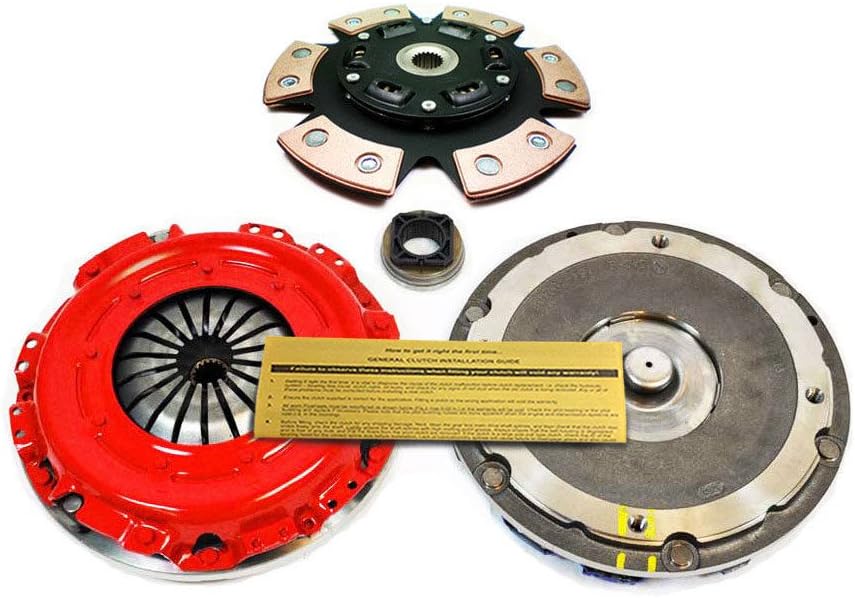
| Horsepower rating | 297 HP |
|---|---|
| Torque capacity | 276 ft/lbs |
| Disc type | Stage 3 copper-ceramic sprung (232 mm, 17 spline) |
This EFORTISSIMO Racing Stage 3 clutch kit combines a copper-ceramic sprung disc, strengthened pressure plate and an integrated heavy-duty flywheel into a single modular assembly meant to replace the factory clutch on 1995–1999 Mitsubishi Eclipse non-turbo models. It is intended for street and occasional track use where higher heat tolerance and clutch life matter more than feather-light pedal feel. The copper-ceramic friction material and heat-treated springs increase resistance to fade under load and the single-piece modular design simplifies installation because no separate flywheel resurfacing or mating is required. Practical benefits include higher torque capacity (listed at 276 ft·lbs) and a ready-to-install kit that includes a release bearing and installation guide. Limitations are a firmer engagement typical of stage 3 setups and the integrated flywheel means you cannot reuse an existing lightweight aftermarket flywheel or resurface the unit separately if it wears; repairs require replacing the full assembly.
Best for: Reliability-focused owners who want a durable, factory-replacement clutch that tolerates heat and repeated spirited driving without frequent service interventions.
Less Ideal for: Drivers seeking the lightest possible pedal, a dual-mass or lightweight aftermarket flywheel solution, or those planning high-boost power upgrades beyond the stated torque capacity should consider alternatives.
- Integrated one-piece design simplifies installation and avoids separate flywheel fitting steps.
- Copper-ceramic friction material offers higher heat tolerance and longer life under spirited driving.
- Heat-treated springs and hardened components improve durability for heavier use.
- Includes release bearing and installation guide so installers have the basic parts to complete the job.
- Modular integrated flywheel means the unit cannot be resurfaced or swapped independently of the clutch disc.
- Stage 3 engagement produces a noticeably firmer pedal and quicker bite compared with stock.
- Not intended for high-boost turbo builds beyond the listed torque rating.
Verdict A durable, ready-to-install stage 3 clutch with an integrated flywheel built for heat resistance and long service life on 1995–1999 Mitsubishi Eclipse non-turbo models.
2. LTPREMIUM Stage 2 Complete Clutch Kit with Flywheel for Mitsubishi 2.4L

| Brand | LTPREMIUM |
|---|---|
| Manufacturer Part Number | 348956PWFFK |
| Applicable Engines | 2.4L 4Cyl |
| Included Components | Clutch cover, disc, release bearing, alignment tool, flywheel, fork |
This LTPREMIUM Stage 2 complete clutch kit supplies everything needed for a full clutch service on 2.4L Mitsubishi models and includes a reinforced diaphragm pressure plate, carbon Kevlar composite friction disc, clutch release bearing, flywheel, clutch fork, and alignment tool. It is typically used as a drop-in replacement when replacing a worn clutch or upgrading for slightly higher torque capacity; the reinforced pressure plate and composite facing are intended to improve durability and life over basic stock replacements. The kit’s inclusion of the flywheel and alignment tool simplifies installation logistics by reducing parts sourcing. Expect typical installation to require transmission removal and standard mechanical skill or shop time. Limitations: Stage 2 performance means a firmer pedal and slightly more noise or chatter compared with a pure stock replacement, and buyers should confirm vehicle-year fitment before ordering since fitment is limited to specific 2004–2012 Mitsubishi 2.4L applications.
Best for: A convenience-driven buyer who wants a single kit that contains all parts needed for a clutch job on 2.4L Mitsubishi Eclipse owners seeking an easier parts-sourcing experience and a more durable replacement than basic stock kits.
Less Ideal for: Drivers who prioritize factory-smooth pedal feel and the quietest possible operation or those who need a lighter, race-oriented clutch should consider other specialized options.
- Complete kit includes pressure plate, clutch disc, release bearing, flywheel, fork, and alignment tool to avoid separate sourcing.
- Reinforced ductile cast iron pressure plate for improved strength and wear resistance.
- Carbon Kevlar composite facing on the disc for extended service life compared with basic organic facings.
- Stage 2 components produce a firmer pedal feel that may be less comfortable for daily stop-and-go driving.
- Not a direct description of OEM-level NVH tuning so may introduce more noise or slight chatter under certain conditions.
- Fitment is limited to specific 2.4L Mitsubishi model years and must be confirmed before purchase.
Verdict A convenient all-in-one Stage 2 clutch kit with flywheel for 2.4L Mitsubishi models that simplifies replacement and improves durability at the cost of a firmer pedal feel.
3. EFORTISSIMO Stage 3 Clutch Kit with Aluminum Flywheel for Mitsubishi Eclipse 3.0L

| Vehicle fit | Mitsubishi Eclipse 3.0L (2000-2005 coupe/2001-2005 Spyder; 2003-2005 GT-S variants listed) |
|---|---|
| Disc type | Stage 3 6-puck copper ceramic (MIBA) sprung disc |
| Disc diameter/spline | 225mm, 23 spline |
| Flywheel material | 6061 T6 billet aluminum |
| Flywheel spec | Meets or exceeds SFI 1.1 |
This EFORTISSIMO Stage 3 kit combines a heavy-duty pull-type pressure plate, a 6-puck copper-ceramic sprung disc, and a lightweight CNC-machined 6061 T6 aluminum flywheel to deliver faster engine response and stronger clutch engagement for the 3.0L Mitsubishi Eclipse. It is intended as a direct factory-replacement performance upgrade for street and light track use where quicker throttle response and reduced inertia matter. Notable features include the MIBA copper-ceramic puck disc with multiple friction pads for high heat resistance, a single-diaphragm pressure plate designed for increased clamp load, and a flywheel machined to SFI 1.1 spec with safety tab, stepped pin indexing, and new mounting bolts. The kit ships with release bearing, alignment tool, and an installation guide to simplify fitting. Expect crisper shifts and improved acceleration roll-on, but also a firmer engagement and more vibration at low rpm compared with stock, making it less comfortable for drivers who prioritize smooth everyday commuting. Proper installation and periodic inspection are important to maintain clutch life and flywheel torque integrity.
Best for: Performance-oriented buyers seeking a high-quality, factory-replacement clutch and lightweight flywheel package to improve throttle response and acceleration on a Mitsubishi Eclipse 3.0L for spirited street or occasional track use.
Less Ideal for: Drivers prioritizing smooth daily comfort, quiet operation, or frequent low-speed stop-and-go commuting should consider a softer street-oriented clutch instead.
- Complete kit includes pressure plate, 6-puck copper-ceramic sprung disc, release bearing, alignment tool and installation guide
- CNC-machined 6061 T6 aluminum flywheel that meets or exceeds SFI 1.1 for reduced rotational mass and durability
- Pressure plate single-diaphragm design increases clamp load for firmer engagement and higher torque capacity
- Flywheel features stepped pin, tig-welded safety tab, and new mounting bolts to improve reliability and installation safety
- 6-puck copper-ceramic disc produces a noticeably harsher engagement and increased vibration at low RPM compared with organic street discs
- Designed for performance use so clutch feel may be abrupt for daily stop-and-go driving
Verdict A high-performance clutch kit with a lightweight aluminum flywheel that sharpens throttle response and holds more power but sacrifices low-speed smoothness.
4. XTD Clutch Chrome-Moly Lightweight Flywheel for 1992–1999 Mitsubishi Eclipse GS-T (7-Bolt FWD)

| Vehicle fitment | 1992–1999 Mitsubishi Eclipse GS-T (7-bolt FWD) |
|---|---|
| Material | Forged chrome-moly |
| Included | Single lightweight flywheel |
This XTD Clutch chrome-moly flywheel is a lightweight, direct-fit replacement designed for 7-bolt FWD Mitsubishi Eclipse GS-T models from the 1992–1999 era. Forged from chrome-moly steel and precision balanced, it reduces rotational inertia compared with a stock unit, which helps the engine rev more quickly and sharpens throttle response for more engaging acceleration. The product is sold as a single 11 lb flywheel intended for professional installation and is marketed as engineered to higher strength and wear resistance than standard cast flywheels. For a budget-focused build or when replacing a worn OEM flywheel, it offers a clear performance-oriented upgrade without the complexity of multi-stage competition units. Expect slightly livelier idle and a bit less rotational mass for quicker revving, but be aware lighter flywheels can make smooth low-speed driving and shifting feel different and may increase stall risk with stock clutch setups. Fitment is limited to FWD 7-bolt turbo Eclipse GS-T models, so confirm your crank bolt pattern before buying.
Best for: Budget-conscious owners wanting a cost-effective performance upgrade to make a turbo Eclipse feel more responsive while avoiding high-end race components.
Less Ideal for: Drivers wanting a completely stock driving feel or those who need multi-vehicle fitment should look for alternatives that prioritize smooth idle and broad compatibility.
- Forged chrome-moly construction for increased strength and durability versus standard cast flywheels
- Lightweight 11 lb design reduces rotational inertia for quicker engine response and improved acceleration
- Precision-balanced to minimize vibration after installation
- Direct-fit for 7-bolt FWD Mitsubishi Eclipse GS-T models, simplifying replacement
- Lighter inertia can make low-speed drivability and clutch engagement feel harsher for street use
- Requires professional installation for safe fitment and optimal balance
- Compatibility limited to 7-bolt FWD turbo models only
Verdict A wallet-friendly forged lightweight flywheel that sharpens throttle response for 7-bolt FWD Eclipse GS-T owners but will change low-speed clutch feel.
5. Mitsubishi 1120A147 Clutch Flywheel

| Manufacturer | Mitsubishi |
|---|---|
| Brand | MITSUBISHI |
| Model | Universal |
| Manufacturer Part Number | 1120A147 |
| OEM Part Number | 1120A147 |
This Mitsubishi 1120A147 clutch flywheel is a direct replacement item meant to restore the rotating assembly in clutch repairs on compatible Mitsubishi vehicles. Installed as part of a clutch job, it replaces a worn or damaged flywheel to reestablish smooth engagement and correct starter ring gear mesh. The listing identifies it as a Mitsubishi-branded, universal-style replacement with the manufacturer part number 1120A147, which implies factory-quality fit and finish for vehicles that accept this part. Because it is a straightforward replacement flywheel, installation follows standard flywheel removal and torque procedures and is typically handled during a clutch resurfacing or full kit swap. Limitations are that the listing gives minimal fitment detail beyond the part number, so confirm compatibility specifically for the Mitsubishi Eclipse model year and engine before buying, and the product page provides little technical data such as tooth count or balance type which technicians need for precision fitment.
Best for: A risk-averse mainstream buyer seeking a factory-branded replacement part for clutch repairs on a Mitsubishi Eclipse who prioritizes brand pedigree and straightforward replacement logic.
Less Ideal for: Shoppers who need detailed technical specifications for performance tuning or exact-match verification across multiple model years should look for a listing with full fitment and spec data.
- Branded by Mitsubishi, suggesting factory-quality manufacturing and fit.
- Supplies a direct replacement part number (1120A147) for shops to verify compatibility.
- Designed for standard clutch replacement workflows, so installation follows familiar procedures.
- Listing lacks detailed technical specs such as tooth count, balance type, or material construction.
- Fitment information on the page is minimal, requiring independent verification for Eclipse model years.
Verdict A factory-branded replacement flywheel that suits buyers wanting Mitsubishi parts for an Eclipse but requires confirming exact year and engine fitment before purchase.
6. EFORTISSIMO Chromoly Lightweight Flywheel for 1992–1999 Mitsubishi Eclipse GSX / Eagle Talon TSi

| Material | 4140 forged chromoly steel |
|---|---|
| Ring gear count | 106 |
| Balance | Computer balanced |
| SFI spec | Meets or exceeds SFI 1.1 |
This EFORTISSIMO chromoly flywheel replaces the factory unit with a one-piece 4140 forged design that cuts rotational mass to sharpen engine response and help the clutch cool more effectively. It is CAD-designed, CNC-machined and computer balanced, with a milled ring gear and engineering validation to 12,000 rpm. Installation is typical for a flywheel on these AWD turbo models and it requires a 500-mile break-in after professional fitting. The reduced inertia makes throttle and rev changes feel quicker and pairs with aftermarket or factory-quality clutch kits from common brands. Practical benefits include stronger material than typical billet alternatives and an SFI 1.1 level of performance readiness. Important limitations are that it is a lightweight racing-style flywheel, so idle smoothness and drivability can be slightly harsher than a heavier stock unit, and it requires proper professional installation and break-in to avoid premature wear.
Best for: A practical optimizer looking to extract sharper throttle response from a 1992–1999 Mitsubishi Eclipse GSX or Eagle Talon TSi without spending on extreme race-only components.
Less Ideal for: Drivers who prioritize daily comfort, ultra-smooth idle, or who prefer maintenance-free stock-like behavior should consider a heavier factory-style replacement instead.
- One-piece 4140 forged chromoly construction for high strength and durability
- Significantly reduced rotational weight for faster engine response
- CAD/CNC machining and computer balancing for accurate fitment and reduced vibration
- Milled ring gear reduces risk of ring separation compared with pressed-on designs
- Engineered and tested to 12,000 rpm and meets SFI 1.1 specification
- Lightweight design can increase idle vibration and make low-speed drivability feel less smooth
- Requires professional installation and a 500-mile break-in period before full use
Verdict A strong, race-capable lightweight chromoly flywheel that improves throttle response for practical tuners of 1992–1999 Mitsubishi Eclipse GSX models while trading some idle smoothness for performance.
7. ClutchMaxPRO Heavy Duty Clutch Kit with Chromoly Flywheel for Mitsubishi Eclipse (2000–2005) 5‑Speed
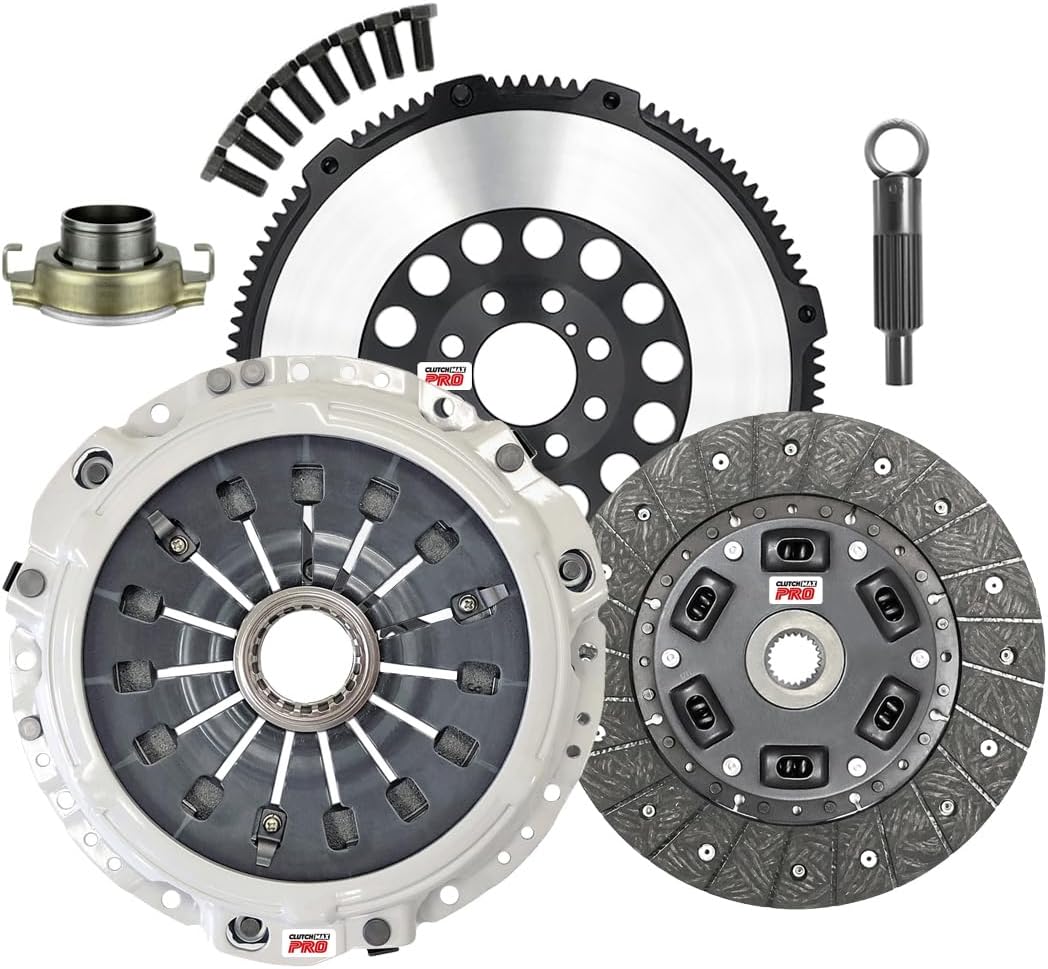
| Compatible vehicles | 2000–2005 Mitsubishi Eclipse GT/GTS 3.0L 5‑speed (F5M51‑1) |
|---|---|
| Includes | Chromoly flywheel, pressure plate, clutch disc, release bearing, alignment tool, bolts |
| Clutch disc size | 8‑7/8" x 1" x 23 spline |
This ClutchMaxPRO kit pairs a chromoly lightweight flywheel with a premium heavy‑duty pressure plate and clutch disc to provide a full clutch replacement for 2000–2005 Mitsubishi Eclipse GT/GTS 3.0L 5‑speed models. It is intended for direct replacement during a clutch job and ships with the flywheel, pressure plate, clutch disc, release bearing, alignment tool and mounting bolts so a technician has what is needed for installation. The chromoly flywheel reduces rotational mass for crisper throttle response while the HD pressure plate and disc aim to handle more load than a basic replacement. Buyers will appreciate the factory‑style fitment approach and the inclusion of hardware to streamline installation. Some customers reported durability concerns under heavy use, so this kit is best if you want a balance of performance and daily drivability rather than a motorsport clutch; professional installation is recommended. The manufacturer offers technical support and a limited warranty for peace of mind.
Best for: A balanced all‑round buyer who wants a single complete clutch package that improves responsiveness while remaining suitable for daily driving and occasional spirited use.
Less Ideal for: Not the best choice for track‑focused drivers or heavily modified engines that need an aggressive performance or race clutch designed for sustained high heat and extreme torque.
- Includes chromoly lightweight flywheel plus pressure plate, disc, release bearing and alignment tool for a complete kit
- Chromoly flywheel lowers rotational mass for sharper throttle response
- Designed to match factory fitment for direct replacement on specified Mitsubishi Eclipse models
- Ships with mounting bolts and installation guide to simplify professional fitting
- Some users reported premature wear or performance loss under heavy use
- Limited warranty period and support conditions may not cover all long‑term issues
Verdict A complete, factory‑fit clutch kit with a chromoly flywheel that balances improved throttle response and everyday drivability for 2000–2005 Mitsubishi Eclipse owners.
Choosing the Right Mitsubishi Eclipse Flywheel: Key Factors to Consider
Compatibility and Fitment
Correct fitment is fundamental because the flywheel must match the Mitsubishi Eclipse crank flange, bolt pattern, and starter engagement. An incorrectly sized or misaligned unit can cause poor starter engagement, uneven clutch contact, and accelerated wear.
Verify bolt circle, dowel locations, and ring gear orientation before buying. Also check whether the flywheel is specified for manual transmission variants or requires any adapter for specific engine options. Choosing a flywheel with explicit Eclipse fitment reduces installation time and the chance of driveability problems.
Material and Heat Treatment
Flywheels are typically made from cast iron, steel, or billet materials, each with different thermal and wear characteristics. Material choice affects how the flywheel handles heat from clutch slippage and whether it is prone to cracking or warping under stress.
Look for information about heat treatment or surface hardening because those processes increase resistance to hot spots and glazing. A well-treated surface also holds up better to repeated clutch engagement and reduces the need for premature resurfacing.
Balancing and Runout
Proper balancing and low runout are essential to prevent vibration at idle and during acceleration. An unbalanced flywheel transmits unwanted forces through the crankshaft, which can lead to noise, bearing wear, and driver discomfort.
Manufacturers that specify dynamic balance values and runout tolerances help ensure smoother operation. If precise balancing data is unavailable, plan for a professional check during installation to confirm acceptable vibration levels.
Surface Condition and Resurfacing Needs
The condition of the friction surface determines whether the flywheel is ready for a new clutch or requires resurfacing. Scoring, heat checking, or uneven wear will compromise clutch contact and cause chatter or slipping.
Decide whether to purchase a pre-machined, ready-to-install unit or a unit intended for resurfacing. If resurfacing is needed, professional machining to correct flatness and surface finish will be required to achieve reliable engagement and longevity.
Weight and Inertia Characteristics
Flywheel weight affects engine response and clutch feel. A heavier flywheel increases rotational inertia, smoothing low-end torque but slowing throttle response. A lighter flywheel reduces inertia for quicker engine revving but can make low-speed control more challenging.
Consider your driving style and whether you prioritize street drivability or performance responsiveness. Matching inertia characteristics with your clutch and driving demands helps maintain consistent engagement and reduces shock loading on drivetrain components.
Installation and Serviceability
Ease of installation and the availability of replacement or service options matter for long-term ownership. Some flywheels come ready-to-install, while others require ring gear transfer or machining, which adds labor and complexity.
Check if the flywheel requires special tools or torque specs for installation, and whether the unit allows for future resurfacing. Ensuring that service instructions and torque procedures are available will reduce the risk of installation errors and future maintenance headaches.
FAQ
What are common Mitsubishi Eclipse flywheel symptoms I should watch for?
Common symptoms often include vibration at idle or during clutch engagement, abnormal noise from the bellhousing area, and slipping or grabbing when shifting. These signs usually indicate wear, hot spots, or imbalance. A technician can diagnose the exact cause by inspecting surface condition, runout, and mounting hardware.
Can a flywheel be resurfaced instead of replaced on a Mitsubishi Eclipse?
Often resurfacing is possible when the damage is limited to surface wear or light heat checking. Resurfacing restores flatness and surface finish, improving clutch contact. However, if the flywheel has deep cracks, excessive runout, or altered material properties, replacement is usually the safer option.
How does flywheel vibration show up while driving the Eclipse?
Vibration may be noticeable as a shudder during idle, a judder when releasing the clutch, or a rhythmic shake at certain engine speeds. These behaviors often depend on the severity and source of imbalance. Identifying whether the vibration correlates with engine RPM helps isolate the flywheel from other drivetrain causes.
Is a dual mass flywheel necessary for a Mitsubishi Eclipse?
Whether a dual mass flywheel is appropriate depends on the vehicle specification and the desired tradeoffs between noise isolation and long-term durability. Dual mass designs reduce vibration and drivetrain harshness but can be more complex to service. Consult vehicle-specific documentation to determine if a dual mass option matches your Eclipse configuration.
What should I expect during Mitsubishi Eclipse flywheel installation?
Installation typically involves securing the flywheel to the crank with correct torque sequencing and verifying ring gear and starter alignment. Proper torque, thread locking where specified, and checking runout are important steps. If resurfacing or ring gear transfer is needed, allow extra time for machining or precise fitment checks.
How do I know if flywheel noise requires replacement or just adjustment?
Noise can stem from surface issues, loose fasteners, starter engagement, or imbalance. If inspection reveals scoring, heat damage, or movement at the mounting interface, replacement or machining may be required. If the issue is caused by loose bolts or misalignment, correcting hardware and re-torquing can resolve the noise without replacing the flywheel.
How We Chose the Best Mitsubishi Eclipse Flywheel
We focused on fitment accuracy to the Mitsubishi Eclipse powertrain and consistent manufacturing tolerances that affect clutch engagement. Material construction and heat treatment were considered because they influence wear resistance, warping tendency, and the need for later resurfacing. Balancing and runout specifications were included to limit vibration and ensure smooth idle and takeoff. Mounting hole patterns, ring gear condition, and whether the unit requires resurfacing or is ready-to-install were also judged. Lastly, durability indicators such as hardness and corrosion protection were used to estimate service life under normal driving conditions.We excluded flywheels lacking clear vehicle fitment data, parts with undocumented material specs, and units that required extensive modification to install. The final list emphasizes options that align with common Eclipse driveline setups and that minimize the risk of secondary clutch or transmission issues.
Our full evaluation process is outlined in our review methodology.
Conclusion
Pick a flywheel that matches your Mitsubishi Eclipse bolt pattern and drivetrain specifications, and prioritize material quality, balance, and surface condition. Balance the tradeoff between weight and inertia based on whether you prefer smoother low-speed behavior or faster engine response.If the surface shows only minor wear, resurfacing can extend service life, but deep damage or excessive runout calls for replacement. Proper installation and verifying runout and torque specs will help avoid vibration and ensure reliable clutch performance.
Explore More:
- Check out all Mitsubishi Eclipse parts & accessories
- Explore Flywheels Maintenance & Repair Guides
- Explore Transmission & Drivetrain
- Browse all Auto Parts
