

Note: This article contains affiliate links. If you click on these links and make a purchase, I may earn a small commission at no extra cost to you. This helps support my research and content. Read my full affiliate disclosure here.
Replacing the timing belt on a Mitsubishi Eclipse is a critical maintenance task that affects engine reliability and performance. Choosing the right timing belt ensures correct valve timing, reduces the risk of catastrophic engine damage, and can extend the life of other timing components. This guide highlights seven shortlisted timing belts selected for compatibility and durability. We evaluated each option for fitment accuracy, material quality, and ease of installation to help you pick a reliable replacement. Read on for practical guidance before you begin the job.
Looking for other parts? See all Mitsubishi Eclipse parts & accessories.
Top Picks at a Glance
| Best Reviewed A top-rated pick with lots of positive feedback | MOCA Timing Belt Kit with Water Pump for 2.4L Mitsubishi Eclipse |  |
| Most Popular A crowd favorite that many people choose with confidence | Daysyore Timing Belt Kit with Water Pump for 2004–2007 Mitsubishi 2.4L (4G69) |  |
| Best Quality Built to a higher standard if you want something more solid | ACDelco Professional Timing Belt Kit with Water Pump (TCKWP329) |  |
| Best Budget The cheapest option that still gets the job done reliably | MOCA Timing Belt Kit for 2008–2012 Mitsubishi Eclipse / 2007–2012 Mitsubishi Galant 2.4L |  |
| Most Sold A high-volume bestseller chosen again and again | Dayco WP287K1A Timing Belt Kit |  |
| Best Value for Money The sweet spot between price and what you get | DNJ Timing Belt Kit for 1995–2005 Chrysler/Dodge/Mitsubishi 2.5–3.0L V6 |  |
| Best Overall The best all-around choice for most situations | A-Premium Timing Belt Kit with Water Pump for Mitsubishi Eclipse 3.8L |  |
1. MOCA Timing Belt Kit with Water Pump for 2.4L Mitsubishi Eclipse
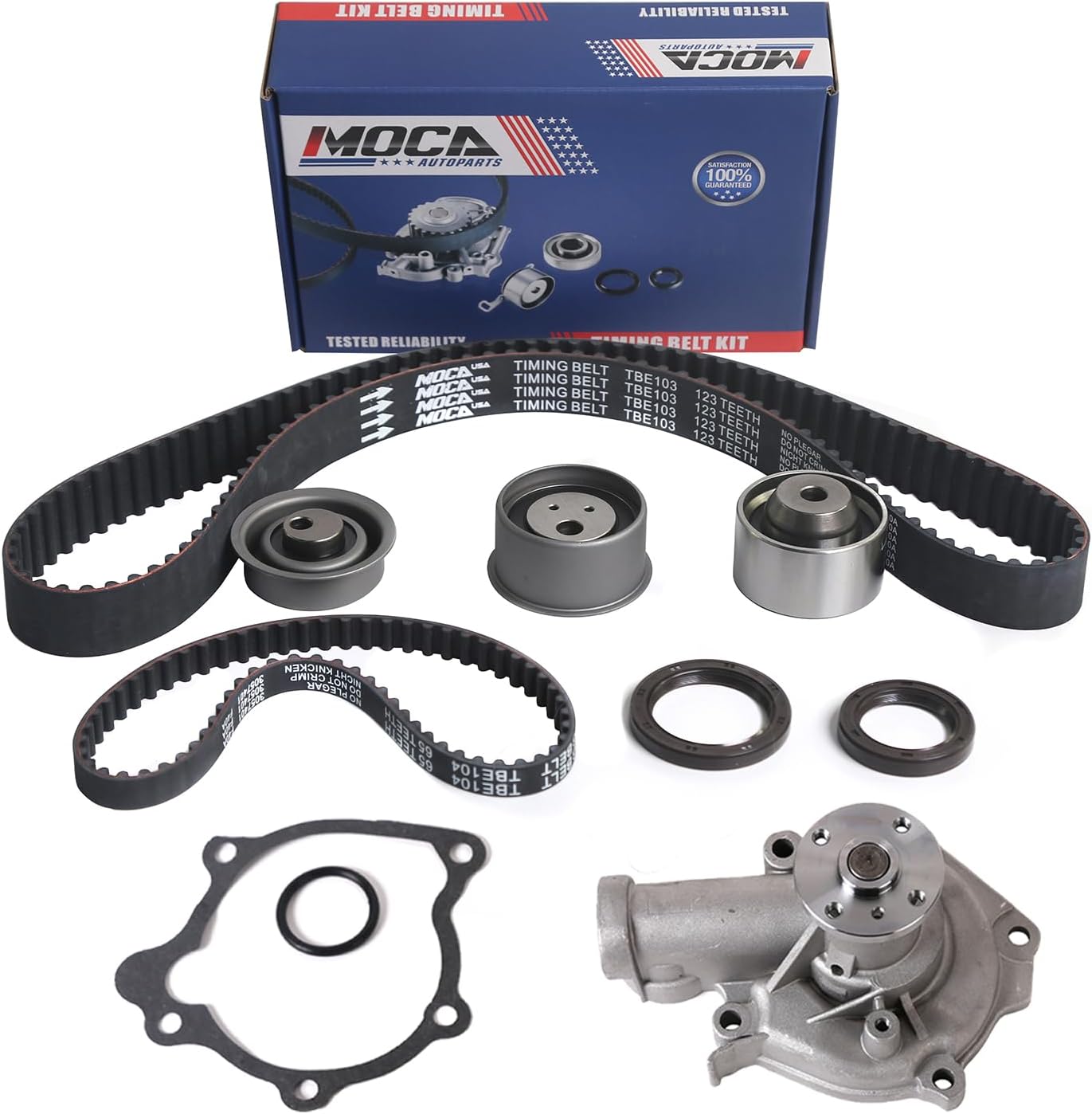
| Fitment engine | 2.4L Mitsubishi Eclipse |
|---|---|
| Package contents | 2 timing belts, 3 tensioners, 2 seals, 1 water pump |
| Manufacturer | MOCA AUTOPARTS |
| Item model number | 2522321 |
This MOCA timing belt kit supplies the main wear parts needed when servicing the 2.4L Mitsubishi Eclipse timing system: dual timing belts, tensioners, seals, and a replacement water pump. It is intended for a full timing service where you remove the old belts and associated components and install the new kit to restore correct timing and coolant circulation. Notable features include two belts for the engine layout, three tensioners to reestablish proper belt tension, and the included water pump to avoid doing the job twice. For a reliability-focused owner this kit reduces the risk of future failures by replacing all critical items at once and the manufacturer states components meet or exceed factory performance. Limitations are typical of aftermarket kits: fitment must be verified for specific model years and professional installation is recommended to ensure timing marks and torque specs are correct. The kit does not include step-by-step installation instructions or OEM-branded fasteners, so expect to reuse or source original bolts as needed.
Best for: Reliability-focused owners who prioritize replacing all timing components in a single service to minimize future failures and maintenance downtime.
Less Ideal for: Owners who prefer dealer-branded parts, need a kit with OEM fasteners, or plan to do only a partial repair without replacing all components.
- Complete overhaul kit replaces belts, tensioners, seals and water pump in one purchase
- Includes a replacement water pump to avoid separate coolant-system work
- Manufacturer states components meet or exceed factory performance standards
- Multiple tensioners provided for correct belt routing and tension restoration
- No OEM-branded fasteners or detailed installation guide included
- Fitment must be confirmed for exact Eclipse model years before installation
Verdict A full, reliability-oriented timing kit for the 2.4L Mitsubishi Eclipse that replaces all wear items at once but requires confirming year fitment and professional installation.
2. Daysyore Timing Belt Kit with Water Pump for 2004–2007 Mitsubishi 2.4L (4G69)
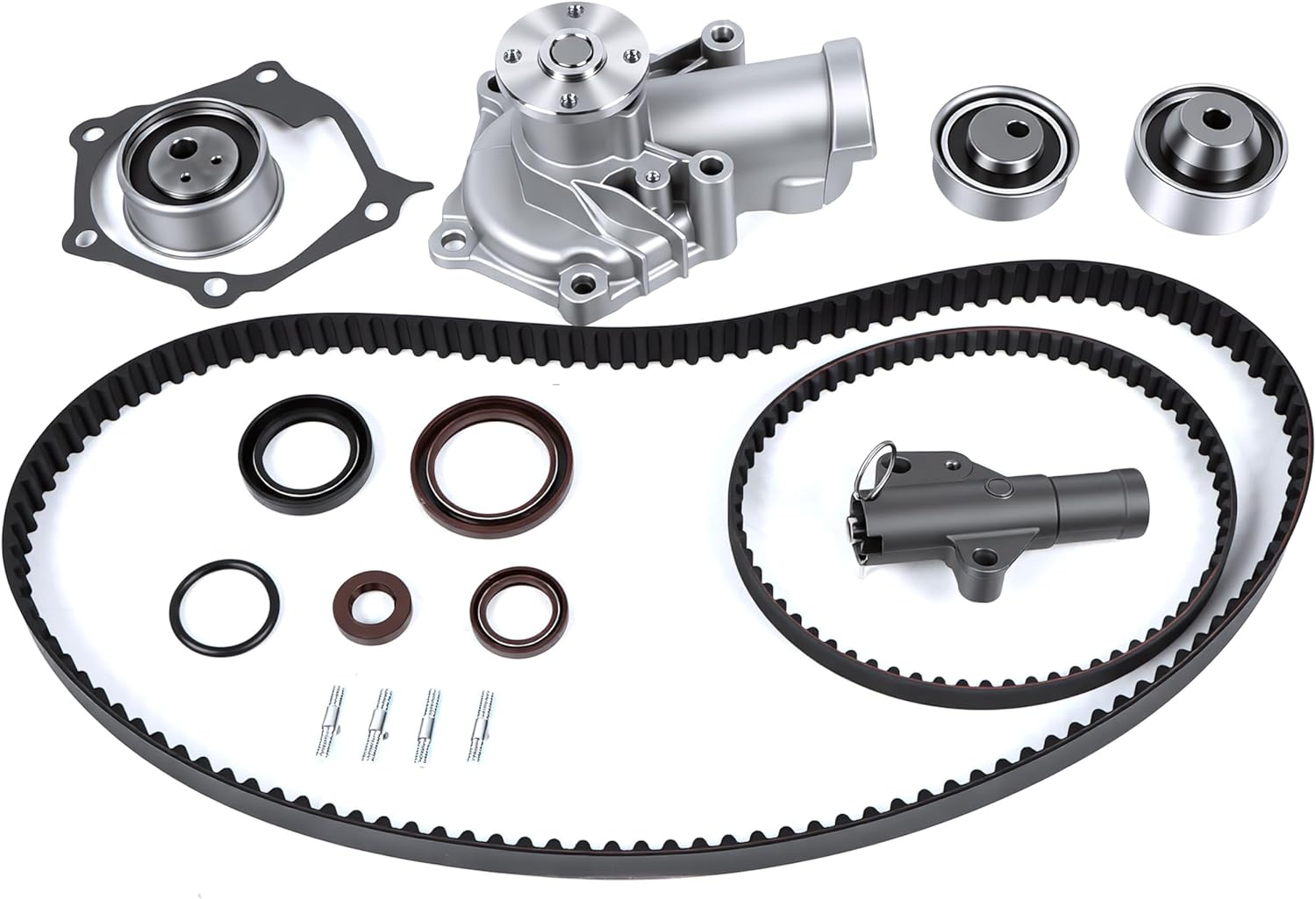
| Fitment engine code | 4G69 |
|---|---|
| Compatible models | 2004–2006 Galant/Lancer/Outlander; 2006–2007 Eclipse 2.4L |
| Part numbers listed | MR994968, MR984778, MR984375, MN137247, MD352473, 1300A066 |
This Daysyore timing belt kit bundles a replacement timing belt, water pump, tensioners and related components intended as a direct-fit replacement for Mitsubishi 2.4L 4G69 engines (Galant, Lancer, Outlander and Eclipse years listed). It is used when performing scheduled timing service or replacing a failing water pump to avoid a second teardown. The kit claims high-temperature resistant materials and metal components for stable performance, and the package is marketed as easy to install for someone familiar with belt service. Practical benefits include getting all required parts in one purchase and replacing both belt and pump at the same interval to reduce labor redundancy. Limitations to note are that some buyers report fitment inconsistencies across vehicle variants so you must verify part numbers and photos against your car before installing, and this is an aftermarket option rather than a factory-branded part which may display variable long-term durability between vehicles.
Best for: Convenience-driven owners who prioritize a single, ready-to-install kit to complete timing belt and water pump service quickly and reduce the chance of a second labor event.
Less Ideal for: Buyers seeking an exact factory-branded replacement or those unwilling to verify part numbers and photos against their vehicle should consider OEM-sourced components or professional verification.
- All-in-one kit includes timing belt, water pump and tensioning components for a full service job
- Manufactured materials and construction designed for high-temperature resistance and stable timing control
- Targets specific Mitsubishi 4G69 engine fitment so parts match common service items
- Saves time and labor by combining belt and pump replacement in a single purchase
- Some customers report incompatible or missing parts for certain vehicle variants so double-check fitment before installation
- Aftermarket item with potential variability in long-term durability compared with factory-branded parts
Verdict A convenient, full-service aftermarket kit for 4G69 Mitsubishi 2.4L engines that saves time but requires careful fitment verification before buy.
3. ACDelco Professional Timing Belt Kit with Water Pump (TCKWP329)
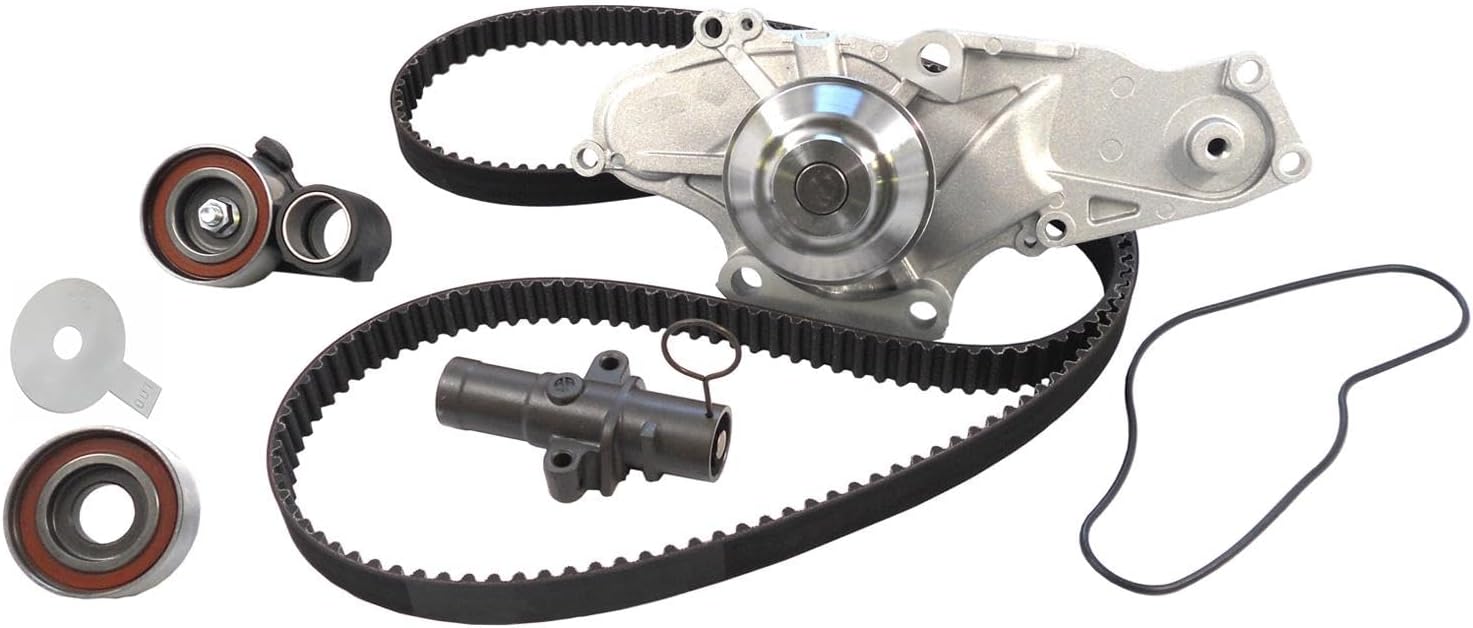
| Brand | ACDelco |
|---|---|
| Automotive Fit Type | Vehicle Specific Fit |
| Manufacturer Part Number | 19253929 |
This ACDelco Professional timing belt kit bundles the belt, water pump, idler pulleys, and tensioners plus supporting hardware and instructions to replace the timing components in a single service. It is meant to be used when performing a timing belt service and is especially useful when you want the water pump replaced at the same time. The parts are packaged for vehicle-specific fit and several reports compare the pump and belt favorably to factory-quality parts, and some internal components come from reputable suppliers. For a performance-oriented owner the benefit is a consolidated, matched set that reduces part-sourcing risk and helps preserve engine timing and cooling system reliability after installation. Expect the install to require proper tools and some mechanical experience because access and crank pulley removal can be difficult on many engines. This kit focuses on providing high-quality replacement components rather than installation ease or additional specialty tools.
Best for: Performance-oriented owners who prioritize dependable, matched replacement components and want a consolidated timing service solution to maintain engine performance.
Less Ideal for: Buyers seeking an easy DIY install without special tools or those who prefer sourcing individual aftermarket brands for each component.
- Complete kit includes belt, water pump, tensioners, idlers, and hardware for one-stop servicing
- Components are reported to match factory fit and function and include parts from known suppliers
- Water pump included eliminates the need for a separate part order and aligns service intervals
- Detailed installation instructions are provided to aid correct assembly
- Installation can be labor-intensive and may require specialty tools for crank pulley removal
- Water pump and some components are manufactured in multiple locations which may concern buyers seeking single-origin parts
Verdict A complete, performance-minded timing kit that matches factory fit and lets you replace belt and water pump together, but plan for a challenging installation.
4. MOCA Timing Belt Kit for 2008–2012 Mitsubishi Eclipse / 2007–2012 Mitsubishi Galant 2.4L

| Vehicle fit | 2008–2012 Mitsubishi Eclipse 2.4L; 2007–2012 Mitsubishi Galant 2.4L |
|---|---|
| Timing belt teeth | 122 teeth |
| Balance shaft belt teeth | 65 teeth |
| Included hardware | Tensioner and idler pulleys (3) and installation hardware |
This MOCA timing belt kit is a complete aftermarket replacement for the 2.4L Mitsubishi Eclipse and Galant applications, supplying the main timing belt, balance shaft belt, three tensioner/idler pulleys, and installation hardware. It is designed for DIY or professional timing system service where you need all the wear items replaced at once. The kit advertises reinforced belts and factory-style tensioners to restore correct belt tension and timing operation, and it includes installation instructions to simplify fitment. For a budget kit it covers the whole job so you do not need to source individual parts, and the included pulleys and hardware can save time during a belt job. Limitations are typical for value aftermarket kits: component longevity and precision may vary compared with higher-end or factory replacement parts, and buyers who prefer OEM-sourced components may prefer a factory-quality alternative. Verify vehicle year and engine match before ordering and follow torque and timing procedures during installation.
Best for: Budget-conscious owners doing a full timing service who prioritize getting all replacement parts in one package to save time and money.
Less Ideal for: Buyers who require factory-sourced parts, certified performance upgrades, or elevated long-term durability should consider higher-end or dealer options instead.
- Complete kit includes main timing belt, balance shaft belt, tensioner and idler pulleys, and hardware for a full timing service.
- Designed to match factory fit and function for the listed Mitsubishi 2.4L engines, simplifying installation and part selection.
- Reinforced belt construction intended for quieter operation and improved wear compared with unspecified low-end belts.
- Aftermarket components may not match the long-term durability or precision of factory-quality parts.
- Limited documentation on individual component brands and manufacturing tolerances.
Verdict A low-cost, all-in-one timing belt kit that gets most DIY and budget-focused Mitsubishi 2.4L timing jobs done, with the usual durability trade-offs of aftermarket components.
5. Dayco WP287K1A Timing Belt Kit

| Brand | Dayco |
|---|---|
| Item model number | DAYWP287K1A |
| Manufacturer Part Number | WP287K1A |
| Item Weight | 5.8 pounds |
This Dayco WP287K1A timing belt kit supplies the core components needed when servicing the timing system on a Mitsubishi Eclipse. Intended as a full-service replacement kit, it includes a molded cog timing belt with a non-stretch glass fiber cord and the typical complementary components you replace during the job. Dayco advertises quiet operation and abrasion-resistant, self-lubricating fabric for longer belt life, which translates to smoother, less noisy running compared with cheaper belts. The kit arrives as a single package designed to simplify a scheduled timing service and reduce the risk of leaving worn parts in place. Limitations are the lack of detailed fitment notes in the listing and no vehicle-specific instructions provided here, so verify exact compatibility with your Eclipse year and engine before installation. Professional installation or careful following of factory procedures is recommended because timing work is critical to engine health.
Best for: Risk-averse mainstream buyers who prioritize replacing the whole timing assembly with a reputable, factory-quality kit during scheduled maintenance to avoid premature failures.
Less Ideal for: Drivers looking for performance upgrades or model-specific high-performance kits should consider specialty options tailored to their engine and power goals.
- Kit includes the primary timing belt and accompanying timing components to complete a service in one purchase
- Molded cog design and glass fiber non-stretch cord aimed at stable timing and longer service life
- Materials promoted for quiet operation and abrasion resistance to improve durability
- Packaged as a single manufacturer kit to reduce parts mismatch risk
- Listing does not include explicit vehicle-year fitment or detailed installation instructions
- No indication of upgraded performance parts beyond factory-style replacement
Verdict A dependable, factory-style timing belt kit from a known supplier that simplifies scheduled timing replacement on compatible Mitsubishi Eclipse models.
6. DNJ Timing Belt Kit for 1995–2005 Chrysler/Dodge/Mitsubishi 2.5–3.0L V6

| Fits engines | 2.5L–3.0L V6 24V SOHC |
|---|---|
| Model years | 1995–2005 Mitsubishi Eclipse |
| Kit contents | Timing belt, timing seal, cam seal, tensioner bearings |
| Manufacturer | DNJ ENGINE COMPONENTS |
This DNJ timing belt kit supplies the belt, seals, cam seal, and tensioner bearings needed when servicing the timing system on 1995–2005 Mitsubishi Eclipse 2.5–3.0L V6 engines. It is intended for a full timing service and is used during routine maintenance or when replacing a worn belt to avoid catastrophic engine damage. The kit’s claim to OEM-fit means the parts are shaped to match factory mounting points so installation follows the same steps as a factory replacement. Buyers will appreciate getting all core items in one package which simplifies the job and reduces parts-sourcing time. Expect durable materials geared for heat and long service life, but keep in mind the kit does not include water pump or accessory belts so additional parts may be needed depending on your service scope. Professional installation or solid DIY experience is recommended because timing work requires correct tension and alignment to avoid engine harm.
Best for: Practical optimizers who want a convenient, cost-conscious way to perform a full timing belt service on a Mitsubishi Eclipse and prefer buying a ready-made kit to minimize parts shopping.
Less Ideal for: Those replacing the water pump or doing a broader engine refresh who want a kit that bundles every auxiliary component, or owners who prefer dealer-sourced factory parts.
- Complete timing service pack including timing belt, seals, cam seal, and tensioner bearings so you get the main replacement parts in one purchase.
- Designed for factory-style fit and alignment which streamlines installation on compatible 1995–2005 Mitsubishi Eclipse engines.
- Durable construction intended to withstand typical under-hood heat and provide extended service life compared with buying a belt alone.
- Does not include water pump or accessory belts that are commonly replaced during timing service.
- Fitment covers a range of engines and VIN notes so confirming exact engine code is required before purchase.
Verdict A budget-friendly, factory-fit timing belt kit that gives Mitsubishi Eclipse owners the core parts needed for proper timing system service while leaving optional extras like the water pump to be sourced separately.
7. A-Premium Timing Belt Kit with Water Pump for Mitsubishi Eclipse 3.8L

| Brand | A-Premium |
|---|---|
| Manufacturer Part Number | APTBK570 |
| Compatible Engines | V6 3.5L, 3.8L |
| Kit Contents | Timing belt, water pump, tensioner, pulley, idler, cam/crank seals |
This A-Premium timing belt kit supplies everything needed to service the front engine timing system on compatible Mitsubishi V6 models, including a timing belt, water pump with seals, tensioner adjuster, pulley, idler, and front seals for cam and crank. It is typically used during scheduled timing service or when a failing water pump or belt is discovered. The inclusion of a water pump and all associated seals simplifies a full front-end overhaul and reduces the chance of rework. The kit’s parts are manufactured to match factory part numbers and are intended to reinstall using the vehicle’s existing mounting points. Expected benefits are restored valve-to-piston timing, reduced risk of catastrophic engine damage, and a single-kit solution that saves time compared with sourcing parts separately. Limitations include dependence on correct fitment for the specific Eclipse model year and engine, and the kit does not include labor, specialty tools, or step-by-step installation instructions for novice installers.
Best for: Performance-minded owners who prioritize restoring precise engine timing and reliability with a single, factory-replacement-style kit for a thorough front-end service.
Less Ideal for: Drivers seeking a basic belt-only replacement or those who prefer paying a shop to source individual OEM parts should consider other options.
- Complete kit includes timing belt, water pump with seal and O-ring, tensioner, pulley, idler, and cam/crank front seals so you can replace the whole front-end assembly in one service.
- Parts manufactured to match OEM part numbers for straightforward installation with factory mounting points.
- Bundling the water pump with the belt reduces the chance of needing a second job when the pump fails later.
- No installation instructions or tools included, which may challenge DIYers without mechanical experience.
- Fitment is specific to particular Mitsubishi V6 model years so buyers must verify exact vehicle details before purchase.
Verdict A complete, factory-replacement-style timing kit that simplifies a full front-end timing service for compatible Mitsubishi V6 engines.
Choosing the Right Mitsubishi Eclipse Timing Belt: Key Factors to Consider
Compatibility and Exact Fitment
Correct fitment is the single most important factor when replacing a Mitsubishi Eclipse timing belt. The belt must match the engine variant and pulley dimensions so the tooth pitch, width, and overall length align precisely. A belt that is slightly off can cause skipped teeth, misaligned timing, or rapid wear.
Check the vehicle-specific fitment data and part numbers to ensure the replacement matches factory specifications. Proper fitment reduces installation headaches and minimizes the risk of premature failure, especially in engines with tight clearances.
Material Quality and Construction
Belt material and internal construction determine how well the belt resists heat, oil, and mechanical fatigue. Look for belts with strong tensile cords, heat-resistant rubber compounds, and reinforced edges to prevent fraying. These features help the belt maintain tooth engagement under load and temperature cycles.
Higher-quality construction also means reduced stretch over time, which contributes to more consistent valve timing and fewer adjustments during routine maintenance.
Service Life and Maintenance Interval
Knowing the expected service life helps you plan preventative replacement and avoid unexpected failures. Different belts have varying rated maintenance intervals, often influenced by material and build quality. Choose a belt with a documented maintenance interval that aligns with the Mitsubishi Eclipse manufacturer recommendations or slightly better if long-term durability is a priority.
Factor in driving conditions; frequent short trips, high heat, or heavy loads can shorten service life, so consider a belt with a stronger longevity rating in those cases.
Compatibility With Related Components
Timing belt replacement is often done alongside tensioners, idlers, and water pump service. A belt that is designed to work with compatible tensioners and pulleys reduces the chance of mismatched wear patterns. Consider whether the belt is frequently offered as part of a kit that includes these components, or if you need to source them separately.
Ensuring component compatibility helps maintain correct belt tension and alignment, which are essential for reliable engine timing and to prevent early failures.
Ease of Installation and Alignment
Installation complexity affects labor time and the chance of installation errors. Belts that provide clear alignment marks and match factory timing marks make the job more straightforward. Some belts are designed to be more forgiving during tensioning, which can help achieve the correct deflection without repeated adjustments.
If you plan to perform the replacement yourself, prioritize belts with good documentation and straightforward installation characteristics to reduce the risk of improper setup.
Durability Against Environmental Factors
Timing belts operate in harsh environments where heat, oil exposure, and debris can degrade materials. Choose a belt with resistance to common automotive contaminants and high-temperature stability. This reduces the likelihood of cracking, glazing, or loss of tooth profile over time.
Durability against environmental factors helps ensure consistent performance across seasons and driving conditions, lowering the chance of sudden belt failure.
FAQ
How often should I replace the timing belt on a Mitsubishi Eclipse?
Replacement intervals often depend on the engine variant and driving conditions. Many guidelines suggest replacing the timing belt at recommended mileage or time intervals to avoid failure. Inspecting the belt for wear, cracking, or glazing and following the vehicle maintenance interval is the safest approach.
What are common symptoms of a failing timing belt?
Common symptoms can include unusual ticking noises from the engine, rough idling, or difficulty starting. In some cases, loss of power or sudden engine stalling may indicate a serious belt issue. If you notice these signs, have the belt inspected promptly.
Can I replace just the timing belt or should I replace other parts too?
It is common practice to replace tensioners, idler pulleys, and the water pump when changing the timing belt. These components experience similar wear and can cause premature belt failure if not addressed. Coordinating replacement reduces the chance of needing additional labor soon after the belt service.
How long does a typical timing belt install take?
Install time varies with experience and the engine layout, usually taking several hours for a complete replacement including associated components. Allow extra time for proper alignment and torqueing of tensioning hardware, and for any ancillary tasks like coolant system service if the water pump is replaced.
Are OEM timing belts necessary for reliable service?
OEM belts are made to original specifications and often provide predictable fitment and material properties. Aftermarket options can also be reliable if they supply clear fitment data and construction details. Prioritize verified part numbers and documented compatibility rather than assuming one source is always superior.
How We Chose the Best Mitsubishi Eclipse Timing Belt
We focused on factors that directly affect long-term engine health and straightforward replacement for the Mitsubishi Eclipse. Key evaluation criteria included belt material and construction, factory-style fitment tolerances, compatibility with the Eclipse engine variants, and evidence of consistent manufacturing quality. We also considered documented longevity and typical maintenance intervals, plus how the belt integrates with related components such as tensioners and idlers. Excluded from consideration were belts that lacked clear compatibility information with the Mitsubishi Eclipse, unverified aftermarket listings, or products that did not provide specification data. Our selection favors options that prioritize correct pully alignment, consistent tooth profile, and materials suited to high-temperature engine bays. The result is a focused list that balances durability, accurate fitment, and practical serviceability.
Our full evaluation process is outlined in our review methodology.
Conclusion
When selecting a timing belt for a Mitsubishi Eclipse, prioritize exact fitment, durable materials, and a clear maintenance interval. Also consider replacing related components such as tensioners and the water pump at the same time to reduce future labor and risk. Balancing longevity against installation ease will help you choose a belt that minimizes the chance of engine timing problems. Focus on verified compatibility and construction quality to protect the engine over the long term.
Explore More:
- Check out all Mitsubishi Eclipse parts & accessories
- Explore Engine
- Browse all Auto Parts
