

Note: This article contains affiliate links. If you click on these links and make a purchase, I may earn a small commission at no extra cost to you. This helps support my research and content. Read my full affiliate disclosure here.
Picking the right Subaru Legacy oxygen sensor matters because a failing sensor affects fuel trim, engine response, and emissions compliance. You want a unit that fits correctly, delivers a clean signal, and holds up to under-hood heat and contaminants. This guide covers seven shortlisted Subaru Legacy oxygen sensor options selected for those priorities. We evaluated each option on fitment accuracy and signal stability, so you can choose with confidence. Read on for practical guidance and what to watch for when replacing the sensor.
Looking for other parts? See all Subaru Legacy parts & accessories.
Top Picks at a Glance
| Best Reviewed A top-rated pick with lots of positive feedback | VEIFNIY Upstream & Downstream Oxygen Sensor Set for Subaru Outback/Legacy 2.5L H4 (2010–2012) |  |
| Most Popular A crowd favorite that many people choose with confidence | NECATUO Upstream Oxygen Sensor 89467-33040 |  |
| Best Quality Built to a higher standard if you want something more solid | Denso Oxygen (O2) Sensor 234-4445 |  |
| Best Budget The cheapest option that still gets the job done reliably | BLPextrm Upstream Oxygen (O2) Sensor — Replacement for Subaru Legacy 2.5L (2000–2002) |  |
| Most Sold A high-volume bestseller chosen again and again | BOSCH 17018 Premium Oxygen Sensor |  |
| Best Value for Money The sweet spot between price and what you get | Likala Oxygen Sensor Kit (Upstream & Downstream) for Subaru 2.5L 2006–2011 |  |
| Best Overall The best all-around choice for most situations | Bosch Premium Fitment Oxygen Sensor (model 18075) |  |
1. VEIFNIY Upstream & Downstream Oxygen Sensor Set for Subaru Outback/Legacy 2.5L H4 (2010–2012)

| Fitment | Subaru Legacy/Outback 2.5L H4 2010–2012 |
|---|---|
| Includes | Upstream and downstream sensors |
| Manufacturer | VEIFNIY |
| Manufacturer Part Number | OXY-Oxygen Sensor-29 |
This VEIFNIY kit supplies both upstream and downstream oxygen sensors engineered to match the factory fit and connectors for Subaru Legacy and Outback 2.5L H4 (2010–2012). It is designed as a plug-and-play replacement so you install the sensors into the exhaust bungs, connect the factory-style harnesses, clear any stored codes, and the vehicle’s fuel-trim and emissions monitoring should return to normal. Notable items include factory-matched connectors, heat-resistant wiring jackets, and quality control checks during production. For a reliability-minded buyer the practical benefits are immediate: accurate AFR feedback to the ECU, restored catalytic monitoring, and simplified DIY replacement without splicing or programming. Limitations to consider are typical for aftermarket O2 swaps: long-term durability can vary with exposure to road salt and exhaust corrosion, and installation may be difficult if the original sensor is seized in place. While the kit aims for factory-spec fit and function, owners in heavily rusted climates should be prepared with penetrating oil and the right socket for removal.
Best for: Reliability-focused Subaru owners who prioritize restoring proper emissions monitoring and predictable engine behavior with a straightforward, factory-style replacement to avoid repeat visits to the shop.
Less Ideal for: Owners looking for a lifetime performance upgrade or heavy-duty racing sensors should consider performance-grade alternatives rather than a factory-style replacement.
- Direct-fit replacement for Subaru 2.5L H4 2010–2012, matching factory connector and thread pattern
- Includes both upstream and downstream sensors so both monitoring points are addressed at once
- Plug-and-play design requires no wiring changes or ECU programming
- Heat-resistant wiring jacketing and factory-style connectors for improved weather and heat protection
- Long-term corrosion resistance depends on local road conditions and cannot be guaranteed
- Removal can be difficult if original sensors are rusted in place, requiring penetrating oil and specialty tools
Verdict A practical, factory-style two-sensor kit for 2010–2012 Subaru 2.5L models that restores emissions monitoring and makes a reliable DIY replacement when installed with proper tools.
2. NECATUO Upstream Oxygen Sensor 89467-33040

| Mounting Type | Upstream Mount |
|---|---|
| Material | Ceramic, Metal, Stainless Steel |
| Output Type | Push-Pull |
| Manufacturer | NECATUO |
This NECATUO upstream oxygen sensor is designed as a direct-fit replacement for vehicles that use part number 89467-33040. It installs in the upstream position to monitor exhaust oxygen before the catalytic converter and feed the engine computer data used for fuel trim. Typical use is straightforward replacement when a check engine light or diagnostic code points to a failing upstream O2 sensor. The unit is built with ceramic sensing elements and a heated design implied by mounting type, and the listing emphasizes factory-quality fit and easy installation. In practice this delivers a quick DIY swap for a convenience-focused owner who wants to clear a CEL and restore normal fuel economy without dealer visits. Customer feedback shows many successful installs on compatible Subarus, though there are some reports of early failures and one case of a vehicle running rich after installation. That suggests occasional quality variation and the usual risk that a non-factory sensor may not match OEM response exactly, so keep a code reader handy and be prepared to revert to a factory-quality part if problems persist.
Best for: Convenience-driven buyers who prioritize a simple, quick repair to clear a check engine light and get their Subaru back on the road without a dealer visit.
Less Ideal for: Owners who need guaranteed factory-identical performance for long-term reliability or those who prefer OEM-brand parts for peace of mind should consider factory-quality alternatives.
- Sold as a direct replacement that matches part number 89467-33040 for plug-and-play installs
- Ceramic sensing element with heated upstream mount for faster warm-up and stable readings
- Compact, lightweight unit that is easy for DIY installation
- Many buyers report that the sensor cleared check engine lights and restored normal operation
- Some users report early failures or inconsistent performance compared with factory-quality sensors
- Not guaranteed to match OEM response characteristics on every vehicle, which can affect fuel trim
Verdict A convenient, direct-fit upstream O2 sensor that works for quick DIY repairs but may show occasional quality or response differences versus factory-quality parts.
3. Denso Oxygen (O2) Sensor 234-4445
| Output Type | NPN |
|---|---|
| Mounting Type | Thread-In |
| Upper Temperature Rating | 800 Degrees Celsius |
| Material | Stainless Steel, Zirconium |
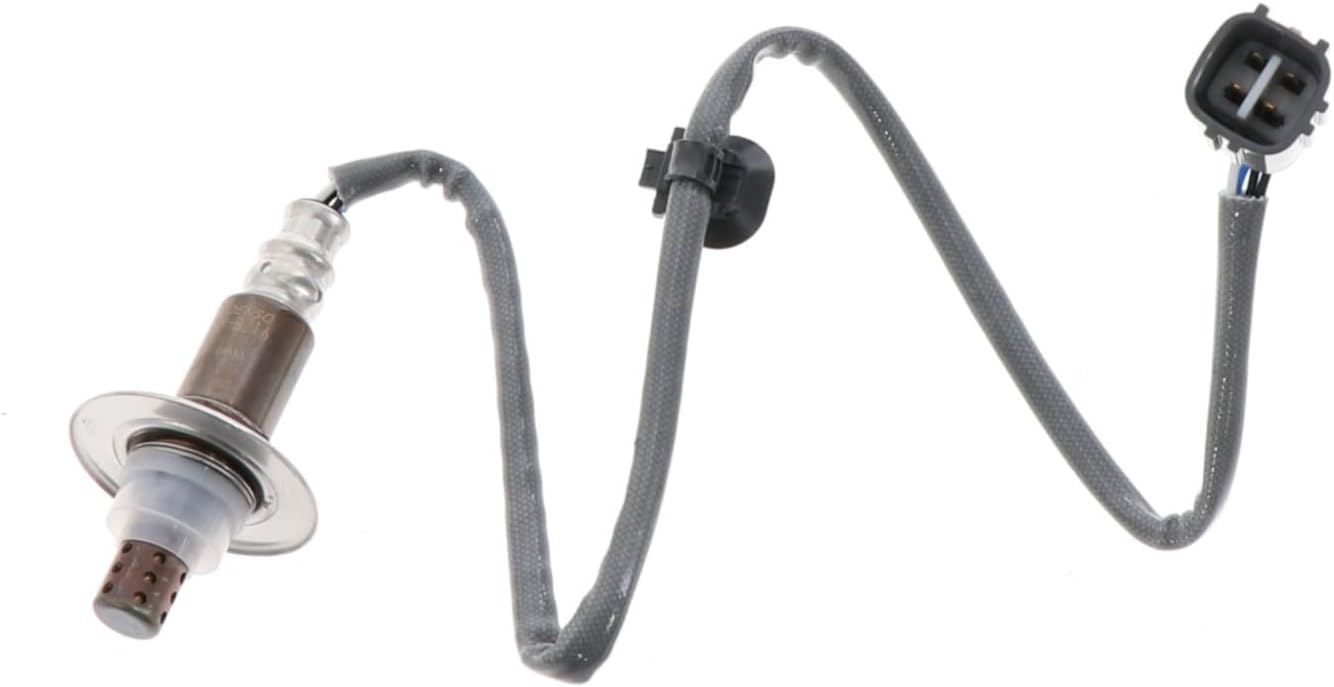
This Denso 234-4445 oxygen sensor is a direct-fit replacement intended to restore accurate exhaust oxygen readings on compatible Subaru engines. Installed as a downstream or upstream sensor depending on year and bank, it connects the vehicle wiring harness and threads into the exhaust system to monitor combustion and feed feedback to the engine control unit. Key features are factory-grade construction, a machined stainless steel housing, zirconium sensing element, and Denso’s protective aluminum oxide trap to resist contamination. For a performance-oriented Subaru owner, the practical benefits are predictable fitment, reliable sensor output that helps maintain correct fuel trim and emissions control, and reduced likelihood of recurring check-engine codes that can affect drivability. Installation typically requires an oxygen sensor socket or crowfoot and basic hand tools; some models may need minor component removal for access. Limitations: this is a vehicle-specific replacement so correct year/position matching is essential, and while built to factory standards many users still report occasional early failures in high-mileage or harsh-corrosion environments.
Best for: Performance-oriented Subaru Legacy owners who prioritize OEM-level fit and predictable sensor response to maintain engine tuning and emissions control.
Less Ideal for: Owners seeking a universal or multi-vehicle sensor option or those who prefer the lowest-cost aftermarket sensors for short-term repairs should consider alternatives.
- Factory-quality fit and finish for direct replacement on compatible Subaru models
- Zirconium sensing element with contamination-resistant aluminum oxide trap for stable long-term readings
- Machined stainless steel housing built to withstand high exhaust temperatures
- Includes anti-seize on threads in many packages to simplify future removal
- Vehicle-specific unit so wrong year or bank selection will not fit
- Occasional reported early failures in vehicles exposed to heavy corrosion or extreme duty conditions
Verdict Choose this Denso sensor for factory-quality, performance-focused replacement on compatible Subaru Legacy models to restore accurate fuel trim and emissions control.
4. BLPextrm Upstream Oxygen (O2) Sensor — Replacement for Subaru Legacy 2.5L (2000–2002)

| Vehicle fit | Subaru Legacy 2.5L 2000–2002 |
|---|---|
| Application | Upstream oxygen sensor |
| Replacement part numbers | 234-5003, 12567073, 22641AA011, ES10923 |
This BLPextrm upstream O2 sensor is a direct replacement option for the 2000–2002 Subaru Legacy 2.5L and is aimed at restoring the vehicle’s air/fuel monitoring after the original sensor fails. It installs in place of the factory upstream sensor and uses an integrated heater for faster warm-up so the engine computer gets accurate readings shortly after start. Typical use is a direct swap during routine diagnostics or when a check engine code indicates an upstream oxygen sensor fault; it helps stabilize idle, improve drivability, and can return diminished fuel economy. Notable features called out by the maker include a ceramic sensing element, an internal heater with short activation time, and temperature resilience for high exhaust conditions. As a budget aftermarket part, fitment depends on precise part-number matching and professional installation is recommended if you are not comfortable with sensors and wiring. Expect a cost-effective way to get the Legacy running normally again, while accepting that long-term durability may be less certain than higher-end factory-quality replacements.
Best for: Budget-conscious Subaru Legacy owners looking to restore normal engine operation and trim repair cost rather than invest in a premium sensor.
Less Ideal for: Shoppers seeking a long-term, high-mileage factory-quality replacement or those who prefer OEM dealer support and extended warranties should consider higher-tier options.
- Designed to directly replace the upstream O2 sensor for 2000–2002 Subaru Legacy 2.5L
- Integrated heater for faster activation and improved cold-start response
- Manufacturer claims high temperature tolerance and rapid sensor response to restore drivability
- Aftermarket construction may not match long-term durability of higher-end factory-quality sensors
- Compatibility requires confirming part numbers and vehicle year before purchase
- Limited warranty and support details are not specified in the product information
Verdict A low-cost upstream O2 sensor that can quickly restore your 2000–2002 Subaru Legacy’s drivability if you confirm fitment and accept typical aftermarket durability limits.
5. BOSCH 17018 Premium Oxygen Sensor

| Compatible vehicles | Subaru Legacy (2000–2002) — verify engine and sensor position |
|---|---|
| Material | Stainless Steel |
| Mounting Type | Flange Mount |
| Output Type | Electrical signal |
This Bosch 17018 oxygen sensor is a direct-fit replacement intended to restore proper air–fuel feedback on compatible Subaru Legacy engines from the 2000–2002 model years. It installs like a factory-quality part thanks to matching connectors and pre-coated threads that simplify fitment, and the fast-acting heater helps the sensor reach operating temperature quickly so the engine control module sees accurate readings soon after startup. Bosch uses a double laser-welded stainless steel body and factory testing to improve durability against exhaust exposure, which is useful for drivers who want a long-lasting repair. In practice it is used when a failing sensor triggers a check engine code, causes rough idle, or reduces fuel economy; swapping this in should correct those symptoms when the Legacy’s sensor position and engine variant match. Some users report occasional quality variation in gasket or build compared with dealer parts, so expect a small risk of early failure on a minority of units. Professional installation is recommended if access is cramped or if the sensor position requires removal of exhaust components.
Best for: Risk-averse mainstream buyers who prioritize a factory-quality replacement to restore proper engine operation on a Subaru Legacy and prefer a tested, reputable brand over aftermarket unknowns.
Less Ideal for: Drivers seeking the absolute highest-end motorsport or long-term fleet durability upgrades should consider higher-spec or OEM-sourced options instead.
- Direct-fit connectors and pre-coated threads for straightforward installation
- Fast-acting heater that gets the sensor to operating temperature quickly
- Double laser-welded stainless steel body for improved resistance to exhaust corrosion
- Factory testing for full functionality before shipment
- Some reported variability in gasket/build quality compared with dealer-sourced parts
- Fitment limited to specific early 2000s Subaru models and engine variants
Verdict A reliable Bosch direct-fit oxygen sensor that restores proper engine sensing on compatible Subaru Legacy models, with mostly OEM-like fitment but occasional quality variation reported.
6. Likala Oxygen Sensor Kit (Upstream & Downstream) for Subaru 2.5L 2006–2011

| Vehicle fit | Subaru 2.5L models 2006–2011 (Legacy, Outback, Forester, Impreza) |
|---|---|
| Mounting type | Plug mount |
| Measuring range | -40°C to 932°F |
| Output type | Electrical signal |
This Likala kit includes both upstream and downstream oxygen sensors intended as direct replacements for Subaru 2.5L Legacy, Outback, Forester and Impreza models from 2006–2011. The sensors use a stainless steel, double laser welded body and a plug-and-play connector with pre-coated threads for straightforward installation. In practice they monitor exhaust oxygen to help the engine control unit correct fuel trim, which can clear check-engine lights and restore fuel economy when factory sensors wear out. Buyers report quick response time and reliable operation at high exhaust temperatures, and the pair covers both front and rear banks so you can replace both sensors at once. Important limitations are that this is an aftermarket unit rather than a factory part and some installations may require a thread tap to clean the bung before fitment; fitment must be confirmed against the specific Subaru 2.5L part numbers listed by the seller. If you want a low-cost way to return a Legacy to correct emissions and drivability without advanced tuning, this kit is practical and effective.
Best for: Buyers who prioritize practical, cost-effective repairs and want a complete replacement set to restore normal emissions and fuel economy on a Subaru 2.5L without paying for dealer parts.
Less Ideal for: Drivers seeking an exact factory-branded sensor or those who require manufacturer-backed long-term warranty and certified OE matching should consider alternatives.
- Includes both upstream and downstream sensors so you can replace both banks at once
- Plug-and-play connector and pre-coated threads simplify installation for DIY mechanics
- Stainless steel, double laser welded body rated for high exhaust temperatures
- Faster response time claimed to help restore accurate fuel trim and reduce check-engine warnings
- Aftermarket part so fit and long-term durability may vary compared with factory-quality sensors
Verdict A budget-friendly pair of plug-and-play oxygen sensors that let practical Subaru owners replace both sensors at once to restore fuel trim and clear emissions faults.
7. Bosch Premium Fitment Oxygen Sensor (model 18075)

| Material | Stainless Steel |
|---|---|
| Mounting Type | Flange Mount |
| Output Type | Push-Pull |
| Response Time | 5 seconds |
| Upper Temperature Rating | 150 Degrees Celsius |
This Bosch oxygen sensor is a direct-fit replacement intended to restore accurate O2 readings and emissions control on compatible Subaru engines. It is typically used where a failed upstream or downstream sensor has triggered check engine lights, reduced fuel economy, or caused drivability issues. Notable features include a stainless steel, submersible body for corrosion resistance, a fast-acting heater that brings the sensor to operating temperature within seconds, and factory-style connectors and pre-coated threads to simplify installation. In practice the sensor brings prompt warm-up, reliable signal response for the engine computer, and a straightforward install without splicing. Limitations to be aware of are fitment sensitivity across engine and sensor position variations for Subaru Legacy models, so verifying the correct sensor location and engine application is essential, and a replacement sensor will not correct unrelated engine or fuel system faults. For someone replacing a worn O2 sensor on a Legacy, this unit provides the expected durability and OEM-style operation.
Best for: Balanced buyers who want a factory-quality, drop-in oxygen sensor for routine maintenance and to clear O2-related check engine lights on a Subaru Legacy.
Less Ideal for: Drivers seeking a universal or performance-wideband sensor for tuning should look at dedicated aftermarket controllers and sensors instead of this direct-fit replacement.
- Direct-fit connectors and pre-coated threads make installation quick and reduce the need for anti-seize prep
- Fast-acting heater reaches operating temperature within seconds for accurate readings at idle and short trips
- Stainless steel, sealed body resists exhaust corrosion and extends service life
- Factory-quality testing ensures each sensor meets Bosch performance standards
- Fitment depends on engine variant and sensor position so wrong selection can lead to incompatibility
- Does not address other causes of poor fuel economy or emissions beyond the sensor itself
Verdict A factory-style, durable direct-fit oxygen sensor that restores proper emissions monitoring on the Subaru Legacy when the correct engine and sensor position are selected.
Choosing the Right Subaru Legacy Oxygen Sensor: Key Factors to Consider
Fitment and Connector Compatibility
Correct physical fitment and matching electrical connectors reduce installation time and prevent wiring issues. A sensor that uses the OEM-style threads and terminal layout minimizes the risk of exhaust leaks or poor electrical contact.
Besides threads and connector type, pay attention to sensor length and harness orientation. An incorrectly sized sensor can place the wiring harness under tension or in contact with hot components, which may cause premature failure.
Signal Response Time and Accuracy
Faster response to changes in exhaust oxygen helps the engine control module adjust fuel trim more precisely, improving throttle response and emissions. Look for sensors with documented voltage response characteristics or response time metrics.
Accuracy matters during transient conditions such as acceleration and deceleration. A sluggish or noisy sensor signal can lead to rich or lean running conditions and trigger diagnostic codes.
Durability and Heat Resistance
Oxygen sensors operate in a harsh environment with high temperatures and corrosive gases. Materials and heat shielding affect how long a sensor will function before degradation.
Sensors with sturdy housings and protective coatings resist contamination from combustion byproducts, while reinforced wiring and high-temperature insulation protect signal integrity over time.
Heater Circuit Functionality
An integrated heater brings the sensor up to operating temperature quickly, which reduces cold-start emissions and ensures accurate readings shortly after engine start. Heater reliability affects how consistently the sensor provides usable data.
Check that the heater circuit matches the vehicle wiring and has adequate current capacity. A failed heater often shows up as delayed warm-up behavior and can lead to maintenance codes related to heater circuit performance.
Upstream Versus Downstream Application
Upstream sensors monitor combustion quality and directly affect fuel trim adjustments, while downstream sensors primarily check emissions system efficiency. Knowing which position the sensor is intended for helps ensure correct operation and diagnostic behavior.
Choose a sensor specified for the intended bank and position. Using the wrong type can lead to inappropriate readings and confuse on-board diagnostics during testing or repairs.
Installation and Serviceability
Ease of installation affects time and cost of maintenance. Features like OEM-style connectors, anti-seize coating on threads, and clear wiring length specifications make replacement simpler and reduce the chance of installation damage.
Also consider access in the engine bay. A sensor designed with a compatible harness length and orientation avoids stretching the wiring and facilitates future service work.
FAQ
How do I know if my Subaru Legacy oxygen sensor is failing?
Symptoms often include rough idle, reduced fuel economy, or a persistent check engine light. You may notice hesitation on acceleration or unusual exhaust smell. Diagnostic trouble codes related to oxygen sensors can also indicate failure, though codes should be interpreted together with live sensor data when possible.
Can I replace an oxygen sensor myself on a Subaru Legacy?
Many owners can replace an oxygen sensor with basic hand tools and a suitable sensor socket. Ensure the vehicle is cool enough to work safely and that replacement fitment and connector type match the original. If you are uncomfortable working under the vehicle or dealing with wiring, seek professional help.
Should I replace upstream and downstream sensors at the same time?
It depends on symptoms and age. Upstream sensors have a greater impact on fuel trim and drivability, so they are often prioritized. Downstream sensors can remain serviceable longer. Replacing both at once can be convenient, but inspecting their performance first helps make a cost-effective decision.
What does a bank 1 sensor 1 code usually mean on a Subaru Legacy?
A bank 1 sensor 1 code typically points to the upstream oxygen sensor on the cylinder bank that includes cylinder one. The code usually indicates that the sensor is not producing the expected signal or that the heater circuit is malfunctioning. Confirm the diagnosis with live readings before replacing parts.
How can I test an oxygen sensor without special equipment?
Basic checks include visual inspection for wiring damage and measuring heater circuit resistance with a multimeter. You can also observe voltage fluctuations with a scan tool or multimeter while the engine is warm; upstream sensors typically oscillate when operating correctly. These methods give useful clues but do not replace detailed diagnostic testing.
How We Chose the Best Subaru Legacy Oxygen Sensor
To assemble this list we focused on criteria that directly affect real-world performance and longevity on the Subaru Legacy. Primary filters included exact fitment to Legacy model years and engine variants, robust sensor signal stability under a range of operating temperatures, and resistance to contamination from oil and coolant leaks. We also weighed response time to changes in exhaust oxygen, connector and harness compatibility, and overall construction quality including materials and heat shielding. We excluded any units with ambiguous fitment claims, sensors lacking documented electrical specifications, and products without clear warranty or return policies. We did not consider price alone as a deciding factor. The result is a set of oxygen sensors that prioritize correct fit, reliable readings, and durable design for the Subaru Legacy platform.
Our full evaluation process is outlined in our review methodology.
Conclusion
When choosing a Subaru Legacy oxygen sensor, prioritize correct fitment and reliable signal performance to maintain fuel trim and emissions control. Balance heater circuit functionality and durable construction against ease of installation when deciding which unit to buy. Be realistic about tradeoffs: faster response and robust materials typically cost more but reduce the chance of repeat repairs. Use diagnostic data to confirm which sensor and bank require attention before replacing components.
Explore More:
- Check out all Subaru Legacy parts & accessories
- Explore Oxygen Sensors Maintenance & Repair Guides
- Explore Engine
- Browse all Auto Parts
