

Note: This article contains affiliate links. If you click on these links and make a purchase, I may earn a small commission at no extra cost to you. This helps support my research and content. Read my full affiliate disclosure here.
Picking the right Chevrolet Tahoe oxygen sensor matters because this small component influences fuel delivery, emissions control, and engine responsiveness. A properly functioning sensor helps the engine management system maintain correct air-fuel ratios, which in turn affects fuel economy, idle quality, and overall drivability.This guide covers seven shortlisted oxygen sensors that meet common fitment and performance needs for the Tahoe. We evaluated each option against signal stability and fitment accuracy while also considering durability and ease of installation. Read on to compare key attributes and find the sensor that matches your priorities.
Looking for other parts? See all Chevrolet Tahoe parts & accessories.
Top Picks at a Glance
| Best Reviewed A top-rated pick with lots of positive feedback | GM Genuine Parts AFS138 Heated Oxygen Sensor (19178961) |  |
| Most Popular A crowd favorite that many people choose with confidence | DOICOO Downstream Oxygen Sensor (234-4407) for Chevy/GMC 4.8L–6.2L |  |
| Best Quality Built to a higher standard if you want something more solid | A-Premium 4‑Pack Heated Oxygen Sensors Compatible with Chevrolet V6 3.6L (Upstream & Downstream) |  |
| Best Budget The cheapest option that still gets the job done reliably | MTKHMN Downstream Oxygen O2 Sensor — compatible with 2015–2020 Cadillac Escalade and select GM trucks |  |
| Most Sold A high-volume bestseller chosen again and again | RANSOTO O2 Oxygen Sensor Set (4) for Chevrolet Tahoe 2008–2014 |  |
| Best Value for Money The sweet spot between price and what you get | GM Genuine Parts 213-3866 Heated Oxygen Sensor (12583804) |  |
| Best Overall The best all-around choice for most situations | Denso 234-4337 Replacement Oxygen (O2) Sensor |  |
1. GM Genuine Parts AFS138 Heated Oxygen Sensor (19178961)

| Material | Stainless Steel |
|---|---|
| Mounting Type | Flange Mount |
| Output Type | Digital |
| Connector Gender | Female |
This GM Genuine Parts AFS138 is a direct-fit heated oxygen sensor intended to detect oxygen content in exhaust gases and feed that information to the vehicle’s engine control module so the air/fuel ratio can be corrected. It is used as a replacement upstream sensor on compatible Chevrolet trucks and SUVs and installs like the factory unit with a flange mount and female connector. Notable features include a machined stainless steel housing, a heated element for faster warm-up and stable readings at idle, and digital output for the ECU. In real-world use it helps clear OBD-II codes, smooth cold idle and improve emissions control and fuel economy when the original sensor has failed. Because it is a GM Genuine Part manufactured to factory specifications, fit and function are reliable for the listed Chevy applications. The sensor is a single-purpose replacement part so you should expect professional-style installation access and no additional accessories in the box.
Best for: A reliability-focused buyer who prioritizes factory-quality replacement parts to restore correct engine management and avoid repeated failures on Chevrolet Tahoe and similar Chevy trucks.
Less Ideal for: Anyone looking for a universal aftermarket sensor, a multi-pack of sensors, or a part for non-Chevrolet vehicles should consider alternatives better matched to those needs.
- Factory-quality fit and validation for GM Chevy applications
- Heated element provides faster accurate readings at idle and during warm-up
- Stainless steel machined housing built for durability in exhaust environment
- Direct digital output and factory-style connector for plug-and-play replacement
- Single-sensor replacement with no installation hardware or anti-seize supplied
- Fitment limited to specific Chevrolet model years and engine configurations listed by the manufacturer
Verdict Choose this GM Genuine heated oxygen sensor when you want a factory-spec direct replacement for Chevy vehicles to restore emissions control and reliable engine performance.
2. DOICOO Downstream Oxygen Sensor (234-4407) for Chevy/GMC 4.8L–6.2L
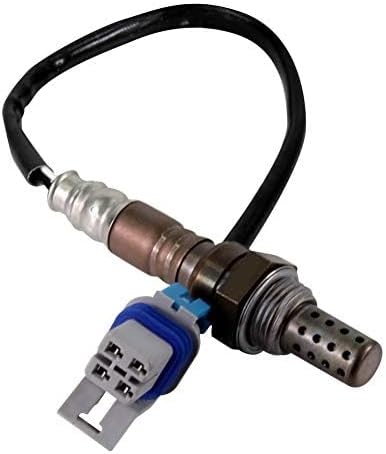
| Brand | DOICOO |
|---|---|
| Mounting Type | Thread mounting |
| Measuring Range | λ=0.7- ∞ |
| Response Time | 5.6 seconds |
This downstream DOICOO oxygen sensor is a plug-in replacement intended to restore accurate exhaust oxygen readings and resolve related check-engine codes on compatible Chevrolet models. It installs in the exhaust downstream position and is used after diagnosing the faulty bank/sensor with a scan tool. The sensor includes a threaded mounting, factory-style connector and is marketed to match factory specifications so no programming is required. In real-world use it can help the engine control module resume correct fuel trims, which can stop an emissions light and improve drivability. Buyers report straightforward installation and restored voltage readings when paired with an OBD-II monitor. Limitations include the usual fitment sensitivity for specific model years and engine variants, so careful verification of part numbers and sensor location is required, and some customers noted fitment errors when vehicle selection was incorrect. The part comes from an aftermarket brand, so longevity may vary compared with a factory-quality unit.
Best for: Practical, convenience-driven buyers who want a quick, no-programming replacement to clear emissions codes and restore normal O2 sensor readings on their Chevrolet without dealer visits.
Less Ideal for: Buyers seeking an exact factory unit for maximum long-term durability or those who prefer dealer-sourced parts and warranty coverage should consider OEM replacements instead.
- Direct-thread downstream design that fits factory mounting and connector for straightforward replacement
- Designed to restore oxygen voltage readings so the ECU can correct fuel trims and clear related codes
- Reports from users indicate easy installation and functional compatibility on many Chevy V8 applications
- Fitment must be checked closely for year, engine and downstream sensor location because incorrect selection is possible
- Aftermarket build quality can vary from factory-quality units, so longevity may differ
Verdict A convenient, plug-and-play downstream replacement for Chevy V8s that gets your O2 readings back quickly if you confirm exact fitment.
3. A-Premium 4‑Pack Heated Oxygen Sensors Compatible with Chevrolet V6 3.6L (Upstream & Downstream)

| Brand | A-Premium |
|---|---|
| Material | Stainless Steel |
| Mounting Type | Threaded Mount |
| Output Type | Analog |
| Wire Quantity | 4 |
These A-Premium sensors are a budget-friendly 4-pack of heated, threaded oxygen sensors meant to replace factory-style upstream and downstream units. They provide real-time oxygen readings to the engine control unit so the ECU can maintain closed-loop air-fuel control. Typical use is a direct replacement when a faulty sensor triggers a check engine light or causes drivability and fuel-economy issues. Notable features include a heated element for faster warm-up, a standard 4-wire connector, and threaded mounting for direct fitment. In practice they restore catalytic monitoring and can clear codes when the rest of the emissions system is healthy. The practical benefits are quick ECU feedback, easier roadside repairs with a full set, and lower cost compared with dealer parts. Limitations to expect are varied long-term durability versus factory units and occasional quality variance reported by installers, so professional diagnosis and careful installation are recommended for best results on a Tahoe with the V6 3.6L engine.
Best for: Performance-oriented buyers who want an affordable way to restore proper air-fuel feedback on a Chevrolet with a V6 3.6L and prioritize restoring drivability and emissions control quickly.
Less Ideal for: Buyers seeking guaranteed long-term OEM-equivalent durability or those unwilling to verify sensor heater and connector function after installation should consider factory replacements or professional-sourced alternatives.
- Complete 4-piece kit covers both upstream and downstream positions for a full replacement
- Heated sensor element shortens warm-up time for faster accurate readings
- Standard 4-wire design and threaded mount for direct, factory-style installation
- Lower-cost alternative to dealership parts for restoring ECU closed-loop control
- Longevity and consistency can vary compared with factory-quality sensors
Verdict A practical, lower-cost 4-pack of heated replacement oxygen sensors that can quickly restore air-fuel control on a Chevy V6 3.6L but may not match factory units for long-term durability.
4. MTKHMN Downstream Oxygen O2 Sensor — compatible with 2015–2020 Cadillac Escalade and select GM trucks

| Brand | MTKHMN |
|---|---|
| Material | Stainless Steel |
| Mounting Type | Flange Mount |
| Output Type | electrical signal |
This MTKHMN downstream O2 sensor replaces the factory downstream unit to restore the vehicle’s exhaust oxygen monitoring and help clear check-engine codes related to the sensor. It installs in the exhaust downstream of the catalytic converter and plugs into the factory wiring harness, so typical use is a direct swap during DIY maintenance or as a quick shop repair. The listing states stainless steel construction and flange mounting, which suggests corrosion resistance and a familiar threaded installation. Buyers report straightforward installation and successful smog checks, indicating the unit provides the expected electrical output for emissions control. Limitations are the usual ones for aftermarket budget parts: fitment must be confirmed carefully before purchase and long-term durability may not match premium factory-quality sensors. Also there is limited manufacturer information and only a small number of customer reviews, so you should plan for basic diagnostics after installation to verify proper operation.
Best for: Budget-conscious owners seeking an inexpensive, do-it-yourself replacement to clear downstream O2 sensor faults and prepare a Chevrolet Tahoe for emissions testing.
Less Ideal for: Buyers who prioritize maximum long-term durability or extended warranty coverage should consider higher-end factory-quality replacements or dealer parts instead.
- Direct replacement design for downstream installation compatible with specified GM models
- Stainless steel body for better corrosion resistance in exhaust environments
- Flange/threaded mount and standard electrical output for a straightforward plug-and-play swap
- Multiple customers report easy installation and successful smog checks
- Aftermarket budget part with limited long-term reliability data compared with higher-end factory-quality sensors
- Compatibility requires careful verification for specific engine and model years before buying
Verdict A cost-conscious downstream replacement that offers straightforward fit and function for routine O2 sensor repairs on compatible GM trucks, provided you double-check fitment.
5. RANSOTO O2 Oxygen Sensor Set (4) for Chevrolet Tahoe 2008–2014

| Brand | RANSOTO |
|---|---|
| Mounting Type | Flange Mount |
| Style | O2 Sensor |
| Upper Temperature Rating | 200 Degrees Celsius |
This RANSOTO set provides four replacement oxygen sensors designed to fit Chevrolet Tahoe models from 2008 through 2014. The sensors install in upstream and downstream positions to monitor exhaust oxygen and feed the engine control module so the engine can adjust fuel mixture and keep emissions within range. They are supplied with flange mounts and push-pull connectors intended for direct swap installation, and the listing highlights heat- and rust-resistant rubber construction for durability. In real-world use these sensors will clear oxygen-related trouble codes and can improve fuel trim and drivability when original sensors have failed. Some buyers report reliable, long-term operation while others experienced early failures, so longevity may vary compared with factory-quality parts. Expect straightforward installation for DIYers or techs familiar with Tahoe exhaust work, but consider sourcing a factory-quality sensor if you need guaranteed OEM-level lifespan for heavy-duty or high-mileage trucks.
Best for: A risk-averse mainstream buyer looking to repair a Chevy Tahoe with failed oxygen sensors who prioritizes straightforward, direct-fit replacements and lower upfront risk of installation issues.
Less Ideal for: Drivers seeking an exact factory-quality or long-term OEM replacement for heavy-duty or high-mileage Tahoes should consider branded OEM sensors or a professional parts source instead.
- Full set of four sensors covers upstream and downstream positions for a complete replacement on the vehicle
- Direct-fit flange mount and push-pull connectors simplify installation and reduce wiring modification
- Designed for high-temperature and rust resistance to withstand exhaust conditions
- Can clear oxygen sensor DTCs and help restore correct fuel trim and emissions control
- Some customers report premature failures, so lifespan is less consistent than factory-quality parts
- Not backed by a long-term manufacturer warranty in the provided details
Verdict A convenient, direct-fit four-sensor kit that can reliably clear oxygen-related faults on a Chevrolet Tahoe but may not match OEM longevity for heavy-duty or high-mileage use.
6. GM Genuine Parts 213-3866 Heated Oxygen Sensor (12583804)

| Material | Zirconia Ceramic |
|---|---|
| Maximum Supply Voltage | 12 Volts (DC) |
| Measurement Accuracy | ±1% |
| Mounting Type | Flange Mount |
| Upper Temperature Rating | 1550 Degrees Fahrenheit |
This GM Genuine Parts heated oxygen sensor is a direct-fit replacement that measures oxygen in the exhaust and feeds that data to the engine control module so the Tahoe’s air/fuel ratio and emissions systems can be corrected. It is typically used to replace a failing upstream or downstream O2 sensor when a check engine light or fuel-economy issue appears. The sensor is manufactured to GM factory specification and uses a zirconia ceramic sensing element with a flange mount and electrical signal output, so installation is straightforward and the part plugs into the Tahoe’s existing harness. Practical benefits include factory-quality fit and compatibility, an upper temperature rating suitable for exhaust duty, and consistent measurement accuracy to help the ECU relearn quickly. Limitations to consider are that it is a vehicle-specific genuine-part option, so it does not replace broader aftermarket interchangeability needs, and installation may still require clearance, penetrating seized threads, or a scan tool to clear codes and run a relearn procedure.
Best for: A practical optimizer who wants a factory-quality, cost-conscious replacement for a Chevrolet Tahoe that restores emissions control and drivability without experimenting with generic aftermarket alternatives.
Less Ideal for: Buyers needing a universal sensor for multiple makes or a performance-tuned sensor with nonstandard calibrations should look elsewhere.
- Factory-quality fit and function validated for GM vehicles, reducing fitment risk on a Tahoe
- Heated element and flange mount allow reliable operation and direct replacement installation
- Zirconia ceramic sensing element with ±1% measurement accuracy supports precise air/fuel control
- High temperature rating (up to 1550°F) suited to exhaust-system conditions
- Sold as a vehicle-specific genuine part so it is not a universal aftermarket option
- May require use of a scan tool and relearn procedure after installation to fully clear codes
Verdict A factory-spec replacement that gives Tahoe owners reliable, accurate O2 readings without the uncertainty of cheap aftermarket sensors.
7. Denso 234-4337 Replacement Oxygen (O2) Sensor

| Brand | Denso |
|---|---|
| Material | Stainless Steel, Zirconium |
| Mounting Type | Thread-In |
| Output Type | Push-Pull |
| Upper Temperature Rating | 1562 Degrees Fahrenheit |
This Denso 234-4337 is a direct-fit replacement oxygen sensor engineered to meet factory-spec performance for compatible GM vehicles. It installs as a threaded push-pull sensor and is typically used to replace a worn upstream or downstream O2 unit to restore correct air-fuel readings, resolve check-engine codes, and recover fuel economy. Notable features include a machined stainless steel body, zirconium sensing element with Denso's protective trap layer to resist contamination, and inclusion of anti-seize on threads for easier future removal. In real-world use it provides reliable, OEM-like fit and plug compatibility on supported Chevrolet Tahoes, and many buyers report immediate improvements in idle stability and fuel trims after installation. Limitations are typical of single-sensor replacements: it fixes sensor-related issues but will not cure unrelated intake, fuel, or catalytic converter problems, and access can be tight on some vehicle banks which may require basic hand tools or an O2 socket. For a balanced buyer seeking dependable, factory-quality replacement, this sensor is a practical choice.
Best for: A balanced, all-round buyer who wants a reliable factory-quality replacement that restores proper engine management and fuel economy with minimal fuss.
Less Ideal for: People seeking a multi-vehicle or universal aftermarket sensor solution or those who need a sensor specifically for non-Chevrolet Tahoe vehicles should look elsewhere.
- Factory-quality direct-fit for compatible GM vehicles so the connector and threads match factory locations
- Protective aluminum oxide trap layer reduces ceramic poisoning for longer service life
- Machined stainless steel construction resists exhaust corrosion and furnishes a precise fit
- Includes anti-seize on threads to simplify future removal and reduce risk of seizure
- Does not address non-sensor engine or exhaust issues such as fuel delivery or a failing catalytic converter
- Tight access on some vehicle banks can make installation awkward without the right O2 socket or tools
Verdict A dependable, factory-quality direct-fit O2 sensor that restores proper air-fuel control on compatible Chevrolet Tahoe applications.
Choosing the Right Chevrolet Tahoe Oxygen Sensor: Key Factors to Consider
Fitment And Connector Compatibility
Correct fitment is the foundation of a reliable oxygen sensor installation. An exact thread size and length ensure the sensor seats properly in the exhaust bung and maintains an airtight seal. Matching the vehicle-side connector avoids splicing or adapter use, which can introduce electrical resistance, poor connections, or diagnostic trouble codes.
Fitment also includes wire length and routing allowances. Wires that are too short can put tension on the harness and lead to early failure. Conversely, excess exposed wiring can be vulnerable to heat and abrasion. Verify the sensor’s physical specifications against the Tahoe’s original sensor to avoid installation headaches.
Signal Accuracy And Response Time
How quickly and accurately the sensor reports oxygen levels affects engine control decisions. Faster response time helps the engine control module adjust fuel trim more promptly during acceleration, deceleration, and cold starts. Sensors with stable, repeatable voltage or current signals help avoid oscillating fuel trims that can worsen fuel economy and drivability.
Look for specifications or manufacturer data on response time and output consistency. A sensor that drifts or has noisy output can trigger false diagnostics or make the engine run rich or lean under varying loads.
Durability And Contamination Resistance
Exhaust sensors face high temperatures and exposure to byproducts like soot, oil, and coolant. Durable sensing elements and protective coatings help prevent premature failure from thermal shock or contamination. Good sealing and robust strain relief at the wiring junction reduce the risk of moisture ingress and mechanical damage.
Consider sensors that specify resistance to common contaminants and list operating temperature ranges. Longevity reduces the need for repeat replacements and minimizes the chance of intermittent faults that are hard to diagnose.
Heater Circuit Performance
Many oxygen sensors include an internal heater to bring the sensing element up to operating temperature quickly. A reliable heater reduces the cold-start period during which the sensor cannot provide accurate readings, improving emissions and drivability during the first minutes of operation. Heater circuit reliability is also important for meeting diagnostic readiness requirements.
Evaluate the sensor’s reported heater draw and heating time if available. Faulty heaters can cause check engine light oxygen sensor alerts and affect readiness monitors. Durable heater design and proper electrical connector matching are key to avoiding heater-related faults.
Placement: Upstream Versus Downstream Roles
Sensors located upstream (before the catalytic converter) primarily guide fuel trim by reporting immediate exhaust oxygen content. Downstream sensors monitor catalytic converter efficiency and are used more for emissions monitoring. Understanding which position you need matters for selecting the correct sensor type and wiring.
Ensure the chosen sensor is specified for the needed bank and position. Using the wrong type or placement can produce inaccurate readings, leading to diagnostic trouble codes or improper engine control behavior.
Ease Of Installation And Maintenance
Practical installation concerns influence how quickly you can replace a sensor and how likely it is to be fitted correctly. Consider whether the sensor uses a common thread size and includes anti-seize or pre-applied coatings where appropriate. A sensor designed for straightforward installation reduces the risk of cross-threading, broken studs, or wiring damage.
Think also about access to the sensor on the vehicle and whether you will need special tools. Simpler installations lower labor time and reduce the chance of installation-related faults that can mimic sensor failure.
FAQ
What are common O2 sensor symptoms on a Chevrolet Tahoe?
Common symptoms often include rough idling, reduced fuel economy, and an illuminated check engine light. You may also notice hesitation during acceleration or higher emissions when a sensor is failing. Symptoms usually appear gradually and can vary depending on whether the upstream or downstream sensor is affected.
How can I test an oxygen sensor on my Tahoe?
You can test an oxygen sensor using a multimeter to check heater resistance and signal voltage, or with a scan tool to observe live data and response to throttle changes. Tests usually include checking the heater circuit for continuity and watching the sensor’s voltage or current fluctuate under varying engine conditions. Follow safe diagnostic procedures and consult vehicle-specific service information for exact test values.
Will a bad oxygen sensor trigger the check engine light?
Yes, a failing sensor commonly triggers the check engine light and stores a diagnostic trouble code. Codes can indicate heater circuit faults, slow response, or out-of-range signals. Keep in mind that other engine or exhaust issues can produce similar codes, so proper diagnosis is recommended before replacing parts.
Do upstream and downstream oxygen sensors serve different roles?
They do. Upstream sensors measure exhaust oxygen content to help the engine control module maintain the correct air-fuel mixture. Downstream sensors monitor the catalytic converter’s performance and are used for emissions verification. Choosing the correct position-specific sensor ensures accurate feedback and proper system operation.
How long do oxygen sensors typically last?
Sensor life varies with driving conditions and exposure to contaminants, but many last several years under normal use. Frequent short trips, oil burning, or coolant leaks can shorten service life. Routine monitoring of performance and diagnostic data helps identify declining sensors before they cause drivability problems.
Can a faulty heater affect sensor behavior?
Yes, a defective heater delays the sensor reaching operating temperature, which can cause poor cold-start fuel control and trigger diagnostic codes. Heater issues often show as a specific fault code related to the heater circuit and can be confirmed by checking resistance and power supply to the heater.
How We Chose the Best Chevrolet Tahoe Oxygen Sensor
We focused on sensors designed specifically for the Chevrolet Tahoe and evaluated candidates across four to six concrete dimensions relevant to real-world use. Primary factors included electrical signal accuracy under varied temperatures, OEM-equivalent fitment and connector compatibility, long-term durability of the sensing element and wiring, and responsiveness to changes in exhaust composition. We also assessed materials and protective features that reduce contamination and thermal degradation.We excluded any items lacking clear vehicle-specific fitment information or sensors that require major wiring modifications to function. We deprioritized generic, non-vehicle-specific listings and sensors without documented temperature range or response data. Final selections emphasize accurate signal output, proper connector and thread fit, robust construction, and predictable life expectancy under normal operating conditions.
Our full evaluation process is outlined in our review methodology.
Conclusion
When choosing an oxygen sensor for a Chevrolet Tahoe, prioritize correct fitment and connector compatibility, along with reliable signal response and heater performance. Durability against heat and contamination is also important to avoid repeat replacements and intermittent faults.Balancing these factors helps you restore proper engine control and emissions performance. Focus on the sensor position you need, verify wiring and thread specifications, and consider ease of installation when making a final choice.
Explore More:
- Check out all Chevrolet Tahoe parts & accessories
- Explore Oxygen Sensors Maintenance & Repair Guides
- Explore Engine
- Browse all Auto Parts
